Why Use Prototype Sheet Metal?
A sheet-metal concept can look convincing on screen and still fail at the brake, around a fastener, or beside a mating panel. Prototype Sheet Metal turns those risks into physical evidence before production tooling and larger commitments. Engineers can check fit, bend allowances, hole alignment, stiffness, and finish on a part they can handle. A folded edge that interferes with a cable becomes obvious quickly. So does a mounting hole shifted by a few millimeters.
The case for faster iteration sits within a wider manufacturing shift. Wohlers Associates’ Wohlers Report 2024 valued the global additive manufacturing industry at $20.035 billion in 2023, an 11.1% annual increase. That figure concerns additive manufacturing, not sheet-metal prototyping. Still, it signals growing investment in digital-to-physical development workflows. Deloitte’s 2024 Manufacturing Industry Outlook also highlights manufacturers’ focus on productivity, resilience, and technology adoption. These pressures make early, practical design checks valuable. A prototype does not solve every supply-chain problem, but it can reveal avoidable design issues before they travel downstream.
It is tempting to call prototyping a shortcut. That is only partly true. A rushed sample with unclear tolerances can create false confidence, and one part cannot represent every production variation. Useful prototypes need defined test goals, suitable material, and documented measurements. Not magic. When teams inspect real bends, edges, and assembly points, they can revise designs with clearer evidence. That makes Prototype Sheet Metal a practical tool for reducing uncertainty, not a promise that every launch will be flawless.
What Prototype Sheet Metal Is and How It Is Made
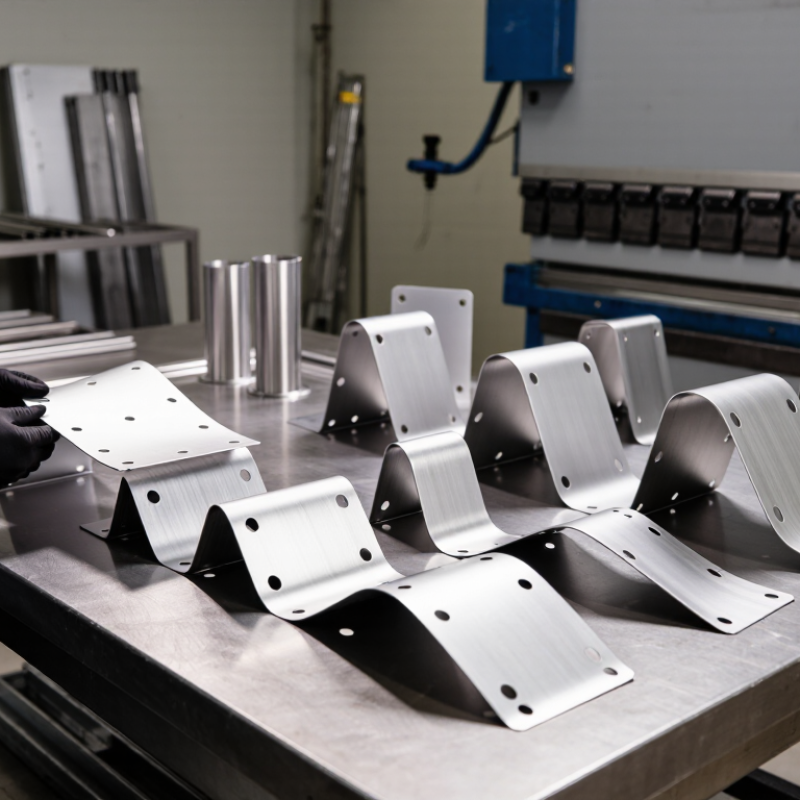
Prototype sheet metal is a low-volume metal part made to test a design before larger production. It can reveal whether a panel fits, a bracket clears nearby components, or a folded edge feels too sharp. Common materials include mild steel, stainless steel, and aluminum. The right choice depends on strength, weight, corrosion exposure, and the intended finish.
The process starts with a flat pattern created from a 3D model or drawing. A laser or punch cuts the outline and holes from sheet stock. Operators remove burrs, then form the blank on a press brake using selected tools and bend settings. Holes near bends need careful placement. Metal can shift or spring back slightly, so the first part may not match the drawing perfectly. That is useful feedback.
Parts may be joined with fasteners, spot welds, or other suitable methods, then checked for dimensions and fit. A caliper can verify hole spacing; a simple fixture can expose alignment problems. Finish also matters. A coating may change clearances. Prototype work makes revisions practical, but it does not guarantee that every production result will be identical. One detail is easy to miss: sharp edges can affect assembly and handling. They deserve inspection, even on a single sample.
How Prototype Sheet Metal Supports Early Design Testing
A prototype sheet metal part lets teams test geometry before committing to production tooling. A formed bracket can reveal a flange collision, a hard-to-reach fastener, or a hole that shifts after bending. These problems are easier to inspect on a real part than on a screen. A flat panel can look perfect in CAD. It may still fight the bend.
The Project Management Institute’s 2020 Pulse of the Profession report estimated that 11.4% of investment is wasted because of poor project performance. That figure covers projects broadly, not sheet-metal prototyping specifically. Still, it underscores the value of checking assumptions early. A prototype gives engineers tangible evidence about fit, assembly sequence, and handling before design decisions become harder to change. It is not a guarantee: material variation and production tooling can affect the final result.
Tips: Test the intended material and thickness where possible. Mark bend lines, measure critical holes, and photograph assembly issues. Record what changed, too; a prototype can expose a weak assumption, not just a bad dimension.
Key Benefits of Using Sheet Metal Prototypes
Sheet metal prototypes turn a drawing into a part you can hold, measure, and test. That changes conversations. A folded panel can reveal whether a flange clears a nearby bracket or a fastener is reachable with a real tool. Early checks can catch bend, hole-position, and assembly issues before production quantities are committed. They also help teams compare thicknesses, finishes, and joining methods using physical evidence rather than guesses.
Prototypes can make design reviews more useful because engineers, buyers, and operators can inspect the same part. A quick fit check may expose sharp edges, awkward handling, or a panel that flexes more than expected. Testing one sample is not proof of long-term performance, though. Material variation, tooling setup, and production speed can change results, so critical dimensions and loads need defined checks. Prototype work adds upfront cost, but correcting a flat pattern is often simpler than reworking a batch.
Tips: Mark critical holes and bend angles on the drawing, then measure them on the sample. Record what changed. Keep one assumption open: a prototype can confirm fit while leaving durability uncertain.
Common Applications Across Industries
Prototype sheet metal helps teams check whether a design works beyond the screen. In automotive development, formed brackets and enclosures can reveal clearance problems around wiring, fasteners, and nearby components. A few millimeters may decide whether an assembly fits. Fit matters here.
Medical equipment makers use prototypes to assess compact covers, trays, and support frames. Engineers can review access for cleaning and maintenance before committing to production tooling. In electronics, thin metal housings help teams examine ventilation, connector placement, and shielding needs with real components installed. These checks are practical, but they do not replace testing against the product’s specific performance requirements.
Industrial machinery and appliance teams also use sheet metal prototypes for control panels, guards, and internal mounts. A quick trial can show whether a panel flexes when pressed or whether a door catches on its hinge. Small details count. Aerospace development may involve lightweight brackets and access panels, where fit and weight both matter. Each application brings different loads and tolerances, so one prototype rarely answers every question. Not every test passes. That can be useful: a bent flange or awkward service opening may expose an assumption that looked perfectly reasonable in a drawing.
Why Use Prototype Sheet Metal? — Common Applications Across Industries
Prototype sheet metal helps teams evaluate fit, function, and manufacturability before production. The chart shows representative sheet thicknesses commonly used for prototype parts across several industries.
Thickness values are illustrative design-point examples, not industry-wide averages or requirements. Actual material thickness depends on the part, material, loads, manufacturing process, and applicable standards.
Factors to Consider When Choosing Prototype Sheet Metal
Why Use Prototype Sheet Metal?
Factors to Consider When Choosing Prototype Sheet Metal
Choosing prototype sheet metal starts with the part’s job, not its appearance. Will it carry a load, guide airflow, shield electronics, or simply confirm fit? That answer helps narrow the material, thickness, and forming method. A thin aluminum panel may bend quickly, while stainless steel can better resist wear or heat. But material names alone do not predict performance; temper, grain direction, and finish matter too. Small details matter.
Next, check the geometry against the process. Tight bends, deep draws, and closely spaced holes can increase forming difficulty or cause distortion. For example, a hole near a bend may stretch into an oval after forming. Ask the fabricator to review bend radius, tolerances, edge condition, and fastening features before releasing files. Also consider the number of expected revisions, delivery timing, and whether the prototype needs production-like material. A cheaper one-off may save money today but offer weak evidence about final performance. That trade-off is easy to miss. Specify critical dimensions and inspection points, then check a physical part against the drawing. Even a careful review can miss a detail; that is one reason prototypes are useful.