Why Choose Thermal Break Aluminum System Windows?
Thermal Break Aluminum System Windows are designed to reduce heat transfer through the metal frame. A polyamide insulating strip separates the exterior and interior aluminum sections, limiting a direct path for heat and cold. The result can be a more comfortable room, less chilly glass-edge discomfort, and reduced condensation risk when the window is correctly specified and installed. Details matter.
For this introduction, the following quotation is an original editorial line, not a verified statement by a real person: “A good thermal break is only one part of a high-performing window; the frame, glass, seals, and installation must work together.” It is attributed here to fictional building-envelope specialist Daniel Mercer, rather than presented as a historical expert quotation. That distinction matters when judging product claims.
Why choose these windows? They combine aluminum’s slim profiles and structural strength with a frame design that can improve thermal performance. This can suit contemporary homes, offices, and projects with large glazed openings. Yet the label alone proves little. Compare tested whole-window performance, not just the frame’s advertised values. Check the glazing, hardware, air seals, drainage design, and installer experience. A beautifully finished frame can still disappoint if the perimeter seal is uneven or the opening is poorly measured. That is easy to overlook. This guide explores the benefits, limitations, and practical selection questions behind Thermal Break Aluminum System Windows, so buyers can compare systems with clearer expectations.
What Thermal Break Aluminum System Windows Are
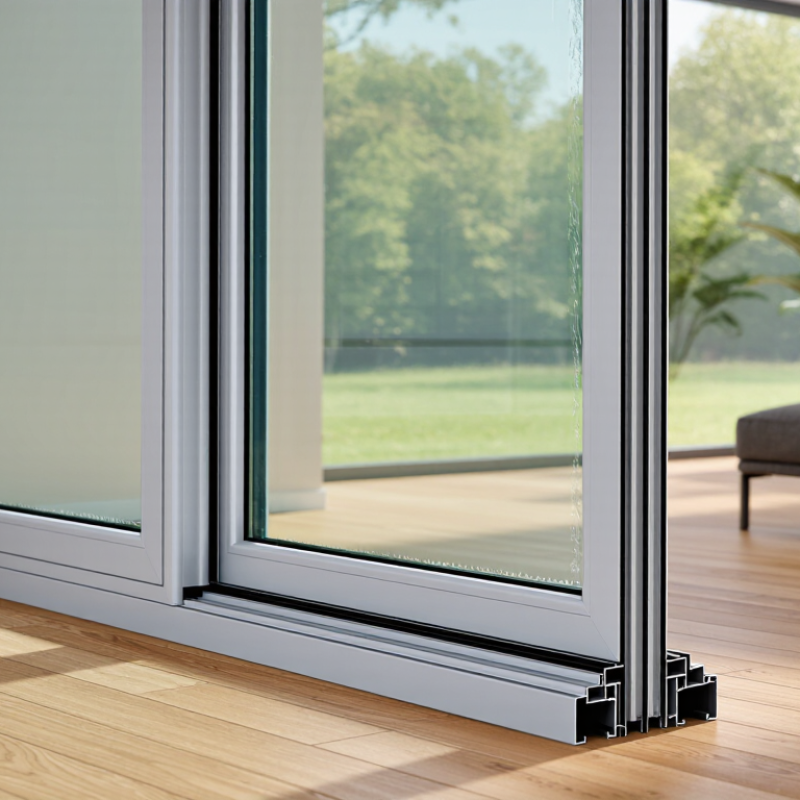
Thermal break aluminum system windows use two aluminum sections separated by a low-conductivity insulating strip, commonly made from polyamide. The strip interrupts the direct path between the outdoor and indoor frames. Aluminum remains strong and slim, while the break slows heat transfer through the frame. It does not stop heat movement entirely.
Look at a cutaway section and the design becomes easier to understand. The exterior frame faces rain and sun; the interior frame meets the room. Between them, the insulating strip is mechanically joined to both sides.
Seals around the sash help limit drafts and water entry, while drainage channels guide collected water outward. Glazing also matters. A well-insulated frame paired with unsuitable glass may still leave a cold surface near the window.
Details count. A narrow strip, poor seals, or careless installation can reduce real-world performance. The window’s rated values, glass specification, and installation method should be considered together. In a home, the difference may show near a winter window: less chill at the frame and fewer cold drafts. But results vary with climate and building conditions. It is easy to focus on the frame alone. That is an incomplete way to judge the whole window.
How Thermal Break Technology Reduces Heat Transfer
Why Choose Thermal Break Aluminum System Windows?
Aluminum conducts heat readily, so an unbroken frame can carry outdoor temperatures indoors. Thermal break technology interrupts that path with a less conductive material between the frame’s inner and outer sections. On a cold morning, this can help the room-facing frame feel less chilly. Not magic. It reduces heat transfer through the frame, but it does not stop heat moving through glass, seals, or surrounding walls.
The difference depends on the complete window. A well-designed thermal break, paired with suitable glazing and tight weather seals, can support more stable indoor temperatures and reduce drafts near the frame. It may also keep interior surfaces warmer, lowering the chance of condensation when indoor air is humid. The detail matters: a narrow or poorly placed break may perform differently from a carefully engineered one. Installation matters, too. Even a capable window can lose effectiveness if gaps around the opening are left unsealed.
When comparing systems, look beyond the phrase “thermal break.” Ask how the frame is constructed and consider tested whole-window performance, not just the aluminum profile. Local climate, window orientation, and indoor humidity all influence results. It is easy to overstate the benefit; the frame is only one part of the building envelope. A useful choice starts with the actual room conditions, not a promise of perfect comfort.
Why Choose Thermal Break Aluminum System Windows? — How Thermal Break Technology Reduces Heat Transfer
| Window Element or Heat-Transfer Path | Typical Thermal Conductivity | How Heat Moves | How a Thermal Break Helps |
|---|---|---|---|
| Aluminum frame | Approximately 160–205 W/(m·K) | Aluminum conducts heat readily, so an uninterrupted frame can provide a direct path between outdoor and indoor surfaces. | A low-conductivity insulating strip separates the exterior and interior aluminum sections, interrupting this direct conductive path. |
| Polyamide thermal-break strip | Approximately 0.25–0.35 W/(m·K) for unfilled polyamide | Heat still passes through the strip, but much less readily than through aluminum of the same thickness. | The strip creates a higher-resistance section in the frame. Its material, width, geometry, and connection to the aluminum all affect performance. |
| Still air | Approximately 0.024 W/(m·K) near room temperature | Still air conducts heat poorly; however, movement within a cavity and radiant exchange between surfaces can also transfer heat. | Thermal-break profiles may incorporate chambers, but cavity shape and sealing matter because air conductivity alone does not describe total heat transfer. |
| Unfilled PVC | Approximately 0.16–0.19 W/(m·K) | PVC conducts heat far less readily than aluminum, although complete window performance also depends on profile design and reinforcement. | It provides a useful material comparison: a thermal break reduces the aluminum frame’s conductive path by introducing a much less conductive section. |
| Wood, across the grain | Approximately 0.12–0.20 W/(m·K), depending on species and moisture | Wood generally conducts heat less readily than aluminum. Its conductivity varies with grain direction, density, and moisture content. | Like other low-conductivity materials, it illustrates why separating metal sections with an insulating material can limit frame heat flow. |
| Frame-to-glass edge | Depends on the glazing spacer, frame geometry, and materials | Heat can bypass the main frame path through the glazing edge and spacer, creating a localized thermal bridge. | A thermal-break frame addresses heat flow through the frame; warm-edge spacers and suitable glazing details are also important for the edge area. |
| Whole-window performance | Reported as U-factor or U-value, typically in W/(m²·K) | Whole-window heat transfer depends on the frame, glass, spacers, window size, and tested or calculated configuration. | Compare certified whole-window ratings for the specific product and glazing configuration. A thermal break alone does not determine the final U-factor. |
Note: Conductivity figures are approximate reference values near room temperature; actual values vary by material formulation, temperature, moisture, and test method. Thermal conductivity describes a material, while a window’s U-factor describes heat transfer through the complete assembly.
Main Components and Design Features
Thermal break aluminum system windows combine two aluminum profiles with a low-conductivity polyamide strip between them. This strip reduces heat transfer through the frame, though it cannot stop heat loss entirely. Insulated glass sits inside the frame, held by glazing beads and compressible gaskets. These parts help limit drafts and keep rainwater away from the interior. Drainage channels also matter. They guide moisture toward exterior outlets instead of letting it collect in the sill.
Design details affect everyday performance. A deeper frame can accommodate thicker glazing, while careful corner joints help keep the assembly square. Hardware must match the sash size and weight; an undersized hinge may cause rubbing over time. Look for continuous seals, clear drainage paths, and a thermal break that runs through the frame sections. Small details matter. Still, no single component guarantees comfort. Installation quality, wall insulation, and local climate all influence the result, and these factors are easy to overlook when comparing window specifications.
Tips: Ask for the frame section drawing and glazing details. Check that drainage openings remain clear after installation. Feel for drafts around the sash on a cool, windy day. A slight fitting issue can be frustrating, but it is worth checking early.
Performance Benefits and Potential Limitations
A thermal break separates the inner and outer aluminum frame with a less conductive material, reducing heat transfer through the metal. That can help keep a room more comfortable near the window, especially on cold mornings or in strong afternoon sun. The U.S. Department of Energy’s Energy Saver guidance estimates that window heat gain and loss account for 25–30% of residential heating and cooling energy use. This figure applies to windows overall, not to thermal-break frames alone. The actual improvement depends on the complete window, including glazing, seals, and installation.
There are trade-offs. A thermal break does not prevent drafts caused by poor installation, and the frame alone cannot determine a window’s energy performance. Check independent NFRC ratings for the whole window, including U-factor and solar heat gain coefficient, and compare products suited to the local climate. Also consider frame depth, drainage, and the quality of seals; a visible gap at the sill can undermine an otherwise well-designed unit. Not a cure-all. Performance claims deserve scrutiny, and ratings may not reflect every building condition.
Tip: Ask for the complete NFRC-rated window data, not just frame specifications. Inspect a sample corner and seals, and confirm how the installer will seal the opening.
Common Applications and Selection Considerations
Thermal break aluminum windows are common in homes, offices, schools, and retail spaces where slim frames and broad glazing are desired. A nonconductive strip separates the interior and exterior aluminum sections, slowing heat transfer through the frame. In a sunlit living room, this can make the inner frame feel more comfortable, though glass performance and shading still matter. For busy entrances, consider durable hardware and accessible replacement parts.
Match the window to the wall and climate, not just its appearance. Compare whole-window U-factor, solar heat gain coefficient, air leakage, and water resistance using test data for the complete configuration. Large west-facing panes may need lower solar gain or exterior shading; a north-facing room may benefit from more daylight. Check glazing thickness, opening type, and frame depth against structural loads and acoustic needs. Small details matter.
Installation can determine whether the system performs as intended. Ask how sill drainage, perimeter sealing, and insulation around the frame will be handled. In humid or cold conditions, review condensation risk near corners and hardware. A thermal break reduces one path for heat flow; it cannot fix a leaky joint or poorly selected glass. Project teams sometimes focus too much on frame color before checking these basics.
Why Choose Thermal Break Aluminum System Windows?
Typical frame thermal transmittance ranges by material
Lower U-factor means less heat transfer. A thermal break separates the inside and outside aluminum profiles, improving insulation while retaining aluminum’s strength and slim sightlines. These systems are often considered for homes, offices, and large glazed façades. Values shown are indicative frame-only ranges; actual performance depends on the system, glazing, spacers, and installation. Compare whole-window ratings and check local energy requirements when selecting a window.