Why Do Buyers Choose ARC Coating Technology?
Buyers choose ARC Coating Technology to manage reflections, improve light transmission, and protect optical surfaces in real operating conditions. The acronym commonly means anti-reflective coating, though buyers should confirm the supplier’s exact definition. A coating is not automatically right because its specifications look impressive. Fit matters.
Dr. Angus Macleod, an authority on optical thin films and author of Thin-Film Optical Filters, offers a useful perspective. A practical paraphrase of his work is: “Judge an optical coating by its measured performance in its intended application.” That distinction matters when comparing samples, test methods, and guarantees. Buyers should ask for wavelength-range data, reflectance measurements, durability results, and details about the substrate. They should also check how the coating performs under the intended lighting, temperature, and cleaning conditions. A specification sheet may not reveal every trade-off. There is a catch.
For example, a coated lens can look clear under showroom lights yet show glare near a bright window. A manufacturer’s test report can help explain that difference. So can a sample tested in the buyer’s own assembly. Cost, lead time, repair options, and quality-control records also shape a sound decision. Not every buyer needs the lowest reflectance possible. Some need easier cleaning or stable performance across a wider range of conditions. Buyers should compare evidence, not slogans, and ask what happens when production conditions change. That question is easy to overlook. Choosing ARC Coating Technology is a technical decision, but it also depends on honest communication and realistic expectations.
What ARC Coating Technology Is and How It Works
ARC means anti-reflective coating: a very thin optical layer, or stack of layers, applied to a surface such as a lens, display, or sensor cover. Bare glass sends some light back as glare. ARC changes how light reflects at the boundary between air and glass. When reflected waves meet, they can partly cancel through destructive interference. That is the basic idea.
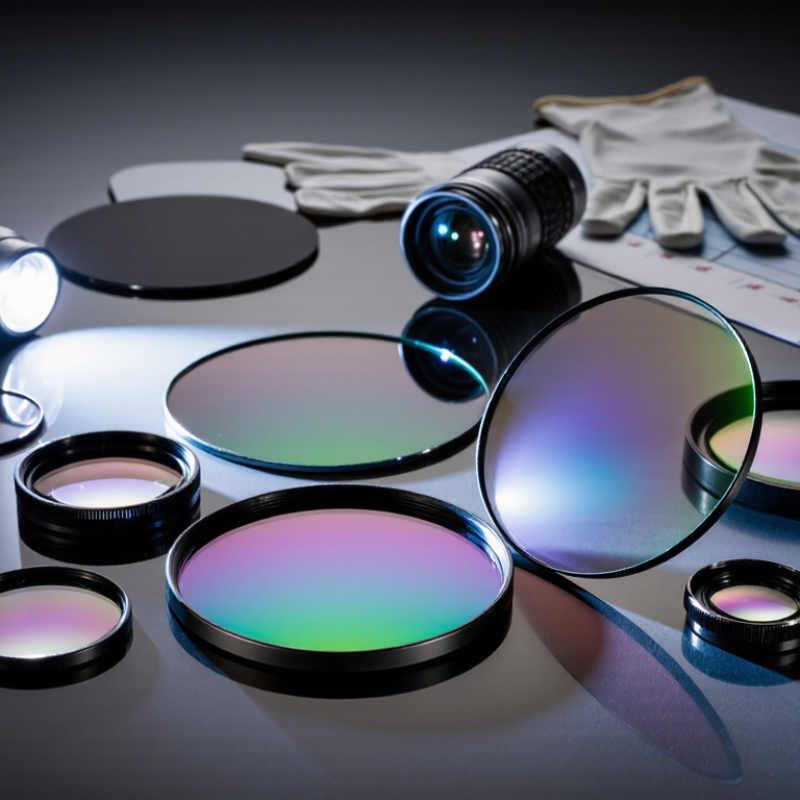
The layers are engineered with specific thicknesses and refractive indices. A single layer can reduce reflections within a limited wavelength range; multiple layers can work across a broader range. They are commonly deposited as films, with thickness controlled during production. Small differences matter. On a camera lens, for example, lower reflections can help preserve contrast when a bright lamp sits near the edge of the frame. But performance depends on wavelength, viewing angle, and the quality of the underlying surface. A coating optimized for visible light may behave differently with infrared light. More layers do not automatically mean better results, either. Buyers should match the coating’s stated performance to the device’s actual use, rather than relying on a general claim of “less glare.”
Why Do Buyers Choose ARC Coating Technology?
What anti-reflective (ARC) coating is and how it works
ARC coatings use thin-film interference to reduce reflected light. At normal incidence and a coating’s design wavelength, uncoated glass with a refractive index of 1.52 reflects about 4.26% of incident light. A quarter-wave magnesium fluoride layer (refractive index 1.38) reduces the theoretical reflectance to about 1.26%. An ideal index-matching layer would reduce it to zero in this simplified model. Actual performance varies with wavelength, angle, materials, and coating design.
Key Stages in the ARC Coating Process
Why Do Buyers Choose ARC Coating Technology?
Key Stages in the ARC Coating Process
An anti-reflective coating is only as dependable as its preparation. Technicians first inspect the substrate for scratches, residue, and edge damage. They then clean it using controlled washing and drying; even a faint fingerprint can weaken adhesion. In vacuum, the prepared part enters a deposition chamber. Depending on the design, thin dielectric layers are added by evaporation or sputtering. Layer thickness matters: a small shift can change the reflected color or reduce performance.
Process control continues during deposition. Optical monitors track layer growth, while batch records capture pressure, temperature, and deposition rate. For context, Fresnel’s equation gives roughly 4% reflection at normal incidence from an uncoated air-to-glass surface with a refractive index near 1.5. That is a useful baseline, not a guaranteed result for every material or viewing angle. After coating, inspection checks appearance and optical performance. ASTM D1003 provides recognized methods for measuring luminous transmittance and haze; durability testing can follow ISO 9211-4. A clean report should state the test conditions, not just a pass result. One practical weakness: inspection may miss defects near edges.
Tips: Compare measured results on the actual substrate, and ask for coating uniformity data across the usable area.
Performance Benefits Buyers Evaluate
Why Do Buyers Choose ARC Coating Technology?
Performance Benefits Buyers Evaluate
Buyers often evaluate anti-reflective coating by checking how much light passes through a surface and how much reflects back. Lower reflection can improve contrast on lenses, display covers, and optical windows. The difference is visible under bright overhead lights, where untreated glass may show distracting glare. Results depend on wavelength, viewing angle, substrate, and coating design. A single specification rarely tells the whole story.
Durability matters just as much as optical performance. Buyers should ask how the coating handles routine cleaning, abrasion, humidity, and temperature changes. Test samples under the lighting and viewing conditions they expect in use. Measure transmission and reflection across the relevant wavelength range, not just at one point. Some coatings perform well in a lab but need careful handling in daily use. That trade-off deserves attention.
Common Applications Across Industries
Anti-reflective (ARC) coatings solve a practical problem: unwanted glare can hide detail and reduce light reaching a sensor. In eyewear, coated lenses can soften reflections from shop windows or headlights. In medical optics, they help imaging systems collect clearer light from lenses and viewing windows. The World Health Organization’s World Report on Vision estimates that at least 2.2 billion people have near or distance vision impairment. ARC coatings do not correct vision, but they can support clearer viewing when applied to suitable optical surfaces.
Solar energy is another major application. Glass covering a solar module reflects some incoming light before it reaches the cells. An ARC layer can reduce that loss. IEA PVPS’s 2025 Snapshot of Global PV Markets estimates that worldwide solar capacity exceeded 2.2 terawatts by the end of 2024. At that scale, even small optical gains matter. Still, performance depends on the glass, coating design, weather exposure, and cleaning conditions.
In vehicles and consumer electronics, ARC coatings appear on display covers, camera optics, and instrument panels. They can make screens easier to read under bright skies and reduce distracting reflections at night. Small details matter. A coating that works well on a phone may not suit a dashboard exposed to heat, dust, and repeated wiping. Buyers should compare measured reflectance, durability testing, and the intended wavelength range—not just a headline performance figure.
| Industry | Typical Components | Common Coating Examples | Buyer Priorities | Why ARC Coating May Be Considered |
|---|---|---|---|---|
| Metalworking | Drills, milling cutters, taps, and forming tools | Titanium nitride (TiN), titanium aluminum nitride (TiAlN), and aluminum chromium nitride (AlCrN) | Wear resistance, reduced tool wear, and performance at elevated cutting temperatures | Cathodic-arc PVD can produce hard, adherent coatings; the suitable coating depends on the tool material and cutting conditions. |
| Automotive | Selected engine, fuel-system, and transmission components | Chromium nitride (CrN), TiN, and other application-specific PVD coatings | Resistance to sliding wear, scuffing, and corrosion where applicable | A thin hard coating can help protect surfaces in contact; component temperature limits and operating conditions must be evaluated. |
| Aerospace | Selected fasteners, actuating parts, and wear-prone components | CrN, TiN, or other qualified PVD coating systems | Controlled friction, wear protection, and process traceability | ARC PVD is considered for hard surface layers, subject to component-specific qualification and applicable aerospace requirements. |
| Medical and Dental Manufacturing | Reusable surgical instruments, dental tools, and manufacturing tools | TiN and other selected hard PVD coatings | Surface durability, cleanability, and compatibility with intended use and reprocessing | Coatings may improve surface wear performance, but biocompatibility, sterilization, and regulatory suitability require application-specific assessment. |
| Molds and Dies | Injection molds, stamping dies, and forming inserts | CrN, TiN, and other coatings selected for the substrate and production process | Reduced adhesive wear, improved release behavior in some applications, and longer service intervals | A hard, thin coating can protect working surfaces; results depend on mold material, preparation, geometry, and operating conditions. |
| Consumer and Precision Hardware | Watch parts, hand tools, fixtures, and decorative metal components | TiN and other colored or functional PVD coating systems | Scratch and wear resistance, appearance, and coating consistency | ARC PVD can provide durable surface finishes; appearance and finish quality depend on substrate preparation and process control. |
| Selection note: Cathodic-arc PVD is commonly used to deposit hard coatings, but the best coating depends on substrate, part geometry, temperature limits, surface-finish requirements, and service conditions. The process is line-of-sight, so part positioning and coverage should be reviewed; arc-generated droplets may also matter where a very smooth finish is required. | ||||
Factors That Guide Buyers’ Coating Choices
Buyers rarely choose an anti-reflective coating by appearance alone. They consider where the coated part will be used and what it must withstand. A lens near a bright window may need reduced glare, while a display used outdoors also needs readable contrast. Fit matters. Substrate material, surface shape, and viewing angle can all affect the result.
Performance should be checked under realistic conditions. Buyers can compare light transmission and reflection data, then inspect samples under the lighting they expect in service. A coating that looks clear in a showroom may show color shifts at an angle. Ask how testing was performed, and whether results apply to the intended surface. Small details matter.
Durability and maintenance also guide the choice. Repeated wiping, dust, and handling can gradually change a surface, so cleaning guidance and abrasion testing deserve attention. A coating may deliver strong optical performance but cost more or require tighter process control. That trade-off is not always obvious from a sample. Requesting consistent measurements across production batches helps buyers judge whether the coating suits both the application and the budget.