What Are Animatronic Dinosaurs?
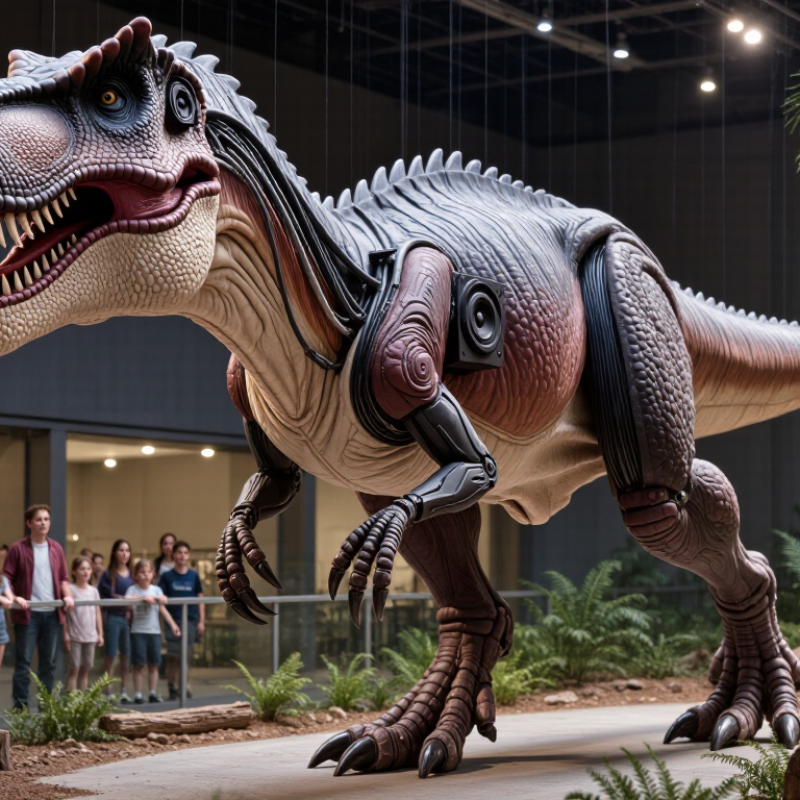
Animatronic Dinosaurs are lifelike mechanical models designed to recreate the movement, sound, and presence of prehistoric animals. They appear in museums, educational parks, films, exhibitions, and family attractions. Their bodies usually combine steel frames, electric servo motors, hydraulic systems, flexible foam, fiberglass, and painted silicone skin. A controlled tail movement can make the entire creature seem alive.
Dr. Jack Horner, a respected paleontologist and dinosaur consultant, once said, “Dinosaurs are not extinct; they are still living in the form of birds.” His observation encourages designers to connect scientific evidence with public imagination. A well-built animatronic model should reflect current fossil research, not only popular movie images. Its posture, skin texture, teeth, and walking pattern require careful interpretation.
Some details remain uncertain. Fossils preserve bones, but they rarely show exact colors, sounds, or social behavior. Designers must make informed choices. Sometimes, they may exaggerate movement for visitors. That can improve excitement, but it may reduce accuracy.
You can hear the difference.
A realistic roar may come from layered animal recordings and digital sound design. Internal sensors can detect nearby movement, triggering blinking eyes or a slow head turn. These effects create memorable experiences, especially for children. Still, technology alone cannot replace scientific responsibility. The best Animatronic Dinosaurs balance engineering, storytelling, visitor safety, and honest education. They should inspire curiosity while making clear where evidence ends and creative interpretation begins.
Definition and Purpose of Animatronic Dinosaurs
Animatronic dinosaurs are programmable robotic figures designed to imitate prehistoric animals. Their movements may include breathing, blinking, jaw motion, tail swings, and sound. A pneumatic or electric system controls these actions. Sensors can also trigger movement when visitors approach. The purpose is not simple decoration. These machines create a physical reference for discussing scale, posture, feeding, and behavior.
Their educational value becomes clearer in museums, science centers, and family attractions. A child can stand beside a moving model and notice its enormous foot, rough skin, or lowered head.
According to the TEA/AECOM Theme Index and Museum Index 2023, the world’s top 25 theme parks recorded 244.6 million visits.
That level of attendance shows why durable, understandable exhibits matter. Animatronic dinosaurs can guide attention quickly, especially in crowded spaces. They still need accurate labels and trained educators.
Professional design should connect movement with accepted paleontological evidence. Designers often study fossil structure, muscle placement, and current research before building a model. Safety also requires controlled motion, stable flooring, guarded mechanical parts, and routine inspections.
The ASTM F24 committee’s amusement-ride standards provide useful safety principles, although an exhibit is not always a ride. That distinction matters. A dramatic roar may attract visitors, but it can also distract from learning. Some reconstructions remain uncertain, and their displays should say so plainly. Science changes. The model should be allowed to change too.
How Animatronic Dinosaurs Are Designed and Built
Animatronic dinosaurs are lifelike machines designed to imitate prehistoric animals. Their movement comes from motors, air systems, sensors, and carefully programmed controls. The design process often begins with fossil evidence, museum research, and detailed anatomical sketches. A paleontology consultant may check the skeleton, posture, and walking pattern. However, fossils rarely reveal every detail. Some decisions require informed interpretation.
Builders usually create a lightweight internal frame from steel or reinforced materials. Technicians then add moving joints, wiring, protective foam, and a durable outer skin. Silicone, flexible rubber, and textured coatings can reproduce wrinkles, scales, and raised scars. Each motor must produce controlled movement without creating excessive noise. The head, jaw, tail, and chest may move separately. Balance matters greatly. A beautiful model can still fail if its feet shift during operation.
Tips: Test one movement at a time. Check cables before public demonstrations. Keep emergency stops easy to reach. Observe the dinosaur from several angles, because stiffness often appears from the side. Allow space around the tail. It can swing farther than expected. Good builders also record unusual sounds and small delays during testing. These flaws are useful clues. A prototype may look impressive, yet its breathing motion can feel too mechanical. That weakness deserves review, not concealment. Steady improvements usually create a more convincing and reliable dinosaur.
Main Technologies Used in Dinosaur Animatronics
What Are Animatronic Dinosaurs?
Main Technologies Used in Dinosaur Animatronics
Animatronic dinosaurs are life-sized robotic figures designed to imitate prehistoric movement, sound, and behavior. Their steel or aluminum frames support the body, neck, tail, and head. During installation testing, technicians check weight balance before adding the outer skin. A heavy tail can change every movement.
Electric motors often control the eyes, jaw, neck, and smaller joints. Larger dinosaurs may use pneumatic or hydraulic systems for stronger lifting actions. These systems create the slow force needed for a rising body or swinging tail. Control software coordinates each movement through programmed timing. It can also respond to sensors, buttons, or distance changes.
Flexible foam, silicone, and reinforced fabric form the skin. Sculpted scales add texture, while hidden speakers produce breathing, calls, or footstep effects. Motion sensors can reduce speed when visitors stand too close. Emergency stops and mechanical limits protect both equipment and people. Regular inspections are essential because cables loosen, joints wear, and outdoor moisture causes problems. Small faults matter.
In practical testing, realistic movement depends on timing more than speed. A blink that starts too late can make the creature look mechanical. A jaw that moves too far may appear uncomfortable. Designers often adjust these details repeatedly, although perfection is difficult. Even sound requires judgment; a loud roar can impress visitors, but it may also overwhelm them.
Where Animatronic Dinosaurs Are Commonly Used
What Are Animatronic Dinosaurs?
Where Animatronic Dinosaurs Are Commonly Used
Animatronic dinosaurs are robotic models designed to move, roar, blink, and react. Motors, sensors, sound systems, and programmed controls create these lifelike performances. Their movements may include breathing, tail swinging, head turning, or slow walking. However, realistic movement does not always mean scientific accuracy.
Museums commonly use animatronic dinosaurs in natural history halls and traveling exhibitions. A moving Tyrannosaurus can help visitors understand its size, posture, and feeding behavior. Touchscreens, fossil replicas, and staff explanations usually make the display more educational. Good exhibits also identify which details are based on evidence and which remain uncertain. That distinction matters.
Theme parks and family entertainment centers often place animatronic dinosaurs along indoor trails, outdoor paths, or ride areas. Shopping centers use smaller models for seasonal attractions and photo spaces. Schools and science events may use portable dinosaurs during lessons or public demonstrations. These settings require careful planning. Operators must inspect cables, joints, sound levels, barriers, and emergency stops. Children may approach suddenly, especially when a model moves or makes a deep sound. Quiet viewing zones can help visitors with sensory sensitivities.
Animatronics can attract attention quickly.
Yet maintenance is easy to underestimate. Dust, heat, moisture, and repeated movement can affect performance. A stiff jaw or delayed sound may break the illusion. More importantly, an impressive display should support learning, not replace it.
How Animatronic Dinosaurs Differ From Real Dinosaurs
What Are Animatronic Dinosaurs?
How Animatronic Dinosaurs Differ From Real Dinosaurs
Animatronic dinosaurs are machines designed to imitate prehistoric animals. Motors move their heads, tails, jaws, and feet. Sensors may trigger a blink or a low electronic roar. Under the skin, metal frames, wiring, and control systems replace bones, muscles, and nerves. A real dinosaur was a living animal. It breathed, hunted, healed, and reacted to its environment.
The differences become clearer during close observation. An animatronic dinosaur repeats programmed movements with predictable timing. Its plastic or silicone skin stays unchanged under bright exhibit lights. A real dinosaur had changing posture, uneven breathing, scars, dirt, and individual habits. Fossils reveal bones and sometimes feather impressions, but they rarely show every detail of color or behavior. Scientists must compare fossils with living animals before making careful reconstructions.
Scale can also mislead visitors. A moving model may look powerful because speakers amplify its call and motors create heavy footsteps. Real movement depended on balance, body weight, muscle strength, and terrain. Those factors cannot be perfectly recreated. Even a well-researched display contains educated guesses. I find that limitation useful, although it can be easy to forget while watching a jaw snap beside you. A museum-quality model should identify reconstructed features clearly and separate evidence from imagination. Its value comes from showing scientific ideas in motion, not from pretending to be a living dinosaur.
What Are Animatronic Dinosaurs? - How Animatronic Dinosaurs Differ From Real Dinosaurs
| Comparison Dimension | Animatronic Dinosaurs | Real Dinosaurs |
|---|---|---|
| Definition | Human-made robotic or mechanical models designed to imitate dinosaur appearance and movement. | Extinct reptiles and birds in the group Dinosauria that lived during the Mesozoic Era. |
| Time of Existence | Can be built and operated today or at any time after manufacturing. | Non-avian dinosaurs lived approximately 245–66 million years ago, from the Triassic through the end of the Cretaceous Period. |
| Energy Source | Usually electricity supplied by batteries, mains power, hydraulic systems, or compressed air. | Obtained biological energy from food through metabolism. |
| Movement | Movement is produced by programmed motors, actuators, hydraulics, cables, or mechanical joints. It may include head, jaw, tail, limb, or body motion. | Movement was controlled by muscles, bones, joints, nerves, and sensory systems. Exact movement patterns are reconstructed from fossils and living animal comparisons. |
| Growth and Development | Does not grow or reproduce. Its size is fixed when manufactured. | Grew from eggs or hatchlings into adults and changed physically throughout its life. |
| Skin and Outer Surface | Often covered with molded rubber, silicone, fiberglass, foam, fabric, or painted synthetic materials. | Had biological skin, scales, feathers, or other tissues. Fossils show that some dinosaur groups had feathers or feather-like coverings. |
| Sound | Uses recorded, synthesized, or electronically generated sounds. These sounds are artistic interpretations rather than confirmed dinosaur vocalizations. | Produced biological sounds, but the exact calls of most extinct dinosaurs are unknown. Fossils can provide limited clues about sound-producing anatomy. |
| Control System | May be controlled by software, sensors, timers, remote controls, or human operators. | Behavior was regulated by a living nervous system and influenced by instinct, learning, environment, and social interactions. |
| Size Range | Can be miniature, life-sized, or larger than life, depending on its design and intended use. | Varied greatly among species, from small bird-sized dinosaurs to giant sauropods measuring more than 30 meters in length. |
| Reproduction | Cannot reproduce; new units must be designed and manufactured. | Dinosaurs reproduced biologically, and fossil evidence shows that many laid eggs in nests. |
| Maintenance | Requires inspection, cleaning, software or control adjustments, battery replacement, and mechanical repairs. | Maintained its body through biological processes such as healing, feeding, and tissue replacement, although it could suffer injury and disease. |
| Movement Speed | Usually limited by motor power, stability, safety requirements, and programming. A display model may move more slowly than a living animal. | Varied by species, body design, size, and behavior. Scientific estimates are based on fossils, biomechanics, trackways, and comparisons with living animals. |
| Scientific Evidence | Represents an educational or entertainment reconstruction and may combine fossil evidence with artistic choices. | Known through fossils such as bones, teeth, footprints, nests, eggs, feathers, skin impressions, and coprolites. |
| Main Purpose | Used for education, exhibitions, film production, themed attractions, research demonstrations, and entertainment. | Lived as part of ancient ecosystems and interacted with other organisms and environmental conditions. |
| Key Limitation | Cannot fully reproduce the biology, behavior, senses, flexibility, or unpredictability of a living dinosaur. | No living non-avian dinosaur can be directly observed today, so many details must be inferred from scientific evidence. |
Note: Animatronic dinosaurs are modern mechanical representations. Scientific reconstructions of real dinosaurs may change as new fossil evidence and research become available.