Top 10 Toiletry Organizer Bags for Travel and Wholesale Buyers
A Toiletry Organizer Bag may look like a small purchase, but it can shape a traveler’s daily routine. UN Tourism’s January 2025 World Tourism Barometer reports 1.4 billion international tourist arrivals in 2024, about 99% of pre-pandemic levels. That figure measures travel, not toiletry-bag sales. Still, it shows why practical packing gear deserves careful attention.
Small details matter. For retailers and wholesale buyers, useful questions are concrete: does the bag stand upright, separate damp items, and clean easily? A snagging zipper or hard-to-wipe lining can turn a neat display into a customer complaint. Design researcher Don Norman writes in The Design of Everyday Things, “Good design is actually a lot harder to notice than poor design, in part because good designs fit our needs so well that the design is invisible.” His observation offers a useful design lens, though it is not specific to toiletry bags. I could not verify a direct quotation from a named specialist in this product category, so I will not invent one.
This guide compares ten options by usable capacity, materials, closure quality, hanging features, and wholesale practicality. Look beyond polished product photos. Check the seams, inspect the lining, and consider whether the compartments fit everyday bottles and brushes. A bulky hook can matter. So can a zipper that catches when the bag is full. These are modest checks, but buyers can miss them when they focus only on price or appearance.
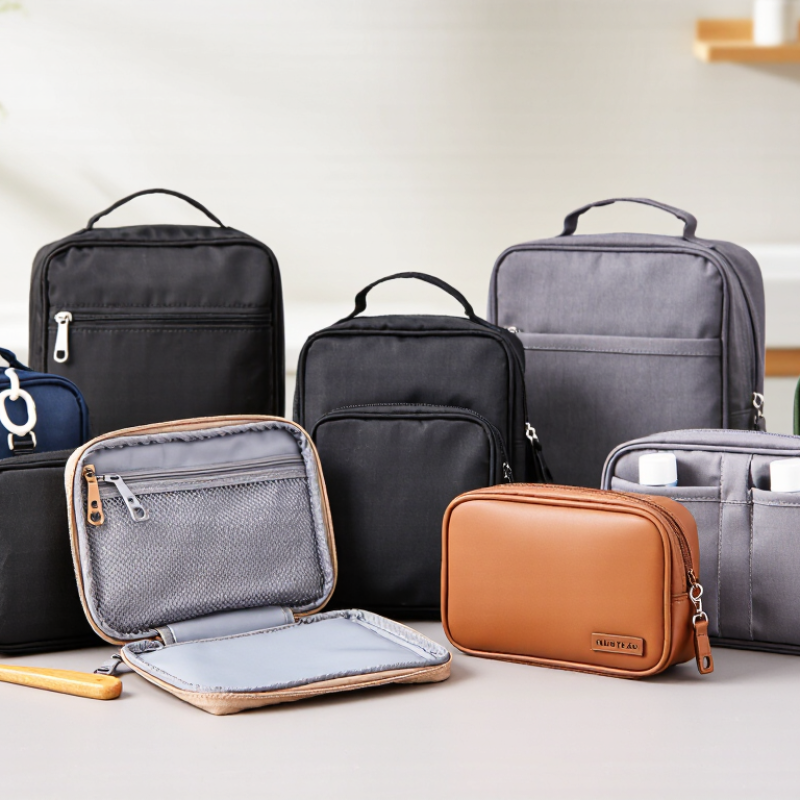
How Toiletry Organizer Bags Serve Travelers and Wholesale Buyers
For travelers, a toiletry organizer bag makes bathroom routines easier in hotel rooms, shared spaces, and cramped carry-ons. Separate mesh pockets help distinguish a toothbrush from a small bottle, while a water-resistant lining can contain minor spills. A hanging hook is useful when counter space is limited. Small details matter. Yet too many pockets can make essentials harder to find, especially in a dim room.
Wholesale buyers should assess practical features, not just appearance. Check zipper movement, seam finishing, lining thickness, and whether compartments fit common travel-size containers. Ask suppliers for samples and inspect them with real items, including a comb, refillable bottles, and a razor. Capacity labels can be misleading. A bag may look roomy but feel bulky when packed, so test the size before placing a large order. Color options and simple customization may also help retailers serve different customer preferences.
Tips: Choose clear or mesh sections for quick visibility, and wipe the lining after leaks. Test it first. For wholesale orders, compare samples from the same production specification and confirm packaging dimensions before shipment.
Top 10 Toiletry Organizer Bags: A Travel Rule to Know
Maximum liquid-container volume for U.S. carry-on travel
For U.S. carry-on travel, liquids, gels, and aerosols must generally be in containers of 100 mL (3.4 fl oz) or less. Travelers can use this limit when choosing an organizer with a clear, quart-size liquids pouch.
Key Features to Compare in a Toiletry Organizer Bag
A toiletry organizer should fit the way people actually pack, not just look spacious in a product photo. Compare its dimensions with common travel bottles, then check whether tall containers can stand upright. A wide opening helps users see small items without emptying the bag. Useful. Separate pockets can keep a toothbrush away from damp items, while elastic loops stop bottles from tipping during transit. Too many compartments, though, may waste space.
Material and construction affect daily use. A wipe-clean lining is practical after a shampoo spill, but “water-resistant” does not mean fully leakproof. Check the zipper for smooth movement and inspect stress points around the handle and seams. A hanging hook can help in a compact bathroom; it is less useful if the bag becomes unstable when loaded. I used to focus too much on pocket count. That was not always sensible.
For wholesale buyers, compare sample quality with production specifications, including fabric feel, stitching, dimensions, and color consistency. Ask how variations are checked between batches, and confirm packaging requirements before ordering. A low unit price can lose its appeal if zippers snag or seams loosen after light use. Request a sample and test it with full-size bottles. Even then, one sample cannot reveal every production issue. A clear inspection checklist makes comparisons more reliable.
Top 10 Toiletry Organizer Bags for Travel and Wholesale Buyers - Key Features to Compare in a Toiletry Organizer Bag
| Organizer Bag Type | Typical Materials | Approx. Capacity | Typical Dimensions (L × W × H) | Organization Features | Liquid Protection | Approx. Empty Weight | Best-Suited Buyers or Uses | Key Wholesale Comparison Point |
|---|---|---|---|---|---|---|---|---|
| Compact Zip Pouch | Polyester or nylon; polyester lining | 1–2 L | 18 × 7 × 12 cm | One main compartment; may include a small inner pocket | Usually splash-resistant exterior; lining may resist minor spills | 50–100 g | Minimalist travelers, gym users, and low-cost travel kits | Check zipper quality, lining seams, and whether the pouch stands upright when filled |
| Hanging Toiletry Bag | Polyester, nylon, or coated fabric with metal or plastic hook | 4–7 L | 24 × 10 × 20 cm (folded) | Multiple zip pockets, elastic loops, and a hanging hook | Often has a wipe-clean lining; not necessarily leakproof | 250–450 g | Hotel stays, shared bathrooms, and frequent travelers | Compare hook strength, pocket access when hanging, and folded closure security |
| Lay-Flat Travel Organizer | Nylon or polyester with mesh panels | 3–5 L | 26 × 16 × 8 cm | Opens wide; divided sections help separate daily-use items | Typically water-resistant fabric with a wipe-clean interior | 180–320 g | Carry-on travelers who want easy access to toiletries | Check that compartments remain usable when the bag is fully packed |
| Clear Toiletry Pouch | TPU or PVC panels with textile trim and zipper | 1–3 L | 20 × 6 × 15 cm | Single visible compartment; contents can be identified quickly | Non-porous panels help contain splashes, but seams and zippers may leak | 80–180 g | Airport screening, short trips, and users who prefer visible contents | Verify material thickness, clarity, odor, seam construction, and applicable market requirements |
| Structured Box-Style Bag | Polyester or nylon with foam padding and lining | 5–8 L | 25 × 14 × 18 cm | Wide opening, structured base, and one or more internal dividers | Often includes a water-resistant lining; protection varies by construction | 300–550 g | Families and travelers carrying full-size personal-care products | Assess shape retention, base stability, and usable volume after dividers are installed |
| Roll-Up Toiletry Organizer | Lightweight polyester or ripstop nylon | 2–4 L | 28 × 12 × 8 cm (rolled) | Several open pockets secured by a roll-and-tie or buckle closure | Fabric is generally splash-resistant at most; pockets may not be sealed | 100–220 g | Backpacking, camping, and travelers seeking a packable option | Compare closure durability, pocket depth, and how securely contents stay in place |
| Double-Compartment Organizer | Polyester or nylon with separate lined sections | 4–7 L | 24 × 12 × 17 cm | Two main compartments separate dry items from cosmetics or grooming tools | One compartment may have a wipe-clean lining; confirm whether it is leak-resistant | 250–450 g | Travelers who carry both toiletries and makeup or grooming accessories | Check divider layout, zipper access, and whether the compartments hold their shape |
| Eco-Focused Recycled-Fabric Bag | Recycled polyester or recycled nylon; lining varies | 2–5 L | 22 × 9 × 15 cm | Usually a simple main compartment with one or two organizer pockets | Depends on fabric coating and lining; recycled content alone does not indicate water resistance | 150–350 g | Retail programs prioritizing recycled materials and sustainability messaging | Request documentation for recycled-content claims and compare fabric durability and finish |
| Premium Leather-Look Organizer | PU-coated synthetic leather with textile lining | 3–6 L | 23 × 11 × 16 cm | Structured interior, zip pockets, and a polished exterior finish | Surface can often be wiped clean; stitching and zipper areas may allow water through | 350–650 g | Gift sets, business travel, and higher-priced retail assortments | Compare coating consistency, odor, surface scuff resistance, and hardware finish |
| Family-Size Toiletry Organizer | Durable polyester or nylon with reinforced handles | 8–12 L | 30 × 16 × 22 cm | Large central compartment, several pockets, and room for multiple users’ items | Commonly uses a wipe-clean lining; a water-resistant finish is not the same as waterproofing | 450–800 g | Family vacations, group travel, and larger personal-care kits | Check handle reinforcement, loaded-bag comfort, and access to items at the bottom |
Note: Dimensions, capacities, and weights are typical estimates for these general bag styles, not specifications for a particular product. Actual measurements and liquid protection vary by design, materials, and construction. Buyers should confirm samples, test methods, packing requirements, and applicable import or retail regulations with their supplier.
Ten Toiletry Organizer Bag Styles for Different Travel Needs
Travel routines differ, so a useful collection offers more than one pouch shape. A compact zip pouch suits a toothbrush and a few small bottles. A hanging organizer uses a hook to keep items visible in a shared bathroom. Structured compartments separate brushes from bottles, while a clear-window style makes contents easier to spot. A roll-up bag folds into a suitcase pocket and opens flat on a counter. Small, but useful.
Other needs call for a leak-resistant pouch with wipe-clean lining, or a family organizer with labeled sections for several travelers. A slim flat bag fits beside folded clothes. A modular set lets users separate skincare from grooming tools. A boxy dopp-kit style stands upright and holds taller containers. The tenth option is a soft, expandable pouch, which can handle changing packing lists but may lose its shape when lightly filled. No style fits everyone.
For wholesale buyers, compare zipper movement, lining seams, handle strength, and how easily each bag can be cleaned. Check samples with travel-sized bottles and full-size brushes; empty bags can hide awkward layouts. A clear panel may improve visibility, but it can show scuffs sooner. I would not assume one “premium” feature matters to every customer. Ask which details travelers actually use, then balance practical construction with price and storage space.
Materials, Sizes, and Construction Methods
For toiletry organizers, material choice affects weight, cleaning, and shape retention. Polyester is lightweight and economical, while denser nylon often feels softer and resists everyday scuffing. A wipe-clean lining helps contain small spills; mesh pockets make brushes and bottles easier to spot. Ask suppliers for fabric weight and lining details, not just a surface description. A glossy coating can look tidy in photographs but may feel stiff when folded. That trade-off matters.
Size should match the travel routine. A compact pouch around 7 by 4 inches suits a few daily essentials, while a case near 10 by 7 inches leaves room for bottles and grooming tools. Hanging designs need enough depth to close without pressing on contents. Check zipper movement, reinforced stress points, and neatly bound seams on a physical sample. Stitching can look even at first glance, yet pull loose when a packed bag is lifted by its handle. For wholesale orders, compare samples for dimensions, color consistency, and lining quality before approving production. Small differences add up.
How Wholesale Buyers Can Choose Suitable Products
Wholesale buyers should define the intended traveler before comparing toiletry organizer bags. A frequent flyer may prefer a slim pouch that fits beside a folded shirt, while a family traveler may need separate sections for several people. Ask what customers usually carry, then compare capacity, weight, and packed dimensions. Bigger is not always better.
Inspect samples with everyday items: a toothbrush, a small bottle, and a comb. Check whether compartments keep damp items apart and whether the lining wipes clean without trapping water in seams. Open and close each zipper repeatedly; look for snagging, loose stitching, and sharp edges around pulls. Small details matter. Test them in person. Product photos rarely show how a bag feels when full.
For wholesale orders, compare material consistency, color options, packaging, lead times, and minimum quantities alongside the unit price. Request samples from the production specification you plan to order, since a polished sample may not reflect every batch. A lower price can be less attractive if the lining tears or dimensions vary. No checklist removes every guess; buyer preferences can shift by season and market. Start with a manageable assortment, gather retailer feedback, and adjust the next order using what customers actually use.