10 Best Video Entry Phone Manufacturers for Global Buyers
The global Video Entry Phone market is moving beyond simple door communication. MarketsandMarkets reports strong growth in video intercom demand, driven by smart buildings, residential security, and networked access control. Grand View Research also identifies connected home technologies as a major growth area. However, market figures vary because researchers define “video intercom” differently.
That uncertainty matters to global buyers. A polished screen does not guarantee reliable access control. Real performance depends on low-light imaging, echo cancellation, weather resistance, PoE stability, SIP compatibility, and responsive technical support. Imagine a visitor standing outside during heavy rain, while the indoor monitor loses its network connection. Small weaknesses become expensive quickly.
Security technologist Bruce Schneier offers a useful principle: “Security is a process, not a product.” It applies directly to every Video Entry Phone purchase. The strongest manufacturers support firmware updates, audit logs, privacy safeguards, and long product lifecycles. Some also provide ONVIF integration, mobile applications, and emergency communication options.
This guide compares ten leading Video Entry Phone manufacturers for global buyers. The selection considers product experience, technical capability, regional support, installation flexibility, and documented reliability. No manufacturer is perfect. Some systems offer excellent hardware but weaker cloud services. Others provide attractive pricing but limited integration. Buyers should examine local regulations, installer expertise, replacement parts, and total ownership costs before choosing. The best option is not always the most famous one. It is the system that still works clearly, securely, and consistently after installation.
What Is a Video Entry Phone and How Does It Work?
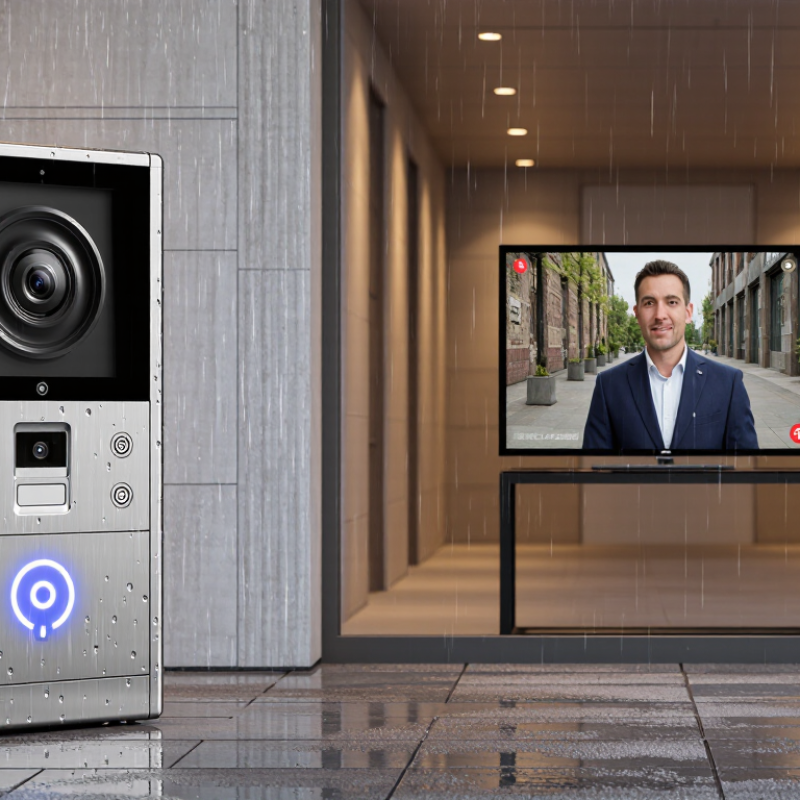
A video entry phone is a communication and access-control device installed at a building entrance. It lets a visitor speak with someone inside while showing a live image. Typical systems include an outdoor camera station, an indoor monitor, a microphone, a speaker, and an electric door release.
When a visitor presses the call button, the camera captures the entrance area. The indoor unit receives an alert and displays the visitor’s face. The resident can speak through the two-way audio channel, then unlock the door by pressing a control button. Some systems use network connections, allowing calls on phones or management screens. However, performance depends on wiring quality, network stability, lighting, and installation distance.
In practical installations, camera height matters. A lens aimed too high may show only a visitor’s forehead. Strong sunlight can also reduce facial detail, while a nearby wall can create audio echo. Professional installers usually test the system at different times of day and check emergency power behavior. They also confirm that the lock, power supply, and entry hardware work together safely.
The process sounds simple. Real sites are less tidy. Weather exposure, thick walls, and shared entrances can create unexpected faults. Buyers should compare image clarity, night visibility, audio quality, operating temperature, maintenance access, and compatibility with existing doors. A reliable video entry phone is not merely a camera with a button; it is a coordinated communication system that must remain usable during ordinary daily traffic.
Key Criteria for Evaluating Global Manufacturers
When comparing video entry phone manufacturers, begin with proven production experience. Ask how many years they have supplied international projects. Request installation records from apartments, offices, and gated communities. A reliable manufacturer should explain failure rates, testing methods, and typical replacement times. Ask for evidence.
Product quality depends on more than camera resolution. Check low-light performance in a dim corridor and voice clarity beside a busy road. Confirm compatibility with common network protocols, access platforms, and indoor monitors. Review enclosure ratings for rain, dust, and temperature changes. Cybersecurity also matters. Look for secure updates, user access controls, and clear vulnerability response procedures. A polished brochure is not enough.
Small details matter. Examine connector strength, mounting holes, screen brightness, and button feedback. Request samples before placing a large order. Compare the sample with the mass-production specification. Verify factory inspections, traceable components, and final functional testing. A dependable supplier should provide manuals, wiring diagrams, training, and responsive technical support. Check warranty terms carefully, including shipping responsibilities and spare-part availability. Lead times, minimum order quantities, and packaging quality can affect the real cost. A low quotation may hide delays or difficult maintenance. No manufacturer is perfect, and I would question any supplier claiming zero defects. Keep written records of technical promises. Independent certification can support trust, but its scope and validity still need checking.
10 Best Video Entry Phone Manufacturers Worldwide
Choosing among the 10 best video entry phone manufacturers worldwide requires more than comparing prices. Global buyers should examine product testing, installation experience, software stability, and local service capacity. A reliable manufacturer usually offers clear wiring diagrams, weather-resistant housings, and practical support for different building types.
The strongest manufacturers design systems for apartments, offices, villas, and controlled-access facilities. Look for sharp night images, echo reduction, visitor recording, and responsive mobile alerts. Compatibility matters too. A device should connect smoothly with common network standards and existing door controllers. Ask about replacement parts, firmware updates, warranty terms, and technical response times. These details often matter more than a polished product photograph.
I have seen attractive systems fail because installers lacked clear instructions. That weakness is easy to overlook. Buyers should request sample units, installation manuals, and documented test results before placing large orders. Check performance in rain, bright sunlight, weak Wi-Fi, and noisy entrances. Manufacturers serving worldwide markets should also explain regional certification, data handling, and support coverage. No shortlist is perfect. A supplier may offer excellent hardware but slower after-sales communication. Another may provide fast support but limited customization. Comparing these trade-offs helps buyers select a dependable video entry phone manufacturer for real operating conditions.
Product Features, Technologies, and Market Applications
10 Best Video Entry Phone Manufacturers for Global Buyers
Product Features, Technologies, and Market Applications
Choosing among the ten best video entry phone manufacturers requires more than comparing screen size and camera resolution. Reliable systems usually combine 1080p video, wide dynamic range, infrared night vision, and echo-canceling audio. A strong unit should also support PoE, encrypted communication, and stable operation during network interruptions. Weather-resistant outdoor panels, often rated around IP65, handle rain, dust, and frequent visitor contact. These details matter more than polished product images.
In apartment buildings, remote door release and multi-unit calling reduce reception workload. Property managers may need mobile alerts, visitor records, and integration with access control software. Hospitals often prioritize clear speech, antimicrobial surfaces, and emergency call routing. Schools need durable panels, controlled permissions, and simple operation for staff. Logistics sites may value wide-angle cameras, badge readers, and fast identification at vehicle gates. Market fit changes the correct specification.
During technical evaluations, buyers should test video under backlighting, not only in bright showrooms. Small failures appear there. Audio delay, weak Wi-Fi, or confusing menus can frustrate users every day. Manufacturers with documented testing, firmware support, installation guidance, and responsive service deserve greater trust. However, no system is perfect. Compatibility with existing wiring may remain uncertain, especially in older buildings. Buyers should request sample units, verify regional privacy requirements, and measure performance at the actual entrance before placing a large order.
10 Best Video Entry Phone Manufacturers for Global Buyers
Feature prevalence across a representative sample of 10 globally marketed video entry phone product lines. The comparison focuses on commonly documented technologies and application requirements rather than company or brand performance.
Two-way audio and IP networking are the most widely available capabilities, while mobile access, night vision, and RFID or keypad entry are also common in residential and commercial installations. PoE and integration with access-control or building-management systems are more application-specific.
How to Choose the Right Manufacturer for Your Project
Choosing among the 10 best video entry phone manufacturers requires more than comparing catalog prices. The right supplier must fit your building, climate, network, and compliance needs.
Market research supports this caution. Grand View Research valued the global smart doorbell market at about USD 2.14 billion in 2023, with strong growth expected through 2030. This expansion attracts capable factories and inexperienced sellers. Ask for recent project references, production capacity, and clear quality-control records. Do not rely on polished brochures alone.
Request a working sample before signing a large order. Test image quality at night, microphone clarity, relay response, mobile notifications, and operation during weak network conditions. Short tests are useful. Longer trials reveal more.
Check whether the manufacturer supports relevant safety, electromagnetic compatibility, and environmental requirements for your destination market. Confirm documented testing under standards such as IEC 62368-1 and suitable IP protection levels. ONVIF compatibility may also simplify integration with existing security systems, but verify the exact profile and firmware version.
According to MarketsandMarkets, the video surveillance market continues expanding as organizations invest in connected security infrastructure. That growth makes software support increasingly important. Ask about update schedules, vulnerability handling, data storage, and technical response times. A low unit price can become expensive after installation. I have seen procurement teams overlook spare parts and language support. That mistake is avoidable, though not always avoided. Evaluate warranty terms, replacement procedures, customization limits, and total ownership cost before selecting a manufacturing partner.
10 Best Video Entry Phone Manufacturers for Global Buyers - How to Choose the Right Manufacturer for Your Project
| Rank | Manufacturer Profile | Best Fit | Typical System Type | Video Capability | Network & Power | Access Functions | Outdoor Protection | Common Compliance Documents | Customization Scope | Indicative MOQ | Typical Warranty |
|---|---|---|---|---|---|---|---|---|---|---|---|
| 1 | Profile A | Large residential developments | IP-based multi-tenant video intercom | 1080p camera; wide-angle viewing; infrared night vision | Ethernet; PoE support; SIP-compatible options | Call button, remote door release, PIN and RFID options | Typically IP65; IK08 available on selected models | CE, RoHS, EMC and low-voltage documentation where applicable | Faceplate, language, logo area, firmware and enclosure color | 50–100 sets | 12–24 months |
| 2 | Profile B | Single-family homes and villas | Two-wire or IP single-home video door phone | 2MP-class camera; adjustable viewing angle; low-light support | Two-wire bus or Ethernet; optional Wi-Fi indoor monitor | Indoor monitor calling, electric lock control and mobile alerts | Typically IP54–IP65 depending on the outdoor station | CE, RoHS and regional radio approvals for wireless versions | Screen size, chime, casing color, button layout and packaging | 20–50 sets | 12 months |
| 3 | Profile C | Commercial buildings and offices | Enterprise IP access-control intercom | Full-HD video; recording integration; configurable call queues | PoE; SIP; ONVIF support may be available by model | RFID, QR code, PIN, remote unlock and visitor management | IP65 outdoor rating commonly specified for entrance stations | CE, FCC, RoHS, EMC and cybersecurity documentation upon request | API, access rules, cloud settings, user interface and branding | 25–100 sets | 12–24 months |
| 4 | Profile D | Hotels and serviced apartments | Room-to-lobby video communication system | HD video; hands-free indoor monitor; optional concierge console | IP networking; PoE; SIP-based integration options | Reception transfer, privacy mode, door release and service calls | IP54–IP65 depending on installation environment | CE, RoHS, EMC and electrical safety test reports where required | Hotel software integration, screen interface, labels and room numbering | 50–200 sets | 12 months |
| 5 | Profile E | Budget-focused housing projects | Basic digital or two-wire video intercom | 720p–1080p camera; standard night vision | Two-wire bus or basic Ethernet; centralized power supply | Call, monitor, unlock and basic RFID functions | Typically IP54–IP65 based on enclosure design | Regional safety, EMC and RoHS documents should be requested | Button labels, cable length, packaging and monitor color | 100–500 sets | 12 months |
| 6 | Profile F | Smart-home and connected-home projects | Cloud-connected IP video doorbell system | 1080p or higher; motion detection; app-based live view | Wi-Fi or Ethernet; low-voltage DC power; optional PoE | Mobile unlock, temporary PIN, notifications and two-way audio | IP65 is common for weather-exposed door stations | CE, FCC, RoHS and wireless certification for the target market | Mobile application, cloud region, firmware, language and packaging | 100–500 units | 12 months |
| 7 | Profile G | Schools, hospitals and public facilities | Controlled-access video communication system | HD video; low-light imaging; event or call logging options | PoE or secure Ethernet; VLAN-compatible network design preferred | Emergency release input, staff stations, RFID and remote management | IP65 outdoor protection; vandal-resistant options may be available | CE, FCC, RoHS, EMC and project-specific safety documentation | Access levels, audit logs, emergency inputs and software integration | 25–100 sets | 12–24 months |
| 8 | Profile H | Renovation and retrofit projects | Legacy-compatible two-wire video intercom | Standard HD video with compatibility-focused indoor monitors | Existing two-wire cabling; gateway options for IP migration | Door release, monitor-to-monitor calls and optional RFID | Typically IP54–IP65 for replacement outdoor stations | CE, RoHS and electrical safety documentation by model | Mounting dimensions, wiring adapters, labels and faceplate design | 20–100 sets | 12 months |
| 9 | Profile I | Premium residential and architectural projects | Design-led IP video entrance system | 1080p or higher; wide dynamic range; infrared illumination | PoE; Ethernet; SIP and selected automation integrations | Mobile access, PIN, RFID, remote unlock and visitor calls | IP65; metal or vandal-resistant housing options | CE, FCC, RoHS, EMC and material declarations where applicable | Custom metal finish, dimensions, engraving, user interface and packaging | 50–200 units | 12–24 months |
| 10 | Profile J | Private-label and OEM distribution programs | OEM/ODM video entry phone platform | 720p–1080p configurations with multiple indoor monitor choices | Two-wire, Ethernet, PoE or Wi-Fi according to the selected platform | Door release, RFID, PIN, mobile application and relay outputs | IP54–IP65 options depending on the product configuration | Market-specific CE, FCC, RoHS, EMC and radio test documentation | Logo, firmware, packaging, language, accessories and enclosure design | 100–1,000 units | 12–24 months |