Top 10 Plate Heat Press Types for Buyers
Demand for personalized textiles and promotional goods has made the Plate Heat Press an important tool for small studios and production floors. Grand View Research’s Custom T-shirt Printing Market report estimated the global market at USD 5.09 billion in 2022 and projected an 11.5% compound annual growth rate from 2023 to 2030. That report describes the print market, not heat-press sales. Still, it helps explain why buyers are comparing equipment for varied materials, order sizes, and workflows.
The right press depends on the job. A flat platen may suit shirts and fabric panels, while a cap or mug attachment handles curved surfaces. Plate size, pressure adjustment, temperature consistency, and timer controls all affect repeatability. Look closely at the heated area. Uneven contact can leave pale edges or incomplete transfers, even when the display shows the target temperature. Small details matter.
This guide compares ten plate heat press types by their practical strengths, common applications, and buyer considerations. Check manufacturer specifications, warranty terms, and safety instructions before purchase. Where possible, test the machine with your own transfer materials; published specifications cannot show every real-world result. One limitation remains: independent, model-by-model performance data is scarce. Buyers should treat marketing claims as claims, then verify them with samples, operating costs, and service support.
Understanding Plate Heat Presses and Their Main Components
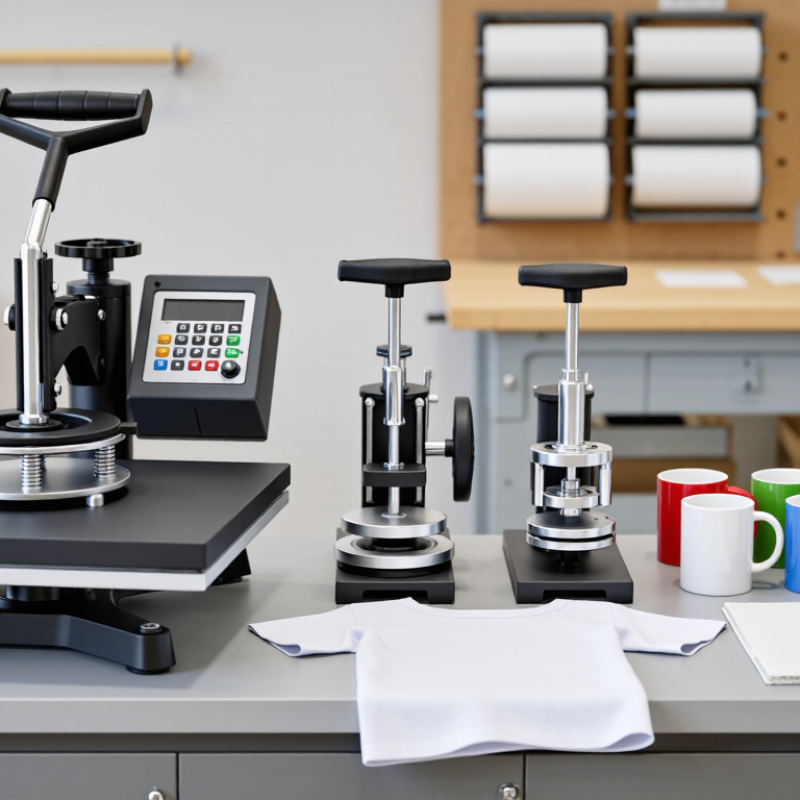
A plate heat press transfers an image by combining heat, pressure, and time across a flat surface. Its main components determine how evenly that transfer happens. The upper heated platen warms the material, while the lower plate supports it and keeps the work area level. A hinged or sliding frame guides the platen down; a loose hinge can cause uneven contact near one edge. Small details matter. The controller sets temperature and dwell time, but its display does not guarantee that every point on the platen is equally hot. Checking heat with a suitable surface probe can reveal cold spots.
Pressure is adjusted through a knob, lever, or pneumatic system, depending on the machine design. A replaceable silicone pad helps cushion the material and accommodate small surface variations. It should sit flat, without cracks or deep impressions. Before a production run, check that the platen closes evenly and that cables and guards are intact. Test one piece. In shop use, a centered sample often looks fine, while a corner may still show weak adhesion. That is a useful reminder: settings are starting points, not proof of a consistent result. Record the material, temperature, pressure, and pressing time when testing, then change one setting at a time.
How Plate Heat Press Types Differ in Design and Operation
Plate heat presses differ most in how the platen opens, applies pressure, and handles repeated work. A clamshell press lifts from the front and needs little bench depth, but its angled opening can make loading thick items awkward. A swing-away design moves the heated platen aside, giving clearer access and more even pressure across flat garments. It needs extra room around the machine. A drawer-style press pulls the lower platen toward the operator, which can simplify positioning, though the sliding mechanism adds parts to maintain.
Dual-platen models let an operator prepare one item while another is being pressed. That can help with steady production, but only if the work area and power supply suit the machine. Pressure systems also vary. Manual presses use a lever and hand-adjusted force; pneumatic models rely on compressed air, while hydraulic systems use fluid pressure. The last two reduce physical effort, but require compatible equipment and routine checks. Small details matter.
Buyers should compare platen size, temperature control, pressure adjustment, and opening clearance against the items they actually make. Automatic-opening models can release the platen after a timed cycle, reducing the need to watch every press. Yet automation does not correct poor alignment or uneven materials. A tidy specification sheet can mislead. Test with representative fabric, transfer materials, and production timing when possible. A press that feels convenient for one sample may be tiring after a full shift.
Top 10 Plate Heat Press Types for Buyers — How Plate Heat Press Types Differ in Design and Operation
| Type | Design and Opening Motion | How It Operates | Typical Best Fit | Main Advantages | Key Considerations |
|---|---|---|---|---|---|
| 1. Manual Clamshell | The heated upper platen is hinged at the rear and lifts upward, opening like a clamshell. | The operator places the item on the lower platen, closes the press by hand, and adjusts pressure with a knob or lever. | Small workshops, occasional production, and buyers seeking a straightforward flat-press setup. | Compact footprint, simple operation, and generally lower equipment cost. | The open platen can limit access to the work area. Repeated manual closing may be tiring during long production runs. |
| 2. Automatic-Opening Clamshell | Uses the same hinged clamshell layout as a manual press, with a release mechanism that opens the platen at the end of a timed cycle. | The operator closes and sets the press; when the cycle ends, the upper platen releases automatically on models with this feature. | Small-to-medium runs where consistent cycle timing and reduced monitoring are useful. | Can reduce the chance of leaving a transfer under heat longer than intended and helps free the operator for other tasks. | Opening mechanisms vary by model. The operator still needs to load, position, and unload each item safely. |
| 3. Swing-Away | The upper platen moves sideways and clears the lower platen before loading or unloading. | The operator swings the heated platen away, positions the item, then returns and lowers the platen for pressing. | Work that benefits from unobstructed access, including thicker items or careful placement of transfers. | Provides open access to the lower platen and keeps the heated platen away from the work area during setup. | Needs clearance beside the machine for the platen’s swing path and usually occupies more bench space than a clamshell. |
| 4. Drawer or Pull-Out Platen | The lower platen slides outward on rails or a drawer mechanism while the upper platen remains in place. | The operator pulls the lower platen out to load and position an item, then slides it back into the pressing area. | Production environments where easy loading access and keeping hands away from the heated upper platen are priorities. | Offers clear access to the lower platen and can make alignment more convenient. | Requires space in front of the machine for the extended platen. Slides and locking mechanisms need regular inspection. |
| 5. Dual-Platen Press | Has two lower platens, commonly arranged side by side, that share one upper heating platen or pressing head. | One item can be prepared on one platen while the other is being pressed; the operator moves the press head or platens between stations, depending on the design. | Repeated production where preparation time can be overlapped with pressing time. | Can increase throughput by reducing idle time between press cycles. | Requires more floor or bench space. Confirm the movement design, usable platen dimensions, and whether both stations are heated. |
| 6. Interchangeable-Platen Press | Uses removable lower platens in different shapes or sizes; the upper platen and frame accept compatible attachments. | The operator installs the appropriate lower platen for the item being processed, then uses the press’s normal closing procedure. | Shops handling varied garment areas or items that need different working surfaces. | One press can serve multiple applications without requiring a separate complete machine for every platen size. | Attachments are not universally interchangeable. Check fit, attachment method, clearance, and pressure distribution for each platen. |
| 7. Pneumatic Clamshell | Uses a clamshell frame with an air cylinder to assist or provide the pressing force. | The operator positions the item and activates the press; compressed air drives the closing action and applies pressure. | Regular production where reduced manual closing effort and repeatable operation are valuable. | Can reduce operator effort and support consistent cycles when air pressure and settings are maintained. | Needs a suitable compressed-air supply. Pressure, safety controls, and maintenance requirements should be checked before purchase. |
| 8. Pneumatic Swing-Away | Combines a sideways-moving upper platen with pneumatic actuation for the pressing action. | The operator swings the platen into position, places the item, and activates the pneumatic pressing cycle. | Higher-volume work requiring open loading access and reduced manual pressing effort. | Combines clear access to the lower platen with assisted pressing force. | Requires compressed air and additional clearance for the swing path. Operators need training on the moving platen and pinch points. |
| 9. Hydraulic Press | Uses a hydraulic system to generate pressing force; frame and platen arrangements vary by machine. | The operator positions the work and activates the hydraulic mechanism, which raises or lowers the platen according to the machine design. | Applications that call for substantial, controlled force or a heavy-duty press configuration. | Hydraulic actuation can provide strong pressing force with less direct manual effort. | Consider machine size, hydraulic-system upkeep, safety features, and the pressure range required for the intended materials. |
| 10. Large-Format Flatbed | Uses a broad, flat platen to accommodate larger workpieces; opening and drive designs differ across models. | The operator positions the material across the platen and applies the set heat, time, and pressure using the machine’s controls. | Large graphics, oversized garments, or workpieces that exceed the usable area of standard platen sizes. | Provides a larger working surface and can reduce the need to reposition oversized items. | Requires more space and may need greater electrical capacity. Check that heat and pressure are even across the full working area. |
Buyer note: These categories can overlap—for example, a press may be both swing-away and pneumatic. Compare usable platen dimensions, temperature and timer controls, pressure adjustment, power requirements, safety features, and available workspace before selecting a machine.
Ten Common Plate Heat Press Types and Their Typical Uses
A manual clamshell press opens upward and suits basic, flat transfers on shirts or tote bags. Swing-away presses move the heated platen aside, leaving more room to position thick garments safely. Drawer-style presses pull the lower platen forward, which can make loading easier. Pneumatic models use compressed air for repeatable pressure in busy production. Hydraulic presses offer strong, even force for thicker materials, but need careful setup. Flatbed presses handle larger, flat items such as fabric panels and signs.
Cap presses use curved platens for decorating hats. Mug presses wrap a heating element around cylindrical drinkware. Plate presses use shaped pads for coated ceramic plates and similar blanks. Multi-function presses swap attachments for different item shapes, useful when jobs vary. Their flexibility has a trade-off: changing attachments takes time, and results can vary if pressure is uneven. These categories can overlap; a flatbed press, for example, may also be pneumatic.
Tips: Match the platen shape to the item, then check its size and thickness. Follow the transfer material’s temperature and timing guidance, and test on a spare blank. Don’t judge a press by pressure alone. Uneven contact, a cool edge, or a slight misalignment can spoil a finished piece. Review those details before choosing.
Key Features Buyers Should Compare Before Choosing
Top 10 Plate Heat Press Types for Buyers
Key Features Buyers Should Compare Before Choosing
A press should fit the jobs you actually run, not just look versatile on a product sheet. Compare platen dimensions against your largest plate, then check whether the heating surface stays even near the edges. Ask for temperature readings at the center and corners. Small gaps can leave pale, under-cured spots. Check pressure adjustment, too; a clear gauge or repeatable setting is more useful than a vague “firm pressure” instruction. Short cycles matter.
Controls deserve close attention. Compare temperature accuracy, timer range, recovery time between cycles, and how easily operators can repeat settings. The U.S. Department of Energy’s 2022 Manufacturing Energy and Carbon Footprint estimates that process heating accounts for about 17% of U.S. industrial energy use. That is broad manufacturing data, not a plate-press benchmark, so measure each machine’s electricity use per finished item before estimating running costs.
Opening style affects workflow and safety. Swing-away designs need clearance beside the machine; clamshell models use less space but bring the hot platen closer to the operator. Review handle force, pinch points, guarding, and access to the emergency stop. One detail gets missed: test with your actual blanks and transfer materials. A convenient sample may not behave like a thick ceramic plate. Even careful buyers can overlook that.
How to Match a Press Type to Your Production Needs
Top 10 Plate Heat Press Types for Buyers
How to Match a Press Type to Your Production Needs
Choose a press around the items you actually make, not the largest product you might someday sell. A compact manual press can suit short runs and varied designs. For steady batches, a pneumatic or hydraulic model may reduce operator effort. Check the platen size against your plate blanks, including room for the transfer sheet. Small batches are different. A press that feels fast in a catalogue may slow production if loading is awkward.
Tips: Measure your most common blanks first. Check the machine’s pressure adjustment, temperature consistency, and timer. Ask how long it takes to reach working temperature. These details matter during a full shift.
Also consider the plate’s shape and thickness. Curved or recessed surfaces may need a matched attachment; a flat platen can leave pale edges or uneven color. If workers change designs often, look for controls that are simple to reset. Test a sample using your actual transfer materials, then inspect the center, rim, and back after cooling. Keep notes on settings and results. One detail is easy to miss: operators may press differently, even with the same machine. A short trial with several users can reveal that. Don’t buy capacity you cannot feed, but leave a little room for growth.