What Are the Top Conductive Rubber Types in 2026?
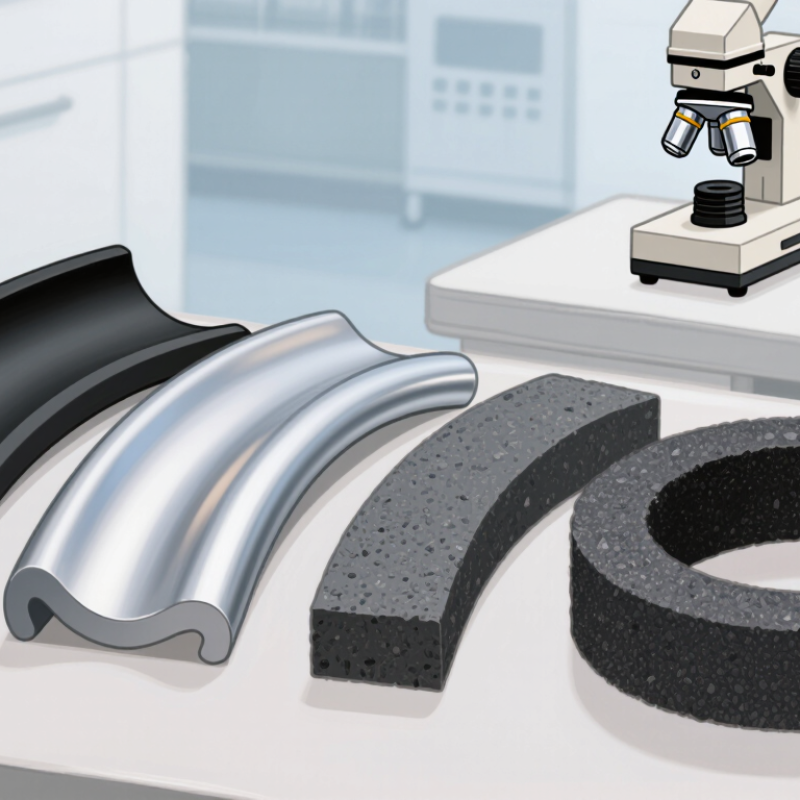
Conductive Rubber is not one material. It is a family of elastomers engineered to carry current while maintaining flexibility, sealing, or vibration control. The leading options in 2026 include carbon-filled silicone, silver-plated silicone, nickel-graphite compounds, and conductive EPDM. Each solves a different problem. A soft EMI gasket, for example, may need shielding and compression recovery; a sensor contact may need stable resistance through repeated flexing.
Market reports offer useful context, but their categories matter. MarketsandMarkets estimated the global conductive polymers market at US$5.1 billion in 2023, with a forecast of US$8.8 billion by 2028. That report covers conductive polymers broadly, not conductive rubber alone. It should not be read as a direct market-size estimate for rubber compounds. For material selection, engineers also look to test methods such as ASTM D991, which addresses electrical resistance and resistivity in rubber products. The test result is only part of the story. Contact pressure, temperature, surface finish, and aging can change performance in the field.
Polymer scientist Dr. James E. Mark’s work emphasizes how composition and structure shape polymer properties. In paraphrase, the practical lesson is simple: the compound and its processing both matter. A datasheet cannot tell the whole story. This guide compares the main conductive rubber types by conductivity, durability, cost, and application fit. Some trade-offs remain messy. That is worth admitting. A material that performs well in a lab may behave differently inside a warm, compressed enclosure.
What Conductive Rubber Is and How Electrical Conductivity Works
What Are the Top Conductive Rubber Types in 2026?
What Conductive Rubber Is and How Electrical Conductivity Works
Conductive rubber is an elastomer blended with conductive fillers, such as carbon black, graphite, or metal particles. The rubber supplies flexibility and a seal; the filler creates pathways for electrical charge. In an unstressed sample, those particles may be separated. Compression can bring them closer, changing the material’s resistance.
Small details matter.
For EMI shielding applications, published engineering data for conductive elastomers commonly show volume resistivity around 0.01–0.1 Ω·cm, though formulations and test conditions vary. ASTM D991 sets out a method for measuring the electrical resistance of conductive and antistatic rubber products. Its measurements help compare samples; they do not guarantee identical performance in a finished gasket.
That distinction is easy to overlook.
A thin seam, uneven compression, or surface contamination can weaken electrical contact even when the compound’s measured resistivity looks suitable. Carbon-filled types are often selected for cost and flexibility, while metal-filled types can offer stronger conductivity but may be heavier or less pliable. Check the test method, frequency, and compression conditions before comparing reported values.
The numbers help, but they are not the whole story.
The Main Conductive Rubber Types Used in 2026
What Are the Top Conductive Rubber Types in 2026?
The Main Conductive Rubber Types Used in 2026
Carbon-black-filled silicone is a common choice for grounding and static dissipation. It bends easily and resists heat, though its electrical resistance is usually higher than metal-filled grades. Silver-, copper-, or nickel-filled silicone provides stronger conductivity for EMI shielding and electrical contacts. Silver-plated aluminum and nickel-graphite fillers can balance conductivity, cost, and corrosion resistance. Fluorosilicone versions suit seals exposed to fuel or oils. The best type depends on the actual environment, not just the filler name.
Market growth offers context, not a rubber-specific ranking. Grand View Research estimated the global conductive polymers market at USD 5.53 billion in 2023, with an 8.8% projected CAGR from 2024 to 2030. That broader category includes materials beyond conductive rubber, so it should not be read as a direct measure of rubber demand. In practice, engineers compare volume resistivity, shielding effectiveness, compression force, and aging results. A seal that looks ideal on paper may lose contact after repeated compression. That detail is easy to miss.
Tips: Match the compound to the enclosure, contact pressure, and temperature range. Check test data from the intended frequency band, and request compression-set and resistance measurements after aging. Do not assume more metal filler always means better performance; it can raise cost and make the compound harder to compress. I would not treat any single “top type” as universal.
How Filler Materials Shape Conductivity and Performance
What Are the Top Conductive Rubber Types in 2026?
How Filler Materials Shape Conductivity and Performance
Conductive rubber depends on its filler network as much as its base polymer. Carbon black is economical and tolerates repeated flexing, but often needs higher loading to create continuous conductive paths. That can stiffen a seal. Silver or silver-plated particles can deliver strong conductivity at lower loading, though cost and corrosion need consideration. Nickel-coated graphite can balance conductivity and shielding performance. Carbon nanotubes and graphene may form conductive paths at low concentrations, but dispersion is unforgiving. Small clumps create uneven resistance. Real parts can disappoint.
ASTM D991-89(2018) describes a test method for volume resistivity in conductive and antistatic rubber products. Compare results only when test conditions match. That detail matters. A resistivity value without test conditions is weak evidence. The USGS Mineral Commodity Summaries 2024 estimated global natural graphite mine output at 1.6 million metric tons in 2023. This indicates an established material supply, not guaranteed compound performance. Ask for resistivity, hardness, compression set, and shielding data after aging. Test the actual molded thickness, too. More filler can lower resistance, but reduce elongation and sealing force. There is no perfect recipe.
What Are the Top Conductive Rubber Types in 2026?
Typical volume resistivity ranges by conductive filler type
Lower volume resistivity means higher electrical conductivity. Silver-based fillers can deliver the lowest resistivity, while carbon-based fillers are often chosen for cost and formulation flexibility. These are indicative ranges for conductive elastomer compounds; actual performance depends on filler loading, formulation, processing, and test method.
Where Different Conductive Rubber Types Are Commonly Used
What Are the Top Conductive Rubber Types in 2026?
Where Different Conductive Rubber Types Are Commonly Used
Conductive rubber is chosen for the job it must do, not just its resistance rating. Metal-filled silicone is common in electronic enclosures, where a gasket must block electromagnetic interference and keep out dust. It compresses around seams and access panels. Carbon-filled silicone is often used for static-dissipative pads, rollers, and flexible contacts. Its conductivity is generally lower, but it can suit applications that do not need strong shielding. Small design details matter.
Carbon-loaded EPDM is used in outdoor seals, grounding components, and some industrial flooring. EPDM handles weather and moisture well, though its electrical performance depends on the compound and operating conditions. Conductive fluorosilicone may be considered where fuel or chemical exposure is a concern, but it can cost more and may not fit every environment. Real installations are messier than charts suggest. A gasket that works in a test fixture may behave differently when compressed unevenly.
Tips: Match the rubber to the surface, temperature, and required conductivity. Check resistance after compression, not only on an uncompressed sample. Ask for data on aging and environmental exposure. Keep the contact area clean; paint, oil, or a rough seam can interrupt the electrical path. If the enclosure flexes, test it during movement too.
How to Compare and Select Conductive Rubber Materials
Conductive rubber selection starts with the environment and the contact surface. Silicone suits broad temperature ranges, while fluorosilicone can better tolerate some oils and fuels. EPDM often performs well outdoors against moisture and ozone. Actual compatibility depends on the compound, so check supplier data against the fluids and temperatures in your application. Names alone are not enough.
Compare electrical resistance, shielding performance, compression set, and hardness. Carbon-filled compounds can offer durable conductivity, while metal-filled options may provide lower resistance. But filler choice affects flexibility, cost, and sometimes corrosion compatibility with nearby metals. Ask for test results using the measurement method relevant to your design. A resistance value without test conditions can mislead. Fit matters.
For an enclosure gasket, test the material at its intended compression, not just as a loose sample. Check whether the seal maintains contact around corners and fasteners. Then expose samples to heat, humidity, and expected chemicals before repeating electrical and compression checks. Small details count. A softer grade may seal uneven surfaces, yet require more careful compression control. I would also test the actual joint; fixture results can look better than field performance.