China Top Race Bike Manufacturers for Global Buyers
Choosing a Race Bike manufacturer in China takes more than comparing catalog photos or quoted prices. Global buyers need to understand how a supplier manages frame design, component selection, production quality, and communication. A polished product page is useful, but it cannot show every detail. Ask how frame materials are specified, which components can be customized, and what inspection steps take place before shipment. These questions help buyers compare manufacturers on evidence rather than broad promises.
Details matter.
This guide introduces key considerations for evaluating China-based race bike manufacturers, including product range, engineering capability, quality control, customization, and export support. It also explains why sample reviews and clear written specifications can reduce avoidable misunderstandings. A lightweight frame may sound impressive, yet fit, handling, durability, and component compatibility matter just as much in real riding conditions. Buyers should check whether a supplier can support their target market and order requirements, instead of assuming that one factory suits every project.
Fit comes first.
No manufacturer should be judged by a single claim or a low initial quote. Lead times, communication, after-sales processes, and consistency between samples and production deserve attention too. Some details may remain unclear until buyers request documentation or test a sample; that is a limitation worth acknowledging. The aim here is not to declare one universal winner, but to help global buyers ask sharper questions and make a more informed shortlist.
Overview of China’s Racing Bicycle Manufacturing Industry
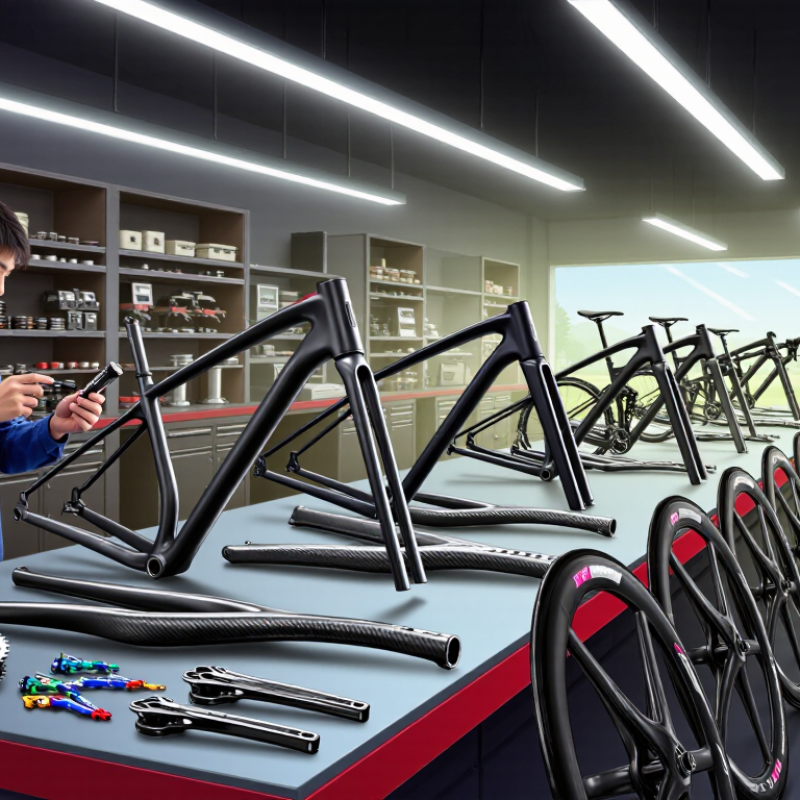
China’s racing bicycle manufacturing industry spans frame production, component sourcing, finishing, and final assembly. Capabilities differ widely between factories. Some specialize in aluminum frames, while others work with carbon fiber, where mold design and careful layer placement affect stiffness and weight. Details matter.
Production often brings several processes together. A frame may move from cutting and forming to welding or carbon layup, then sanding, painting, and inspection. At assembly, technicians check cable routing, brake alignment, headset fit, and wheel clearance. These small checks can reveal problems before a bicycle is packed for shipment. Testing methods and records, however, are not identical across suppliers.
For global buyers, a useful assessment goes beyond a sample’s appearance. Ask how material batches are tracked, how frame dimensions are checked, and what happens when a defect is found. Review test reports, production schedules, and packaging details against the order requirements. A factory visit can clarify workflow, but one visit does not prove every production run will be consistent. Suppliers may also rely on outside partners for parts or coatings, so responsibilities should be clear in writing. Even with good documentation, communication gaps can happen; build time for sample revisions and confirm specifications before production begins.
How Chinese Race Bike Manufacturers Design and Produce Their Bicycles
Chinese race-bike design often starts with a fit brief, target weight, and intended race conditions. Engineers then model frame geometry and stress paths before cutting carbon sheets or shaping metal tubes. Small changes matter: a few millimeters at the head tube can alter handling. Not just appearance.
The China Bicycle Association reported 48.83 million bicycles produced by above-designated-size manufacturers in 2023; this indicates manufacturing scale, not race-bike output. Production still requires product-specific checks. ISO 4210-6:2023 defines frame and fork test methods, while UCI road regulations set a 6.8 kg minimum mass for regulated road-race bicycles. These are useful benchmarks, not proof that every model performs equally. A factory may build test frames, inspect bonded joints, and check alignment before final assembly. Technicians also verify shifting, braking, and wheel clearance on completed bikes. Yet carbon layup can vary, and rushed quality checks remain a real risk. Buyers should ask for test records and traceable inspection procedures. A polished prototype is not enough.
Quality Standards, Certifications, and Export Capabilities
For global buyers, a certificate is a starting point, not proof that every race bike meets the same standard. Ask manufacturers for current ISO 4210 test reports covering frames, forks, braking, and fatigue performance. Check that reports match the exact model and material specification. ISO 9001 certification can indicate documented quality-management processes, but it does not certify a bicycle’s performance. Request batch traceability, inspection records, and clear procedures for handling defects. Small details matter: a serial number should connect the finished frame to its production and inspection records.
Export capability also depends on reliable shipping and paperwork. The World Bank’s 2023 Logistics Performance Index ranked China 19th among 139 economies, with a score of 3.7 out of 5. That is useful context for logistics, not a guarantee of product quality or delivery dates. Buyers should confirm packaging tests, spare-parts availability, lead times, and who manages export documents before placing an order. A certificate can look reassuring. It can also be outdated, incomplete, or unrelated to the bicycle being quoted. Ask for evidence, then check it.
How Global Buyers Can Evaluate and Select a Manufacturer
When evaluating a Chinese race-bike manufacturer, look beyond its catalogue and ask what it can repeatedly produce. The China Bicycle Association’s 2023 industry statistics reported 48.83 million bicycles and 42.28 million electric bicycles produced in China. These figures show the scale of the wider supply base, not race-bike capacity. Request model-specific output records, recent production schedules, and traceable quality checks. Ask for proof.
A polished sample alone tells little about how the next 500 frames will perform.
Check test evidence before approving a production order. ISO 4210-6:2023 sets out frame and fork test methods, including fatigue and impact testing; request complete reports that identify the tested model and sample. The UCI road-racing regulations set a 6.8 kg minimum bicycle weight, but that threshold addresses competition rules, not long-term durability or fit. Treat it as one specification, not a quality score.
I would also compare a pilot batch with the approved sample, inspect finish and alignment under consistent lighting, and record any changes to materials or assembly. Supplier paperwork can look convincing; independent verification is worth the extra time.