China Top Machine Tool Manufacturers for Global Buyers
For global buyers, choosing a reliable China Machine Tool manufacturer requires more than comparing catalog prices. A suitable supplier must demonstrate engineering capability, stable production, and consistent after-sales support. This guide introduces leading Chinese manufacturers serving international markets, including companies producing CNC lathes, machining centers, grinding machines, and specialized metalworking equipment.
The evaluation focuses on practical evidence. Buyers should review factory experience, machine accuracy, spindle performance, control systems, and quality inspection procedures. ISO certifications can support credibility, but certificates alone do not guarantee dependable equipment. Production records, export experience, customer references, and clear warranty terms offer stronger insight. A factory floor can reveal much: organized assembly stations, calibrated measuring tools, labeled components, and technicians testing machines under load.
Machine Tool selection also depends on local needs. A high-speed machining center may suit aerospace components, while a rigid CNC lathe may better serve automotive production. Buyers should confirm voltage requirements, software compatibility, installation support, spare-part availability, and operator training before signing a contract. These details often influence long-term value more than the initial quotation.
No shortlist is perfect. Manufacturer capabilities can change, and published specifications may not reflect every production condition. Independent inspections remain wise. Request sample machining, inspect finished workpieces, and compare actual cycle times with quoted figures. The manufacturers discussed here are useful starting points, not automatic guarantees. Careful verification helps global buyers reduce technical risks and build practical, lasting supplier relationships.
China’s Machine-Tool Industry Scale: 2023 Output, Consumption, and Export Data
China’s machine-tool industry remained a major global supply base in 2023.
Industry data estimated total production at about RMB 321 billion. Domestic consumption reached nearly RMB 387 billion. The gap shows strong demand from automotive, energy, electronics, and general manufacturing.
Metal-cutting machines represented the larger share.
Their 2023 production was approximately RMB 206 billion, while consumption approached RMB 270 billion. Metal-forming equipment added about RMB 115 billion in production. These figures reveal a market still supported by factory investment. They also show China’s dependence on selected high-end components and advanced systems.
Exports reached roughly RMB 63 billion across the sector.
Metal-cutting equipment contributed about RMB 47 billion. Metal-forming equipment supplied nearly RMB 15 billion. The export numbers are substantial, but they need careful reading. Export value does not always equal technological leadership. Product mix, pricing, and imported core parts can change the picture. Buyers should examine accuracy, spindle performance, service response, and long-term operating costs. Factory visits and sample testing remain valuable. Data can guide a shortlist. It cannot replace technical verification.
Top Chinese Manufacturers by CNC Capacity, Product Range, and Global Reach
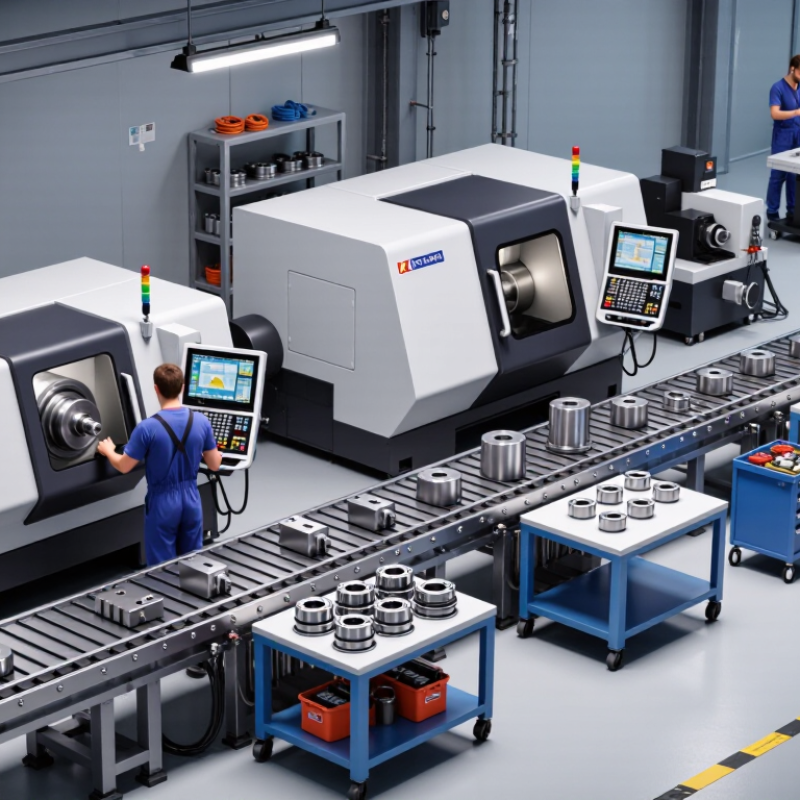
China’s leading machine tool manufacturers serve global buyers through broad CNC capacity and varied production lines. Their facilities may include compact turning centers, five-axis machining systems, vertical mills, horizontal machining centers, and heavy-duty equipment. Capacity matters, but machine count alone can create a misleading impression.
Numbers need context. Buyers should review spindle speed, positioning accuracy, repeatability, working envelope, and tested cycle times. A factory producing hundreds of machines may still struggle with specialized tolerances. Practical evaluation should include sample parts, inspection records, control-system options, and service response times. Ask for evidence.
Product range also reveals manufacturing depth. Some suppliers support automotive parts, aerospace components, medical equipment, molds, and general industrial work. However, a wide catalog does not guarantee equal expertise across every model. I would compare reference projects, operator training, spare-parts access, and commissioning procedures before signing a contract. Small details matter.
Global reach depends on more than export volume. Reliable manufacturers usually provide multilingual documentation, remote diagnostics, installation support, and regional service partners. Buyers should verify packing standards, electrical compatibility, delivery history, and warranty terms. Time-zone coverage helps, but local technical competence matters more. A factory visit can expose workflow problems that brochures hide. I have found that honest discussions about limits often predict better cooperation than impressive capacity claims.
| Manufacturer Capability Group | Core CNC Capacity | Main Product Range | Typical Axis Configuration | Common Spindle Range | Export and Service Reach | Best-Fit Buyer |
|---|---|---|---|---|---|---|
| General-Purpose CNC Machining Specialists | Medium to high-volume production Vertical machining centers, horizontal machining centers, and CNC turning centers | 3-axis and 4-axis machining centers, CNC lathes, production drilling machines, and compact automation cells | 3-axis to 5-axis options; pallet changers available on selected configurations | 6,000–15,000 rpm for standard metalworking applications | Commonly supplied through distributors and regional service partners across Asia, Europe, North America, and the Middle East | Job shops, automotive suppliers, industrial component manufacturers, and contract machining companies |
| High-Speed Precision Machining Specialists | High-speed, tight-tolerance production Focused on precision parts and complex geometries | High-speed vertical machining centers, 5-axis machining centers, mold-making machines, and graphite or non-ferrous machining systems | 3-axis, 4-axis, and simultaneous 5-axis configurations | 12,000–30,000 rpm, with higher speeds available for specialized applications | Strong suitability for international buyers requiring technical documentation, application testing, and process support | Mold and die makers, aerospace subcontractors, medical-device component manufacturers, and precision engineering firms |
| Heavy-Duty CNC Machine Builders | Large-part and high-load machining Designed for high cutting forces and long production cycles | Large vertical lathes, heavy-duty horizontal lathes, gantry machining centers, and large-bore turning systems | 2-axis to 5-axis configurations, depending on machine size and application | 400–8,000 rpm, optimized for large diameters, hard materials, and high-torque cutting | Export projects often include installation supervision, operator training, commissioning, and spare-parts support | Energy equipment, shipbuilding, rail transport, construction machinery, and large industrial fabrication |
| CNC Turning and Turn-Mill Specialists | High productivity for rotational parts Suitable for bar work and chucking operations | Slant-bed CNC lathes, Swiss-type turning machines, mill-turn centers, twin-spindle lathes, and bar-feeding production lines | 2-axis to 9-axis configurations, including live tooling and dual-spindle layouts | 3,000–6,000 rpm for general turning; up to approximately 12,000 rpm for smaller-diameter work | Widely applicable to export production lines requiring standardized tooling, bar feeders, and automated part handling | Automotive, hydraulic, pneumatic, electronics, fastener, and general precision-component suppliers |
| Automated CNC Production-Line Integrators | Continuous and unmanned production Combines machine tools with material handling and process monitoring | Machining centers, robotic loading systems, pallet pools, automated inspection stations, and flexible manufacturing cells | 3-axis to 5-axis machines integrated with robots, pallet systems, or gantry loaders | 6,000–18,000 rpm, selected according to material, tool size, and cycle-time requirements | Usually requires project-based engineering, factory acceptance testing, remote support, and local integration assistance | High-volume automotive, appliance, powertrain, and industrial equipment manufacturers |
| Entry-Level and Cost-Efficient CNC Suppliers | Low to medium production volume Prioritizes accessible pricing and straightforward operation | Compact vertical machining centers, basic CNC lathes, small drilling centers, and educational or prototype machines | 2-axis and 3-axis configurations; optional fourth-axis equipment on selected models | 4,000–12,000 rpm for common steel, aluminum, and non-ferrous applications | Suitable for containerized export, distributor-based sales, and buyers with in-house maintenance capability | Small workshops, technical schools, maintenance departments, prototype shops, and new CNC users |
| Specialized Grinding and Finishing Equipment Builders | Post-machining accuracy and surface finish Supports precision finishing after turning or milling | Cylindrical grinders, surface grinders, centerless grinders, internal grinders, and tool-grinding machines | 2-axis to 5-axis configurations, depending on grinding process and automation level | Grinding wheel speeds commonly range from approximately 1,500–3,600 rpm | International supply often includes process trials, wheel-selection support, measurement guidance, and commissioning | Bearing, tooling, automotive, hydraulic, mold, and precision-machining manufacturers |
| Large-Scale OEM and Export-Oriented Manufacturers | Broad portfolio and multi-market production Offers multiple machine families and application categories | Vertical and horizontal machining centers, CNC lathes, gantry machines, grinding systems, automation, and turnkey lines | 2-axis to simultaneous 5-axis machines, with custom configurations for industrial projects | 400–30,000 rpm across different machine families and application requirements | High global reach Typically supports multilingual documentation, overseas distributors, regional service, and spare-parts planning | International OEMs, tiered suppliers, government-backed industrial projects, and multinational production groups |
How to Compare Accuracy, Repeatability, MTBF, and ISO 230 Compliance
When comparing Chinese machine tool manufacturers, global buyers need more than a brochure’s accuracy claim. Ask how accuracy was measured, at which temperature, and over what travel length. A laser interferometer report can show positioning accuracy, while a ballbar test reveals circular movement errors. Repeatability is different: command the same coordinate repeatedly, then inspect the spread. On a shop floor, a 0.005 mm result may change after warm-up, tool loading, or coolant exposure. Measure under production conditions. That detail matters.
MTBF needs equally careful reading. Request the operating population, observation period, and definition of failure. Ten machines running for six months do not equal a mature reliability record. Check spindle hours, control alarms, bearing replacements, and service response times. Speak with users who run similar materials and cycle times. Their maintenance logs are often more honest than sales tables. Still, user evidence can be incomplete. Record its limits.
ISO 230 compliance should be verified through the exact test parts and clauses cited. Review calibration status, environmental controls, and whether compensation remained active during testing. A compliant report does not guarantee every finished part will meet tolerance. Fixture stiffness, cutting force, operator practice, and thermal drift remain influential. Ask for a witnessed acceptance test using your own workpiece, tooling, and inspection method. Leave room for disagreement. A supplier that explains weak results may be more dependable than one offering perfect numbers.
China Top Machine Tool Manufacturers for Global Buyers: Comparison Framework
A practical reference model for comparing accuracy, repeatability, MTBF, and ISO 230 evidence. The chart uses a normalized buyer-evaluation index; lower values are better for accuracy, repeatability, and MTBF risk, while a higher value indicates stronger documented compliance evidence.
Reference assumptions: positioning accuracy of ±0.010 mm, repeatability of ±0.005 mm, and an MTBF reference point of 20,000 operating hours. ISO 230-2 does not define one universal pass/fail accuracy limit; buyers should request a traceable test report, test conditions, compensation status, and measurement uncertainty. MTBF should be verified from service records and operating conditions rather than treated as a guaranteed value.
Export Certifications, CE Requirements, Warranty Terms, and After-Sales Support
China Top Machine Tool Manufacturers for Global Buyers
Export paperwork deserves the same scrutiny as spindle accuracy. ISO Survey 2022 recorded 1,265,216 ISO 9001 certificates worldwide. However, ISO 9001 confirms management systems, not machining performance or CE compliance. Ask for the certificate scope, audit date, and manufacturing site. For European shipments, request a risk assessment, technical file, operating instructions, and EU Declaration of Conformity. The CE mark is generally a manufacturer’s conformity declaration, not a universal quality certificate. Applicable rules may include the Machinery Directive, EMC, and Low Voltage requirements. The EU Machinery Regulation will apply from 20 January 2027.
Warranty wording often reveals a supplier’s real export experience. A practical contract states coverage length, starting date, included components, response time, and freight responsibility. Twelve months is common, but buyers should negotiate longer coverage for critical systems. Clarify exclusions for coolant, tooling, operator error, and unauthorized modifications. After-sales support should include installation guidance, remote diagnostics, spare-parts availability, and technician response targets. In my experience, a thick certificate folder can still hide weak service. That deserves honest reflection.
Tips: Match every promise to a document. Request serial-numbered parts lists, factory acceptance records, and sample service reports. Check whether software updates remain available after warranty expiration. Ask for one recent export reference, but verify it independently. A low price may become expensive when one sensor waits six weeks. Ask difficult questions early.
Total Cost of Ownership: Pricing, Lead Times, Installation, and Spare Parts
When comparing China’s top machine tool manufacturers, global buyers should calculate total cost of ownership, not only the purchase price. A low quotation can hide higher freight, tooling, commissioning, and training costs. Ask for a complete commercial offer, including export packing, insurance, software, installation, and acceptance testing. Lead times should be confirmed in writing, with clear milestones for production, inspection, shipping, and site commissioning.
Energy also deserves attention. The U.S. Department of Energy reports that motor-driven systems consume more than 70% of industrial electricity. A machine with efficient drives may cost more initially, but reduce operating expenses over years. Spare parts matter too. Request a recommended two-year parts list, local service contacts, and prices for critical components. According to the 2023 World Bank Logistics Performance Index, shipment reliability varies significantly between markets. Therefore, buyers should allow buffer time, especially for customized machines.
Tips: Compare five-year ownership cost. Include electricity, coolant, maintenance, tooling, training, and downtime. Ask for installation drawings before shipment. Check whether technicians can support remote diagnosis. Keep essential sensors and consumables onsite. This feels conservative, perhaps overly cautious, but one delayed encoder can stop a production line. The 2024 Deloitte Global Manufacturing Survey also highlights persistent workforce and maintenance challenges. A technically strong machine still needs trained operators. Review supplier references, factory acceptance records, and response-time commitments before signing.