Skip to content

China Top 10 Veneered Plywood Manufacturers

Choosing a reliable supplier from China’s top 10 Veneered Plywood manufacturers takes more than comparing prices. Buyers need to understand how each company handles veneer selection, core construction, bonding, sanding, and finishing. These details affect appearance, panel stability, and performance in furniture, cabinetry, and interior projects. A smooth sample can look convincing under showroom lights, yet reveal uneven color or surface defects in a larger production run. Details matter.

This guide introduces manufacturers through practical factors, including product range, production experience, quality-control practices, customization options, and communication with international buyers. It also considers whether suppliers can provide clear specifications for thickness, veneer species, grade, and intended use. Such information helps buyers compare offers on a more consistent basis. Still, a ranking is only a starting point. Capabilities and product quality can change, and a manufacturer’s strengths may not match every project. Not every panel fits.

Before placing an order, request current samples and technical details, then confirm the requirements that matter for your application. Ask how the supplier manages veneer matching and checks panel dimensions. These are simple questions, but answers may vary. The following overview aims to support informed supplier research without treating any list as a substitute for direct verification. A careful comparison can reduce surprises, though no introduction can replace inspecting the actual product.
China Top 10 Veneered Plywood Manufacturers

What Veneered Plywood Is and How It Is Made

Veneered plywood combines a real-wood face with a stable plywood core. The core is built from thin wood plies, usually arranged with neighboring grain directions at right angles. This crosswise structure helps limit movement and improves panel stability. A decorative veneer is bonded to one or both faces. It provides the visible grain, color, and texture. Appearance matters. So does construction beneath the surface.

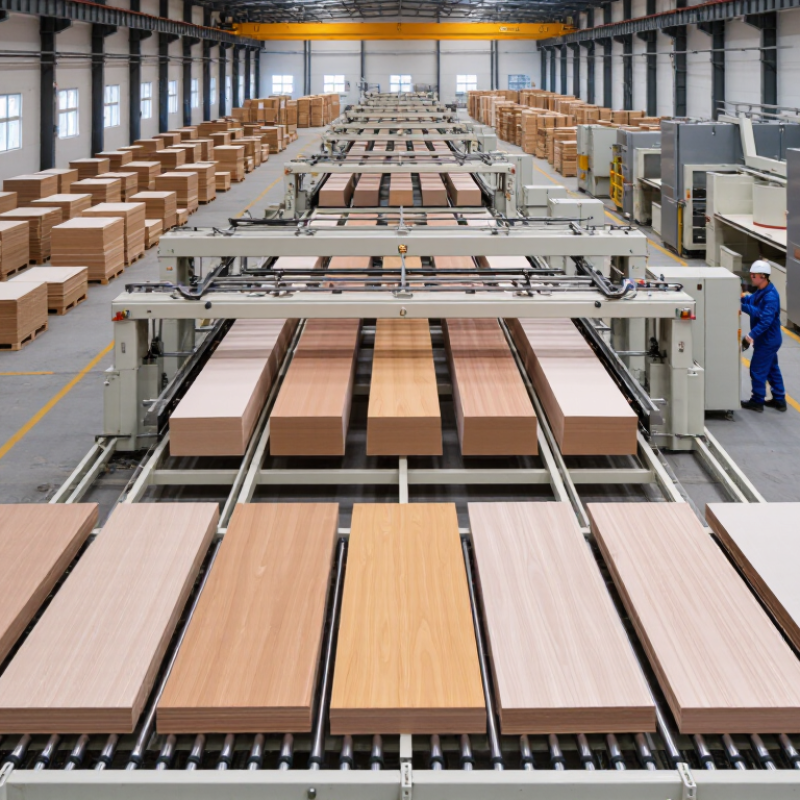
Making the panel starts with selecting and preparing the core and face veneer. Workers spread adhesive evenly, align the layers, then press them under controlled heat and pressure. The cured panel is trimmed and sanded; some grades receive a clear finish, while others remain unfinished for later treatment. Small color shifts between sheets are normal, even when the veneer species matches. That detail can surprise buyers. Veneer thickness, core quality, adhesive choice, and pressing conditions all affect performance, so appearance alone cannot confirm suitability. Check the panel’s stated grade and intended-use specifications, especially where moisture or frequent handling is expected. A neat face is useful, but it does not reveal every flaw inside. Inspect cut edges and sample pieces when possible.
Key Applications and Quality Standards for Veneered Plywood

Veneered plywood combines a stable panel core with a decorative wood surface, making it useful for cabinets, furniture, doors, and interior wall panels. In kitchens, a smooth, well-matched face veneer can create a consistent finish across cabinet doors. For shelving, core stability matters more than a flawless grain pattern. Small details count.

Quality checks should cover more than appearance. Inspect both faces for open splits, bubbles, sanding marks, and uneven veneer color. Check panel thickness at several points, since variation can complicate tight-fitting joinery. Ask for test records on bonding strength, moisture content, and formaldehyde emissions. Standards such as EN 314-2 or EN 636 may be relevant, depending on the product and destination market; confirm the specified grade rather than assuming one standard fits every use.

The application should guide the specification. Interior furniture generally needs reliable surface bonding and a finish suited to daily cleaning. Panels used in damp locations require suitable moisture resistance, but they are not automatically waterproof. That distinction is often overlooked. Before a large order, request samples and compare veneer matching under the lighting used in the finished space. A sample cannot reveal every production variation, so batch inspection remains worthwhile.

How to Evaluate Veneered Plywood Manufacturers in China

When evaluating veneered plywood manufacturers in China, look beyond polished sample boards. Ask how veneer thickness, core construction, and adhesive application are controlled across production. A reliable supplier should explain its inspection steps and provide recent test reports that match the product and intended use. Check the report dates and product specifications, not just the presence of a certificate.

Inspect a sample under natural light. Look for open seams, bubbles, color variation, sanding marks, and uneven edges. Measure panel thickness at several points, then compare the readings with the stated tolerance. Ask about moisture checks and how the factory handles core gaps or repairs. Small defects matter. They can become obvious after cutting or finishing.

Request samples from a regular production batch, if possible, and compare them with the approved sample. A neat sample is not proof of consistent output. It is easy to overlook this. Also confirm packaging, lead times, and how defects are documented and resolved. Factory visits or live production videos can add useful context, but neither replaces written specifications and traceable inspection records. No evaluation is perfect; even detailed checks may miss variation between batches. That uncertainty deserves a clear conversation before placing an order.

China’s Top 10 Veneered Plywood Manufacturers

China’s Top 10 Veneered Plywood Manufacturers should be compared by product consistency, not catalogue size. Veneered plywood pairs a core panel with a thin decorative face, so the bond, veneer thickness, and sanding quality matter. Check sample edges for gaps and faces for bubbles, colour shifts, or visible patches. Small defects often become obvious under showroom lighting.

FAO’s 2022 Global Forest Products Facts and Figures identifies China as the world’s largest producer of wood-based panels, accounting for roughly half of global output. This scale supports a broad supplier base, but it does not prove that any individual factory maintains consistent quality. Compare manufacturers using current test reports, stated core materials, formaldehyde-emission classifications, and batch-level inspection records. Ask how veneer species and thickness are verified. Details matter.

A useful top-ten assessment should also examine production capacity, export experience, lead times, and sample-to-order consistency. Industry reports describe the wider market, not factory performance. That gap deserves attention. I would avoid treating a polished sample as proof of a reliable shipment; checking several production batches is more convincing.

China Top 10 Veneered Plywood Manufacturers - China’s Top 10 Veneered Plywood Manufacturers

Anonymous, standards-based comparison framework. It does not identify manufacturers or represent a verified ranking; supplier-specific performance should be checked against current product documentation and test reports.

No. Comparison dimension Standards-based fact What to verify with a supplier
1 Panel format 1220 × 2440 mm (approximately 4 × 8 ft) is a common commercial panel format, not a universal requirement. Confirm actual length, width, squareness, and available made-to-order sizes.
2 Panel thickness Thickness is product-specific; plywood is manufactured in multiple nominal thicknesses rather than one universal veneer-plywood thickness. Compare declared nominal and actual thickness, measurement method, and applicable tolerance.
3 Intended service conditions EN 636 classifies plywood for use in dry conditions (636-1), humid conditions (636-2), and exterior conditions (636-3). Request the declared EN 636 class and confirm it suits the intended exposure.
4 Bonding quality EN 314-2 defines bond-quality requirements for plywood in three classes corresponding to dry, humid, and exterior service conditions. Check the stated bond class and the test report for the exact panel construction.
5 European formaldehyde emissions The E1 limit commonly referenced for wood-based panels under EN 13986 is 0.124 mg/m³, determined using the EN 717-1 chamber method. Ask for the applicable test method, test date, product scope, and emission result.
6 U.S. formaldehyde emissions The U.S. EPA TSCA Title VI limit for hardwood plywood is 0.05 ppm. For U.S. sales, verify applicable certification, labeling, and documentation for the specific product.
7 Face veneer appearance EN 635-2 provides appearance classifications for hardwood plywood faces, including grades E, I, II, III, and IV. Request the face and back grades, grading standard, and agreed visual reference samples.
8 Construction-product documentation EN 13986 covers wood-based panels for use in construction and specifies relevant characteristics and conformity requirements. Where applicable, check the declaration of performance and product marking for the intended market and use.
9 Dimensional tolerances EN 315 specifies tolerances for dimensions and shape of plywood; permitted values depend on the relevant product requirements. Compare declared tolerances for thickness, length, width, straightness, and squareness.
10 Traceability and test evidence Standards and regulatory declarations apply to defined products and test conditions; results should not be assumed to cover every product from a supplier. Match each certificate or test report to the product code, veneer face, core, adhesive, thickness, and production period.

Reference standards and regulations: EN 636, EN 314-2, EN 635-2, EN 315, EN 13986, EN 717-1, and U.S. EPA TSCA Title VI.

Comparing Product Ranges, Certifications, and Export Capabilities

When comparing China’s top ten veneered plywood manufacturers, look beyond polished catalog photos. Product ranges can differ in veneer species, face grades, core construction, thickness, and panel dimensions. One supplier may offer decorative hardwood faces, while another focuses on engineered cores for furniture or interior fit-outs. Ask for actual samples. Check color variation, veneer matching, sanding, and edge quality under consistent light.

Certifications matter only when their scope matches the product and factory being quoted. Request current documents and confirm the listed site, product category, and applicable requirements. Also ask how adhesive type, emissions testing, and quality checks are documented. A certificate alone does not show how every batch was controlled. Details matter. In practice, paperwork can look tidy while a sample reveals uneven veneer or a rough core.

Export capability is more than a shipping claim. Compare packing methods, moisture protection, pallet dimensions, lead times, and the supplier’s experience preparing export documents. Ask for photos of packed loads and a clear production schedule, especially for mixed sizes or custom specifications. Response speed helps, but it is not proof of dependable delivery. I would treat promised timelines as estimates until order milestones are written down; even careful comparisons leave some uncertainty.

China Top 10 Veneered Plywood Manufacturers — Product Ranges, Certifications & Export Capabilities

Common nominal thickness options for veneered plywood (mm). This product-range snapshot is not a ranking or a comparison of individual manufacturers.

Available thicknesses vary by supplier, panel construction, and destination-market requirements. Certifications and export eligibility are supplier- and market-specific; verify current certificates and test reports directly.