Skip to content

China Top 10 Street Outdoor Light Manufacturers

Street lighting is changing from a basic utility into a connected part of urban infrastructure. The United Nations’ World Urbanization Prospects 2018 estimates that 55% of the world’s population lived in urban areas in 2018, rising to 68% by 2050. That growth puts pressure on cities to plan durable, efficient roads and public spaces. Street Outdoor Light systems now often combine LED optics, surge protection, dimming controls, and remote monitoring. The details matter. A poorly matched optic can send light into windows or leave dark patches on a roadway.

Energy performance also deserves scrutiny. The International Energy Agency’s Energy Efficiency 2017 report estimated that lighting accounted for around 15% of global electricity use. Efficient luminaires can help reduce consumption, but actual savings depend on design, operating hours, controls, and maintenance. A datasheet alone is not proof. Buyers should compare measured efficacy, ingress protection, thermal management, warranty terms, and applicable test documentation.

China has a broad base of lighting suppliers, from large export-oriented brands to specialized factories. This guide introduces ten manufacturers active in the street-lighting market and offers a starting point for supplier research. It is not a certified ranking. Company portfolios, factory capabilities, and product specifications can change, and public claims are not always independently verified. The comparison is imperfect; readers should confirm current test reports, project references, and service arrangements before making a purchasing decision. A useful shortlist begins with evidence, not just a bright photograph.
China Top 10 Street Outdoor Light Manufacturers

What Street Outdoor Lights Are and How They Are Used

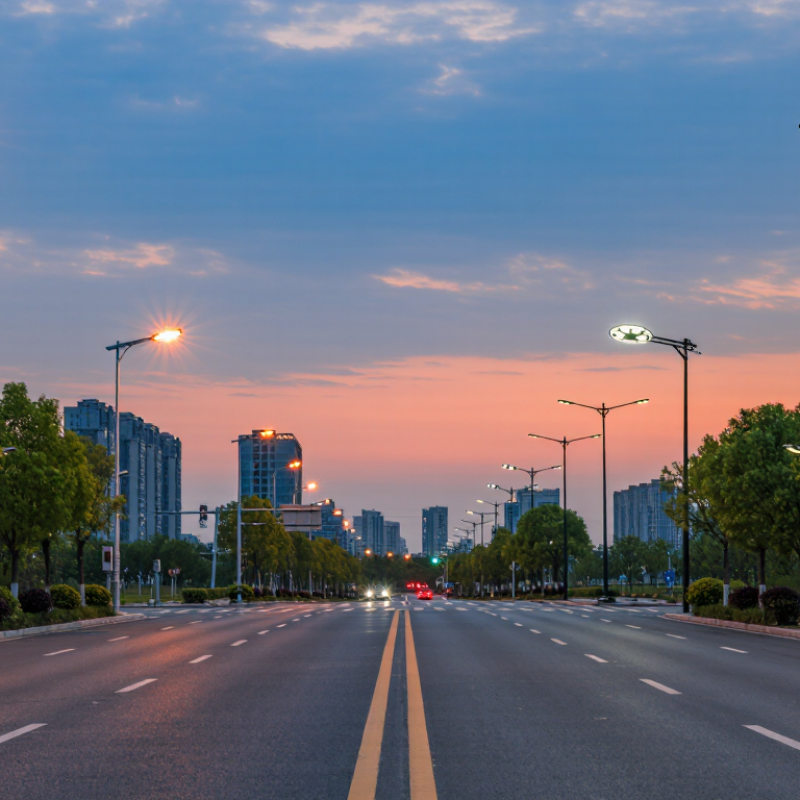
Street outdoor lights are weather-resistant luminaires mounted on poles, walls, or other structures to illuminate roads and public spaces. Their job is practical: reveal road edges, crossings, pedestrians, and obstacles after dark. Distribution matters as much as brightness. A well-chosen optic directs light onto the pavement instead of into nearby homes or drivers’ eyes. Not merely decoration. Installations commonly serve streets, intersections, sidewalks, parking areas, and industrial access roads.

The International Energy Agency’s Energy Efficiency 2023 report estimates that lighting accounts for about 15% of global electricity use. That figure covers all lighting, not streetlights alone, but it shows why efficient operation matters. LED luminaires and timed or sensor-based controls can reduce energy use when designed for local conditions. A careful plan also considers pole height, spacing, glare, color temperature, and maintenance access. Brighter is not automatically safer; excessive or poorly aimed light can create harsh contrast and spill into surrounding areas. Real sites are messy, and a design that looks neat on a drawing may need adjustment after installation.

Tips: Check the light distribution and mounting height, not just wattage. Ask for a photometric layout, then inspect the road at night for dark gaps, glare, and light spilling onto nearby windows.
How China’s Street Lighting Industry Is Organized

China’s street-lighting industry is organized as a connected supply chain, not a group of identical factories. Many manufacturers produce complete luminaires, while specialist suppliers provide LED modules, drivers, lenses, poles, and control systems. Production clusters can make component sourcing and assembly more efficient, but capabilities vary widely. A large catalog alone does not prove engineering depth.

Projects often connect manufacturers with distributors, engineering contractors, and public-sector buyers. Some firms make standard road lights; others adjust optics, housings, or controls for different road widths and mounting heights. Export-oriented suppliers may coordinate photometric files, sample testing, packaging, and shipping. These steps matter. Field performance also depends on installation, heat management, and maintenance access. The industry is not perfectly transparent: claims may omit test conditions or component changes. Compare evidence, not slogans.

Tips: Ask for photometric reports and clear test conditions. Check whether samples match the proposed production model. Clarify who handles installation guidance and replacement parts. Small details count. A tidy drawing is not the whole story.

Criteria for Evaluating Street Light Manufacturers

When comparing China’s street-light manufacturers, request IES photometric files, not just lumen figures. Check roadway uniformity, glare, colour temperature, and delivered light on a sample street layout. IEA data published in 2023 estimates lighting uses about 15% of global electricity, making efficiency a practical procurement concern. The U.S. Department of Energy’s 2017 analysis found LED roadway conversions can reduce energy use by roughly 50%, though savings depend on existing equipment, operating hours, and controls. Numbers need context.

Assess the complete luminaire, including its driver, seals, heat management, surge protection, and corrosion resistance. Ask for independent test reports, warranty terms, and evidence supporting lifetime claims; LM-80 data alone describes LED package performance, not the whole fixture. A polished datasheet can still hide a weak optic. Request a pilot installation and compare measured light levels with the design before placing a large order. Check dimming compatibility and spare-part availability, too. A low purchase price may become costly when drivers fail early or maintenance requires special parts. I would not judge a factory by its showroom sample alone; actual night-time performance matters.

Profiles of 10 Leading Chinese Street Outdoor Light Manufacturers

Profiles of 10 leading Chinese street outdoor light manufacturers are most useful when they show how each company approaches real installation needs. Compare product ranges, engineering support, production capacity, and experience with municipal or industrial projects. Some manufacturers may focus on roadway optics; others may offer solar fixtures, smart controls, or custom pole-and-luminaire packages. These are different strengths, not automatic signs of quality. Check whether published specifications include lumen output, beam distribution, housing material, and ingress protection. Ask for test reports and project references before treating a catalogue claim as verified.

The profiles should also make differences easy to assess. Look for details about LED thermal management, driver options, corrosion resistance, and spare-part availability. A heavy aluminum housing can help manage heat, but weight and coating quality matter too. A polished brochure is not proof of long-term performance. Honestly, comparisons can remain incomplete when manufacturers disclose little about testing or after-sales support. Readers should treat rankings as a starting point, then confirm requirements directly with suppliers and qualified project professionals.

Tips: Request a sample specification sheet and a clear warranty scope. Check photometric files against road width, pole height, and spacing. Small details matter.

Pedestrian-Area Lighting Benchmarks for Outdoor Street Lights

The chart shows maintained average horizontal illuminance benchmarks for EN 13201-2:2015 lighting classes P1–P6. These standard reference values can help compare outdoor lighting designs; they are not measurements or ratings of any manufacturer or product.

How to Compare Manufacturers for a Lighting Project

Compare manufacturers against the actual road, not a catalogue photo. Ask for IES photometric files and check whether the beam pattern fits the road width, pole height, and spacing. A bright fixture can still leave dark patches. Review input power, delivered lumens, glare control, and color temperature together. Request independent test reports, such as LM-79 photometric results, and confirm they match the exact model being quoted. Small discrepancies matter.

Check durability and serviceability in detail. Ask how the housing manages heat, whether the driver can be replaced, and what warranty exclusions apply. For coastal or dusty sites, request relevant corrosion, ingress, and impact test evidence. The International Energy Agency’s 2023 Energy Efficiency report notes that lighting uses about 15% of global electricity. Efficient products matter, but real savings depend on optics, controls, and operating hours. Compare dimming options and calculate energy use using your project’s schedule, not a generic payback claim. A spreadsheet can still miss maintenance costs. Request a sample, inspect its wiring and finish, and run a small field trial before placing a large order. These checks take time. Worth it.

China Top 10 Street Outdoor Light Manufacturers - How to Compare Manufacturers for a Lighting Project

A practical comparison framework for evaluating ten potential suppliers. Use the same project requirements and request supporting documents from every manufacturer; this table does not rank or identify specific companies.

No. Comparison Dimension What to Compare Evidence to Request Project Evaluation Guidance
1 Lighting Design and Photometry Road-lighting layout, luminous distribution, uniformity, glare control, and compliance with the project’s lighting class. Project-specific lighting calculation and luminaire photometric files in IES or LDT format. Compare calculations using the same road geometry, pole positions, mounting height, surface assumptions, and lighting criteria.
2 System Efficacy and Power Delivered luminaire efficacy in lumens per watt, input power, and any dimming or operating profiles. Product datasheet and test report showing the tested luminaire configuration and measurement conditions. Compare complete-luminaire performance rather than LED-chip figures alone; ensure the optical, driver, and control configuration matches the quotation.
3 Ingress Protection Protection against dust and water for the luminaire enclosure and relevant electrical compartments. Test report identifying the tested model and rating under IEC 60529. IP65 indicates dust-tight protection and protection against water jets; IP66 covers powerful water jets. Select the rating for the actual site conditions.
4 Impact Resistance Resistance of the housing, lens, and other exposed parts to mechanical impact. Test report for the relevant luminaire configuration under IEC 62262. For reference, IK08 corresponds to 5 joules, IK09 to 10 joules, and IK10 to 20 joules. Confirm that the tested parts match the proposed product.
5 Materials and Corrosion Protection Housing material, coating system, fasteners, seals, and suitability for coastal, humid, or polluted environments. Material specifications, coating details, and applicable corrosion-test reports. Assess the complete assembly and site exposure; a material or coating claim should be supported by documentation relevant to the project.
6 Driver, Surge, and Electrical Protection Driver model and operating range, power-factor information, over-temperature protection, and surge-protection arrangement. Driver datasheet, wiring diagram, and applicable electrical or surge test reports. Agree on the required surge-protection level and test conditions in the specification; do not compare protection claims without matching test details.
7 Controls and Dimming Compatibility with the project’s control method, dimming schedule, photocell, motion sensor, or central management system. Control-interface specification, wiring diagram, and an operating demonstration or sample test. Confirm interface compatibility and fail-safe behavior before ordering, especially when integrating with an existing control system.
8 Lifetime and Warranty Declared LED and driver lifetime, maintenance assumptions, warranty period, exclusions, and replacement process. Written warranty terms and lifetime declaration stating the applicable temperature and performance-maintenance conditions. Compare like-for-like declarations and clarify whether the warranty covers the complete luminaire, labor, shipping, and replacement parts.
9 Quality Control and Traceability Incoming-material checks, production testing, final inspection, batch identification, and corrective-action process. Quality procedures, sample inspection records, production test checklist, and traceability examples. Ask how the supplier links each delivered batch to its components and inspection records; verify procedures through an audit when appropriate.
10 Compliance, Delivery, and Commercial Terms Market-specific certifications, sample and production lead times, minimum order quantity, packaging, spare parts, and delivery terms. Certificates and declarations relevant to the destination market, plus a written quotation and delivery schedule. Verify certificates against the exact product model and intended market. Compare quotations using the same quantities, specifications, shipping terms, and warranty scope.

Note: Standards references and rating descriptions are general guidance. Confirm current requirements, applicable editions, and project-specific acceptance criteria with the project engineer or relevant authority.