Skip to content

Top 10 Industrial Floor Repair Mortar Suppliers

Industrial Floor Repair Mortar is a small product category with a demanding job: restore worn surfaces while keeping production moving. A repair may face forklift traffic, dropped tools, cleaning chemicals, and repeated washdowns. Buyers therefore need more than a fast-curing claim. They need clear data on bond strength, compressive strength, working time, and resistance to site-specific exposure.

Market context comes from Grand View Research’s Concrete Repair Mortars Market report, which tracks demand and product segments across the broader repair-mortar sector. For technical evaluation, ACI 546R-14, Guide to Concrete Repair, and ICRI guidance offer useful references for assessing substrate preparation and repair practice. These sources do not rank suppliers. They help buyers ask better questions about test methods, installation conditions, and documented performance. A missing test result matters.

Peter H. Emmons, a concrete-repair author and practitioner, has written extensively about repair methods. Without a verifiable source for a verbatim quotation on industrial floor mortar, attributing one to him would be misleading. His work nevertheless reinforces a practical lesson: diagnose the substrate and prepare it properly before choosing the repair material. This Top 10 Industrial Floor Repair Mortar Suppliers overview compares suppliers through product suitability, technical documentation, application support, and availability. The list is a starting point, not a substitute for a site trial. A mortar that performs well on a clean sample may behave differently over a damp, oil-stained slab.
Top 10 Industrial Floor Repair Mortar Suppliers

Industrial Floor Repair Mortars: Uses, Materials, and Key Standards

Top 10 Industrial Floor Repair Mortar Suppliers
Industrial Floor Repair Mortars: Uses, Materials, and Key Standards

Industrial floor repair mortar restores damaged concrete exposed to forklifts, pallet jacks, and washdown water. Typical repairs include spalled joints, chipped loading-bay edges, and shallow depressions that collect grit. Selection starts with the damage and available downtime, not the bag label. Rapid-setting cementitious mortars suit many concrete patches; polymer modification can improve adhesion and reduce water penetration. Epoxy-based repair compounds may suit chemical exposure or thin, high-strength repairs, but moisture and temperature still matter. Small detail, big consequence. Proper preparation is decisive: remove weak concrete, expose sound material, and control dust, oil, and standing water as specified.

Specifications should identify compressive strength, bond performance, working time, and service temperature—not just a generic “industrial grade.” ASTM C928 covers rapid-hardening cementitious repair materials; ASTM C1583 is commonly used to assess tensile bond strength on concrete. ASTM C109 measures cement-mortar compressive strength, though that result alone cannot predict field durability. Confirm current editions and project requirements with the engineer, since standards differ in scope. Ask suppliers for technical data, installation limits, and compatible primers or sealers. A small mock-up can expose mixing or finishing problems before a full shift is lost. I would not assume the strongest mix is always best. Rigid patches beside moving joints can crack again.
EN 1504-3 Strength Classes: R3 at ≥25 MPa and R4 at ≥45 MPa

When comparing industrial floor repair mortar suppliers, check the declared EN 1504-3 strength class, not just a headline strength figure. R3 requires compressive strength of at least 25 MPa; R4 requires at least 45 MPa. These thresholds help screen products, but they do not prove that a mortar suits every floor. Numbers matter.

A loading-bay patch may face forklift wheels, impact, oil spills, and repeated cleaning. Ask suppliers for current technical data and test documentation, then check bond strength, shrinkage, working time, and permitted layer thickness. A high compressive rating alone can mislead: a stiff repair over a weaker, poorly prepared slab may debond. Look for clear substrate-preparation instructions, including removal of loose concrete and control of dust and moisture.

R4 can be appropriate for demanding repairs, while R3 may suit less severe conditions; the engineer or specifier should assess the actual loads and existing concrete. Confirm the required curing conditions and when the repaired area can reopen to traffic. I have seen schedules push repairs too quickly. That deserves a second look. Ask suppliers how their stated performance relates to the intended thickness and site conditions, and compare like-for-like test results rather than relying on sales descriptions.

Top 10 Industrial Floor Repair Mortar Suppliers: Products and Markets

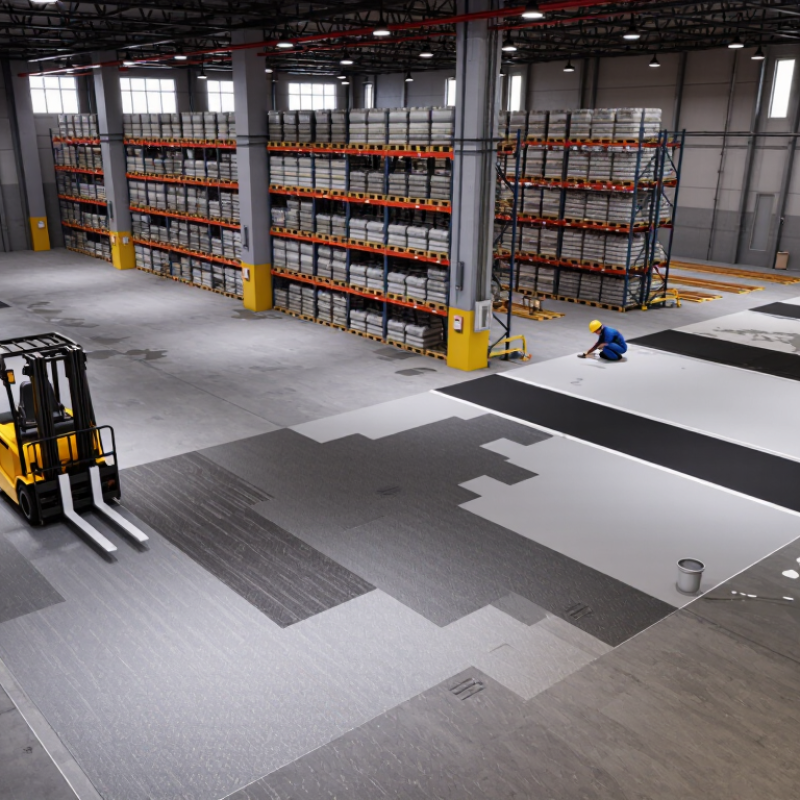
Industrial floor repair mortar suppliers serve factories, warehouses, food-processing sites, and logistics hubs. Their products differ in cure time, abrasion resistance, chemical exposure tolerance, and application thickness. Fast-setting mortars can reopen a loading bay quickly, while polymer-modified systems suit damaged edges and uneven concrete. The right choice depends on the substrate and operating conditions. A mortar that performs well in a dry warehouse may fail near washdown areas. Small details matter.

Market demand sits within a broader construction-chemicals sector. Grand View Research’s Construction Chemicals Market report valued that global market at USD 48.9 billion in 2023 and projected a 6.4% compound annual growth rate from 2024 to 2030. This figure covers more than floor repair, so it is useful context, not a direct measure of mortar sales. Suppliers increasingly compete through technical guidance, local availability, and systems that reduce downtime. For buyers comparing ten suppliers, review product data sheets, installation limits, and repair references from similar facilities. Ask about cure conditions, too. Reports cannot replace a site inspection, and published performance figures may not match a worn, damp slab. That gap deserves attention.

Industrial Floor Repair Mortar: EN 1504-3 Compressive Strength Classes

Minimum compressive strength thresholds for EN 1504-3 concrete repair classes. These standard benchmarks are not supplier-specific product ratings; actual performance depends on the product and application.

Comparing Suppliers by ASTM C928/C928M, Cure Time, and Bond Strength

When comparing ten industrial floor repair mortar suppliers, start with documented compliance to ASTM C928/C928M. The standard covers packaged, rapid-hardening cementitious materials for concrete repairs. Ask for current test records, not just a product-page claim. Check the standard edition and the material class. A compliant mix still needs to suit the slab, traffic, and repair depth.

Cure time can decide whether a production area reopens that shift. Compare the stated time to foot traffic and vehicle traffic separately. Then check the test temperature, water ratio, and repair thickness behind each figure. A mortar tested in warm conditions may behave differently on a cold warehouse floor. Numbers need context.

Bond strength also deserves close review. Request results with the test method, substrate preparation, and curing conditions clearly stated. A high value from one setup may not predict performance on dusty, damp, or polished concrete. Look for evidence from comparable repairs. That matters. Still, a neat test sheet cannot reproduce every jobsite variable. Ask suppliers how they handle mixing windows, edge feathering, and unexpected delays; those details often expose gaps between lab results and field practice.

Selecting a Supplier for Traffic Loads, Exposure, and Repair Downtime

When comparing industrial floor repair mortar suppliers, begin with the traffic the repaired area will actually carry. A pallet jack makes different demands from a loaded forklift turning on hard wheels. Ask for load guidance tied to repair depth, substrate condition, and joint location, not just a general strength figure. Details matter. Request technical data and clarify how the supplier defines its test results.

Exposure can change the choice. A loading bay may see rain, oil drips, hot tires, and repeated washdowns. Ask whether the mortar suits those conditions and what preparation each exposure requires. Chemical resistance is not universal; get written compatibility guidance for the actual cleaning agents or process fluids. Check temperature limits too. A datasheet can look reassuring, but site conditions still decide.

Downtime needs the same scrutiny as strength. Confirm cure times at the temperatures expected on site, and distinguish foot traffic from forklift service. Ask what surface preparation, mixing equipment, and minimum repair thickness are required. A supplier that offers responsive technical support can help crews avoid preventable rework. Still, advertised return-to-service times may assume ideal conditions. A small trial area can reveal awkward mixing or finishing behavior before a full shutdown is scheduled. That extra check may feel unnecessary. It often isn’t.

Top 10 Industrial Floor Repair Mortar Suppliers - Selecting a Supplier for Traffic Loads, Exposure, and Repair Downtime

The entries below are anonymous supplier profiles organized by repair-system specialization, not named companies or a verified ranking. Performance figures are indicative screening ranges; confirm the exact product data, test methods, site conditions, and traffic-release requirements with each supplier.

Profile Typical Repair System Indicative Compressive Strength Typical Repair Depth Indicative Return to Traffic Best-Fit Loads and Exposure Key Supplier Questions
1. Rapid-repair specialist Rapid-setting, polymer-modified cementitious mortar Approximately 30–60 MPa at 28 days Commonly 5–50 mm per application; deeper work may require staged placement Some systems permit light traffic in about 2–6 hours under specified conditions Localized repairs in busy warehouses, loading areas, and production floors where downtime is limited What temperature and repair depth apply to the stated traffic-opening time? Is the time for foot traffic or loaded vehicles?
2. Heavy-load cementitious specialist High-strength, polymer-modified cementitious repair mortar Often approximately 35–60 MPa at 28 days Product-dependent; commonly around 10–100 mm Often about 12–24 hours or longer, depending on product and conditions Forklift routes, pallet-truck lanes, and general industrial floors exposed to repeated wheel loads Can the supplier provide load guidance, bond-strength results, and a repair detail for the existing slab?
3. Deep-patch repair specialist Rapid-hardening, low-shrinkage cementitious mortar Typically specified by product; many systems target at least 30 MPa at 28 days Often suited to repairs about 20–100 mm deep, subject to the product data sheet Some products allow traffic within several hours; deeper or cooler repairs may need longer Spalled joints, broken slab edges, and deeper localized defects under vehicle traffic Is aggregate extension permitted? What are the limits for lift thickness, curing, and early loading?
4. Epoxy mortar specialist Two- or three-component resin mortar, often epoxy with graded aggregate Many formulations report approximately 60–100 MPa, but test methods and formulations vary Commonly around 3–50 mm; confirm allowable thickness and heat limits Often about 12–24 hours for traffic at the stated temperature; full cure may take longer High abrasion or impact zones and areas exposed to selected oils, fuels, or chemicals Which chemicals were tested, at what concentration and temperature? Is the substrate moisture level acceptable?
5. Chemical- and thermal-exposure specialist Polyurethane-cement (urethane-cement) flooring repair system System-dependent; request tested compressive and flexural strength values Often installed in thicknesses of approximately 6–50 mm, depending on system design Many systems require roughly 12–24 hours or more before traffic, subject to temperature Food and beverage processing areas, wash-down zones, and locations with thermal cycling or chemical exposure Does the system tolerate the actual cleaning chemicals, hot-water temperatures, and thermal-shock cycle?
6. Flowable repair specialist Flowable cementitious repair mortar or precision repair grout Often approximately 25–55 MPa at 28 days, depending on formulation Product-dependent; commonly used for formed or contained repairs rather than feather-edge patches Usually at least 24 hours for traffic; verify the specified cure and loading conditions Formed slab repairs, equipment bases, and areas where placement access or consolidation is difficult What are the flow, bleed, shrinkage, and minimum-thickness requirements? Is the repair area suitable for a flowable mix?
7. Joint and edge-repair specialist Rapid-setting cementitious or resin-based joint and arris repair system Varies by chemistry; request compressive, bond, and impact test data Designed for joint shoulders, edges, and localized defects; thickness limits vary substantially May range from several hours to a full day, depending on chemistry and site temperature Damaged construction joints, saw-cut joint edges, and slab transitions crossed by hard wheels Does the repair detail preserve joint movement? What preparation and joint geometry are required?
8. Moisture-tolerant resin specialist Moisture-tolerant epoxy repair mortar or resin system Formulation-dependent; request product-specific strength and adhesion results Typically selected within the manufacturer’s stated patch-depth range Commonly 12–24 hours or longer; temperature and substrate conditions affect cure Repairs where residual substrate moisture is a concern and the specified system permits that condition What moisture test and maximum substrate-moisture condition does the system permit? Is vapor transmission relevant?
9. Exterior and freeze-thaw repair specialist Exterior-grade cementitious repair mortar with specified freeze-thaw performance Product-specific; request strength and durability results for the intended exposure Often available for patch depths from about 10 mm upward; check minimum and maximum lift thickness Typically 6–24 hours or longer before traffic, depending on the product and weather Loading bays, exterior aprons, and slabs exposed to wetting, freezing, or de-icing salts What curing and protection are required in cold weather? Are test results available for the relevant freeze-thaw or salt exposure?
10. Specification and technical-support specialist Multi-system supplier offering cementitious and resin repair options Depends on the selected system; compare certified product data rather than portfolio claims Selected to match the measured defect and the chosen product’s installation limits Depends on chemistry, temperature, repair depth, and the required traffic load Facilities with mixed demands, multiple exposure zones, or a need for a documented repair specification Can the supplier provide a site-specific repair method, compatibility guidance, installer support, and written traffic-release criteria?

Selection note: compressive strength alone does not establish suitability for wheel loads or chemical exposure. Compare bond strength, abrasion resistance, shrinkage, impact resistance, chemical-compatibility data, substrate preparation requirements, and verified traffic-opening criteria. Confirm values in the current technical data sheet and project specification.