10 Tips for Choosing Flat Bottom Pouches?
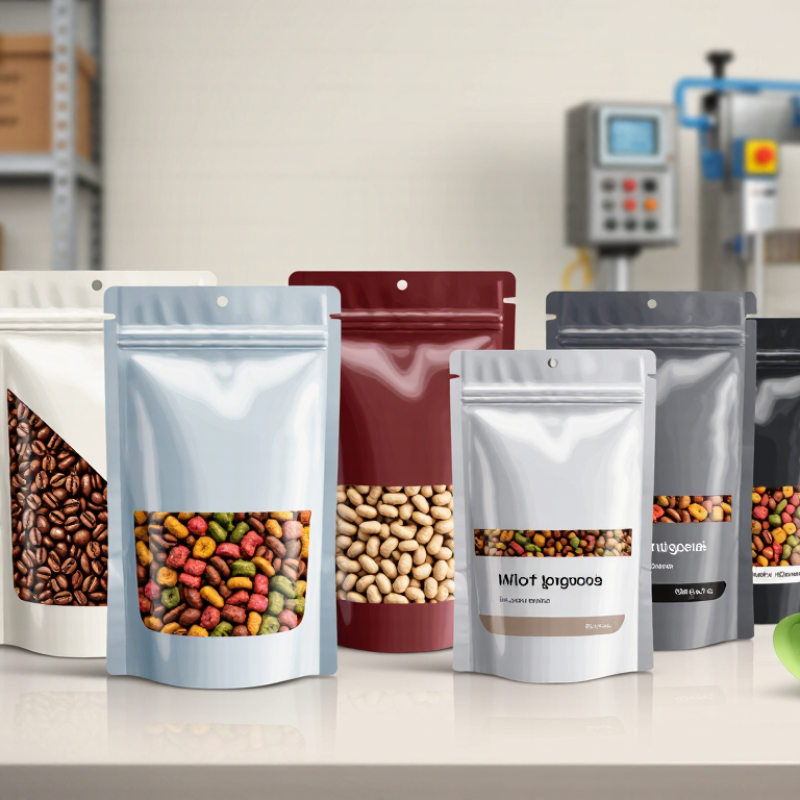
Choosing the right Flat Bottom Pouches is more complex than comparing prices or printing finishes. Product weight, filling speed, shelf life, storage conditions, and consumer handling all matter. A pouch that looks excellent on a sample table may wrinkle, leak, or lose shape during transport.
Industry data supports careful evaluation. Smithers’ report, The Future of Global Flexible Packaging to 2028, identifies continued demand for lightweight, high-performance flexible formats. Grand View Research also reports strong growth in the global flexible packaging market, driven by convenience, material efficiency, and e-commerce distribution. These trends create opportunity, but they also raise expectations for barrier performance, sealing quality, and responsible material selection.
Experience on packaging lines shows that small details often decide success. A 500-gram coffee pouch may need a stronger bottom seal and reliable oxygen protection. A pet-food pouch may require puncture resistance around sharp product edges. A matte surface can improve shelf appearance, yet it may show scuffs after warehouse handling. Practical testing remains essential. Check the pouch on your actual filling machine, not only by hand.
No pouch is perfect.
This guide presents ten useful tips for comparing Flat Bottom Pouches, including film structure, gusset design, closure options, dimensions, printing, and sustainability claims. Data from PMMI packaging reports emphasizes automation, operational efficiency, and machinery compatibility across modern packaging operations. Still, reports cannot replace production evidence. A supplier’s specification may look convincing, but seal tests, drop tests, and aging trials can reveal uncomfortable weaknesses. That is worth remembering.
Define Your Product’s Packaging Requirements
A flat bottom pouch should fit the product, not merely look attractive. Start with weight, volume, shape, and filling speed. A 500-gram powder needs different support from fragile snacks or oily pet food. Measure the filled pouch, including headspace. The first specification is often wrong.
Tip: Test the product in a sample pouch before approving artwork.
The Flexible Packaging Association’s 2024 State of the Flexible Packaging Industry report valued U.S. flexible packaging sales at approximately $39 billion in 2023. Smithers’ The Future of Global Flexible Packaging to 2028 also identifies food and beverage as key growth areas. These figures show strong demand, but performance still depends on product conditions. Specify moisture, oxygen, aroma, light, and grease protection. Then define the required shelf life.
Tip: Ask for barrier data, not vague claims like “high protection.”
Check seal strength, puncture resistance, and drop performance.
Distribution can expose weak choices quickly. Consider stacking, vibration, compression, temperature changes, and warehouse humidity. Confirm whether the pouch will run on existing filling equipment. Film stiffness and seal temperature may affect machine speed.
Tip: Test filled pouches through transport simulation and real production runs.
A pouch can pass a laboratory test yet fail beside a pallet edge. Revisit the design when evidence disagrees with assumptions.
Tip: Leave space for batch coding, opening features, and recycling instructions without weakening the seal.
Compare Flat Bottom Pouch Materials and Barrier Properties
10 Tips for Choosing Flat Bottom Pouches
Compare Flat Bottom Pouch Materials and Barrier Properties
Choosing a flat bottom pouch starts with the product, not its appearance. Different materials protect against different risks.
Polyethylene offers flexibility and reliable heat sealing. It suits products needing moisture resistance and durable inner layers. Polypropylene can provide stronger heat tolerance and a clean, glossy finish. Polyester adds stiffness, print support, and useful puncture resistance.
For oxygen-sensitive contents, consider aluminum foil or metallized film. Foil gives stronger light, oxygen, and aroma protection. Metallized film is lighter, but its barrier performance can decline after creasing. Paper looks natural and feels familiar. However, paper alone rarely provides dependable moisture or oxygen protection.
Layer structure matters more than one material name. A pouch may combine paper, polyester, foil, and polyethylene. Each layer performs a different job. Check oxygen transmission rate, water vapor transmission rate, seal strength, and puncture resistance. Ask for test conditions, because figures can change with temperature and humidity.
Do not trust appearance alone. A shiny pouch is not automatically a strong barrier. In practical evaluations, filled samples should face stacking, drops, friction, and hot storage. Inspect the bottom gusset and seals carefully. Small wrinkles can create weak points.
I would also test the actual product. Powder, oil, and sharp particles behave differently. A material choice that works in the laboratory may disappoint during filling. That is an uncomfortable lesson, but it prevents expensive rework. Sustainability claims also need scrutiny; recyclability depends on the complete structure and local collection systems.
Flat bottom pouch material selection depends on the required protection level. Lower oxygen transmission rate (OTR) and water vapor transmission rate (WVTR) indicate stronger barrier performance. The values shown are representative industry ranges for common laminate structures: OTR measured at 23°C and 50% relative humidity, and WVTR measured at 38°C and 90% relative humidity. Actual performance varies with film thickness, coating quality, seals, and package construction.
Select the Right Pouch Size, Capacity, and Shape
Choosing the right flat bottom pouch starts with the product, not the shelf. Measure the product first. Record its weight, density, particle size, and settling behavior. A 500-gram powder may need more space than 500 grams of compact granules. The pouch should hold the intended quantity without stretching the seams or crowding the closure. Leave practical headspace for clean filling and reliable sealing.
Check width, height, and bottom gusset as a combined system. A wider pouch gives better shelf stability, while a taller pouch may improve visibility. However, excessive height can make the package unstable after opening. The gusset also affects usable capacity; its listed dimensions do not always equal internal volume. Request a filled sample and test it with the real product. Fit matters more than appearance.
Shape should support handling, storage, and display. A square base suits products that need to stand firmly, while softer contents may require a broader footprint. Test the pouch on a shelf, in a shipping carton, and under normal customer handling. Inspect the seal area after filling. Look for wrinkles, trapped particles, and leaning sides. A size chart can mislead. Small trial batches often expose problems that drawings miss. Recheck capacity after settling, because the product may compact during transport. A slightly larger pouch is not always safer; too much empty space can weaken presentation and increase movement inside.
Evaluate Closures, Features, and User Convenience
Choosing flat bottom pouches requires more than checking appearance. The Flexible Packaging Association’s 2024 State of Flexible Packaging report values the U.S. flexible packaging market at nearly 40 billion dollars. That scale reflects demanding performance expectations. Examine ten practical points: zipper strength, seal width, tear-notch position, slider movement, valve placement, handle comfort, gusset stability, corner safety, opening force, and reclosure quality. Small details matter.
A zipper should close with a clear tactile click. A tear notch should open without scattering powder or flakes. For coffee or other aroma-sensitive products, test whether the valve maintains freshness after repeated handling. The pouch should stand steadily on a kitchen shelf, even when partly empty. Research from the Flexible Packaging Association also identifies convenience as a major consumer benefit of flexible packaging. Yet convenience is not automatic. A stiff film, narrow grip, or weak seal can ruin the experience.
Use real product trials, not only laboratory measurements. Ask users to open the pouch with wet hands, gloves, or limited grip strength. Check whether the handle cuts into fingers after carrying several kilograms. PMMI’s 2023 packaging reports highlight the importance of packaging efficiency and user-centered design across consumer markets. Do not ignore imperfect feedback. A closure that works beautifully for testers may frustrate older users. Review material compatibility, seal integrity, and filling-line performance with qualified packaging engineers. Then compare convenience against waste, transport space, and expected shelf life.
Check Printing Quality, Sustainability, and Supplier Reliability
10 Tips for Choosing Flat Bottom Pouches
Printing quality deserves more than a quick visual check. Inspect color consistency across the pouch, especially near folds and sealed edges. Look for sharp text, clean logos, accurate registration, and readable barcodes. Rub the printed surface with a dry cloth. Then test it after stacking and transport. Small flaws matter. A sample can look excellent under showroom lighting but fail on a warehouse shelf. Request production samples, not only digital proofs, and record your acceptance standards before ordering.
Sustainability claims need evidence. Ask about material structure, recycled content, coating layers, and end-of-life options. A thinner pouch may reduce material use, but poor strength can create more waste. Check whether the ink, zipper, valve, and pouch film work together for recycling. Request current technical documents and measurable data instead of vague “eco-friendly” language. I would also compare protection performance, because a pouch that loses aroma or develops pinholes is not genuinely efficient. This judgment can be uncomfortable, but attractive claims are not enough.
Supplier reliability appears in ordinary details. Can the supplier explain tolerances, inspection steps, batch traceability, and expected lead times? Ask how they handle color deviation, seal leaks, or late deliveries. A clear corrective-action process is valuable. Check factory capacity, quality records, and communication during sampling. Do not rely on one successful shipment. Review several batches when possible. No supplier is perfect. The better question is whether problems are reported early, measured honestly, and corrected without excuses.
10 Tips for Choosing Flat Bottom Pouches? - Check Printing Quality, Sustainability, and Supplier Reliability
| No. | Selection Tip | Evaluation Dimension | What to Check | Practical Acceptance Guideline | Recommended Evidence |
|---|---|---|---|---|---|
| 1 | Define the product and filling requirements first | Format and functional fit | Confirm product type, fill weight, bulk density, headspace, shelf life, filling speed, and storage conditions. | The pouch dimensions, gusset size, opening, and barrier structure should be selected from actual filling and distribution requirements rather than appearance alone. | Approved product specification, filling trial report, and dimensional drawing. |
| 2 | Inspect print registration and artwork accuracy | Printing quality | Review text sharpness, barcode readability, color-to-color registration, image detail, and artwork version control. | No missing text, smeared ink, visible ghosting, or unacceptable registration shift; barcode performance should meet the applicable scanning grade agreed in the specification. | Approved press proof, signed artwork, barcode verification report, and retained production samples. |
| 3 | Set measurable color-control requirements | Color consistency | Determine the approved color reference, measurement method, lighting condition, and acceptable variation. | Use an agreed color tolerance, such as a project-defined Delta E limit, instead of relying only on visual inspection. Check samples from the beginning, middle, and end of the run. | Color standard, spectrophotometer readings, press approval sheet, and lot-to-lot comparison record. |
| 4 | Match the barrier structure to shelf-life needs | Moisture, oxygen, and light protection | Review the film layers, sealant, oxygen transmission rate, water vapor transmission rate, light protection, and product sensitivity. | Barrier values should be documented and demonstrated to protect the product through the intended shelf life under defined temperature and humidity conditions. | Material technical data sheet, laboratory barrier report, shelf-life study, and storage-condition specification. |
| 5 | Verify seal strength and package integrity | Leak resistance and seal performance | Check seal width, seal contamination, channel leaks, delamination, and performance after filling, handling, and transport. | Define a minimum seal-strength value and test method for the application. Use seal-strength testing and an appropriate leak test, such as dye penetration or pressure decay. | Seal-strength test results, leak-test records, process window, and transport simulation report. |
| 6 | Assess material sustainability with evidence | Material efficiency and environmental impact | Compare total material weight, recycled content, renewable content, recyclability, production waste, and expected product protection. | Prefer the lowest-impact structure that still meets shelf-life and safety requirements. Do not claim recyclability unless the structure is accepted by the relevant local collection and recycling system. | Material composition declaration, recycled-content evidence, recyclability assessment, and life-cycle or carbon data where available. |
| 7 | Confirm regulatory and food-contact suitability | Compliance and product safety | Check applicable food-contact, chemical, labeling, migration, and packaging regulations in the destination market. | All inks, adhesives, films, coatings, and additives should be covered by current declarations and test results relevant to the intended use. | Declaration of compliance, migration test report, specification sheet, and traceability documentation. |
| 8 | Evaluate supplier quality systems | Process control and consistency | Review incoming-material control, in-process inspection, calibration, nonconformance handling, corrective action, and batch traceability. | A documented quality management system should control specifications, inspections, changes, complaints, and retained samples for each production lot. | Quality manual, audit report, certificate scope, inspection plan, corrective-action records, and sample traceability. |
| 9 | Test delivery and production capacity | Supplier reliability | Assess lead time, minimum order quantity, capacity, backup equipment, raw-material availability, and on-time delivery history. | The supplier should provide a realistic production schedule, defined reorder points, capacity confirmation, and a contingency plan for delays or equipment failure. | Capacity statement, delivery-performance data, production schedule, business-continuity plan, and agreed service levels. |
| 10 | Complete a controlled sample and pilot order | Total cost and commercial risk | Run samples through filling, sealing, labeling, case packing, transport, storage, and final inspection before approving regular production. | Approve the pouch only when performance, appearance, compliance, delivery, and total landed cost meet the written specification. | Pilot-order report, signed golden sample, inspection checklist, total-cost calculation, and formal approval record. |