Top Industrial Gas Alarm Manufacturers for Global Buyers
Choosing the right Industrial Gas Alarm manufacturer can protect workers, equipment, and production continuity. For global buyers, the decision involves more than product price or attractive specifications. A reliable supplier should demonstrate practical experience in hazardous environments, consistent manufacturing controls, and responsive technical support. This guide examines leading manufacturers through measurable factors, including sensor accuracy, alarm response time, detection range, enclosure durability, calibration procedures, and system integration.
Real operating details matter. A detector installed near a boiler room may face heat, vibration, dust, and changing airflow. Another unit may monitor a confined space where seconds matter. Strong manufacturers explain how their devices perform under these conditions. They also provide clear manuals, maintenance guidance, training resources, and traceable test records. Independent certifications and compliance documentation can support trust, but buyers should verify current certificates for the exact model and market. Not every impressive brochure proves long-term reliability.
This comparison focuses on manufacturers that serve international customers and communicate technical information clearly. It considers product breadth, customization, after-sales service, replacement sensor availability, and distributor coverage. Feedback from industrial users can reveal weaknesses that laboratory tests miss. That point deserves attention. A supplier may offer advanced technology but struggle with spare parts or local support. Buyers should therefore compare complete ownership costs, not only the initial quotation. The best choice depends on gas type, site conditions, risk level, and maintenance capability. Safety decisions require careful verification, practical judgment, and periodic review.
Industrial Gas Alarm Systems: Purpose, Types, and Key Applications
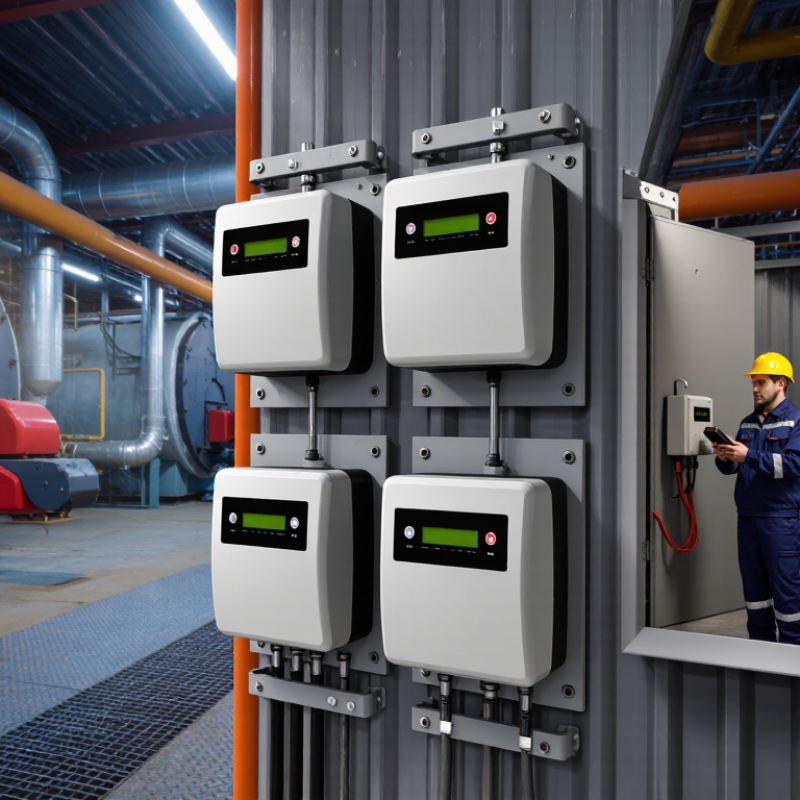
Industrial gas alarm systems protect people, equipment, and production continuity where invisible hazards can develop quickly. Their purpose is early warning, not merely loud noise. Sensors detect combustible gases, oxygen deficiency, or toxic gases, then trigger visual, audible, and sometimes remote alerts.
Fixed systems monitor defined zones around storage areas, boiler rooms, laboratories, and process lines. Portable detectors support technicians entering tanks, service corridors, or poorly ventilated spaces. Single-gas units suit focused risks, while multi-gas monitors provide broader protection during changing work tasks. Sensor choice matters. Catalytic bead sensors detect many combustible gases, infrared sensors suit some hydrocarbons, and electrochemical cells measure gases such as carbon monoxide or hydrogen sulfide. Photoionization detectors can identify many volatile organic compounds, but they cannot replace every sensor type.
Good applications begin with a documented hazard assessment and accurate sensor placement. Install detectors near likely leak points, considering gas density, airflow, temperature, and maintenance access. Alarm levels should match the process risk and site response plan. Operators need regular bump tests, calibration, battery checks, and clear training. A reading can be wrong. Dust, humidity, aging cells, and poor placement may delay detection. Field teams sometimes trust new equipment too quickly; actual conditions deserve more skepticism. Reliable systems record events, support functional testing, and connect with ventilation or shutdown controls when appropriate. Yet automation needs human judgment. It can fail. An alarm without a practiced response is just expensive noise.
Top Industrial Gas Alarm Manufacturers for Global Buyers - Industrial Gas Alarm Systems: Purpose, Types, and Key Applications
| Gas Alarm System Category | Primary Purpose | Typical Target Gases | Common Detection Technology | Typical Installation Area | Key Selection Considerations |
|---|---|---|---|---|---|
| Portable Single-Gas Detector | Personal warning before exposure to one specific hazardous gas. | Carbon monoxide, hydrogen sulfide, oxygen, chlorine, ammonia | Electrochemical sensor | Confined spaces, maintenance work, inspection routes | Sensor life, alarm set points, ingress protection, calibration method, battery runtime |
| Portable Multi-Gas Detector | Simultaneous monitoring of atmospheric hazards during entry and emergency response. | Oxygen, combustible gases, carbon monoxide, hydrogen sulfide | Electrochemical, catalytic bead, infrared, or photoionization sensors | Tanks, sewers, utility vaults, process areas | Number of channels, pump option, data logging, sampling hose length, bump-test workflow |
| Fixed Point Gas Detector | Continuous area monitoring with automatic alarm transmission. | Methane, propane, hydrogen, ammonia, chlorine, sulfur dioxide | Catalytic bead, infrared, electrochemical, or semiconductor | Production halls, compressor rooms, cylinder storage, laboratories | Mounting height, area coverage, relay outputs, communication protocol, enclosure rating |
| Open-Path Gas Detector | Detects gas clouds across a long optical path rather than at a single point. | Methane, hydrocarbons, carbon dioxide | Infrared beam absorption | Perimeters, loading areas, pipelines, offshore and large outdoor facilities | Path length, line of sight, weather conditions, beam alignment, false-alarm resistance |
| Area Gas Monitoring System | Protects a defined zone by combining multiple sensors, alarms, and control outputs. | Combustible gases, toxic gases, oxygen deficiency or enrichment | Mixed sensor architecture with centralized controller | Chemical plants, warehouses, battery rooms, gas cabinets, laboratories | Sensor mapping, zoning, alarm beacons, ventilation interlocks, emergency shutdown logic |
| Sample-Draw Gas Detection System | Draws air from remote or difficult-to-access locations for centralized analysis. | Toxic gases, refrigerants, solvents, oxygen, combustible gases | Pump-driven sampling with electrochemical, infrared, or photoionization sensors | Cleanrooms, analyzer shelters, cable tunnels, cold rooms, enclosed equipment | Tube material, transport delay, filter maintenance, pump capacity, sample-point quantity |
| Combustible Gas Alarm | Warns of flammable gas concentrations before they reach dangerous levels. | Methane, propane, butane, hydrogen, natural gas vapors | Catalytic bead or infrared | Boiler rooms, kitchens, gas storage, refueling facilities, process plants | Lower explosive limit measurement, gas density, ventilation pattern, ignition-source control |
| Toxic Gas Alarm | Provides early warning when toxic exposure may exceed occupational limits. | Hydrogen sulfide, carbon monoxide, chlorine, ammonia, sulfur dioxide | Electrochemical or photoionization | Water treatment, refrigeration, metal processing, pulp and chemical production | Exposure limits, cross-sensitivity, humidity tolerance, sensor response time, calibration gas |
| Oxygen Deficiency Monitor | Alerts personnel when oxygen concentration falls below a safe working level. | Oxygen; often combined with nitrogen, helium, argon, or carbon dioxide monitoring | Electrochemical oxygen sensor | Cryogenic storage, inert-gas rooms, laboratories, food processing, confined spaces | Typical alarm threshold near 19.5% oxygen, ventilation response, sensor replacement interval |
| Gas Detection Controller and Alarm Panel | Receives detector signals and activates visual, audible, ventilation, or shutdown functions. | Multiple combustible, toxic, and oxygen-related hazards | Digital or analog input modules with programmable logic | Central control rooms, plant utility areas, distributed industrial facilities | Channel capacity, relay logic, Modbus or other interfaces, event history, backup power |