Top Injection Molding Automation Systems for Manufacturers
Injection molding automation can turn a busy production cell into a steadier, more predictable process. Robotic takeout systems remove hot parts from molds, while conveyors move them toward trimming, inspection, or packaging. Vision cameras can flag visible defects. Material-handling equipment can keep dryers and hoppers supplied. Each system solves a different problem. The right combination depends on the part, press, and production goal.
This guide to Top Injection Molding Automation Systems for Manufacturers looks beyond speed claims. It considers robot reach, payload, cycle time, mold access, control compatibility, and available floor space. A compact six-axis robot may suit a crowded cell, while a high-speed takeout robot can serve repetitive, short-cycle work. In-mold labeling and automated inspection may add value, but only when the product and process justify the extra complexity. Details matter.
Reliable integration matters just as much as the equipment itself. Ask how a system handles mold changes, part variation, alarms, and routine maintenance. Check guarding, operator access, and training needs with qualified suppliers. A faster cycle is not always a better one. Poorly matched automation can create bottlenecks or make troubleshooting harder. That part is easy to overlook. No system is perfect, and real production conditions can expose gaps that a sales demonstration misses. Comparing practical fit, support, and measurable performance can help manufacturers choose a solution that works on the factory floor—not only on paper.
Understanding Injection Molding Automation Systems
Understanding Injection Molding Automation Systems
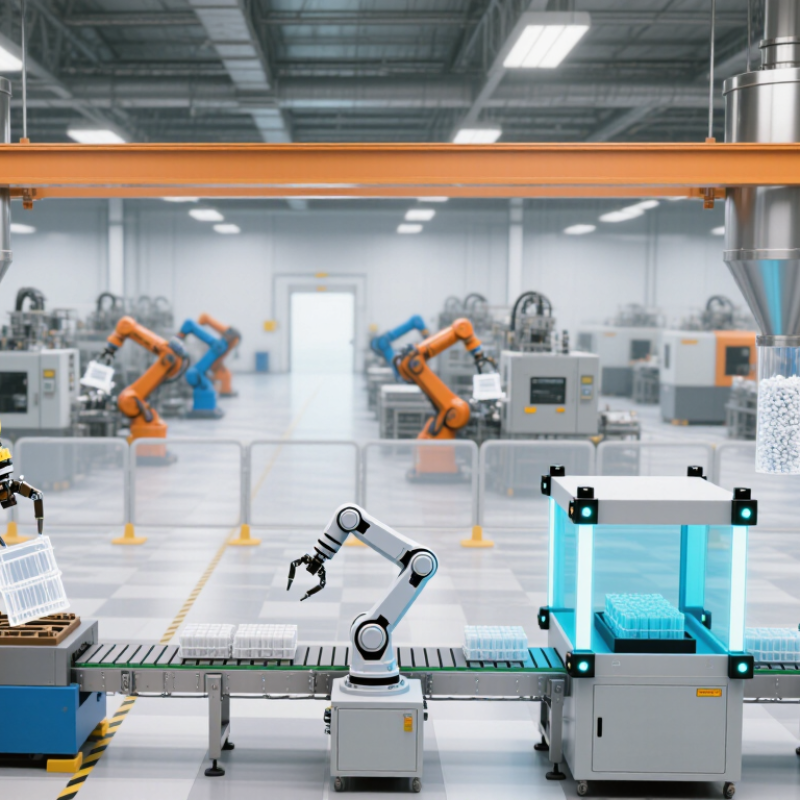
Injection molding automation links the press with equipment that handles parts, materials, and quality checks. A typical cell may include a takeout robot, end-of-arm tooling, conveyors, and safety interlocks. Some systems also coordinate drying, material feeding, part inspection, and packaging. The goal is not simply to add a robot. It is to make each handoff repeatable without slowing the molding cycle.
The International Federation of Robotics reported 4,281,585 industrial robots operating worldwide at the end of 2023, a 10% annual increase. That figure covers many industries, not injection molding alone, but it signals broader adoption of industrial automation.
For manufacturers, integration details matter: robot timing must match mold opening, tooling must avoid delicate features, and sensors must detect missed picks. Small details matter. A clear process map helps teams identify bottlenecks before buying equipment.
Yet automation is not automatically a productivity gain; poorly matched tooling or frequent changeovers can create new delays. Measure cycle time, scrap, and unplanned stops before and after installation, and review the results with operators.
Core Equipment and Technologies in Automated Molding
An automated molding cell begins with the injection molding machine, but reliable output depends on the equipment around it. A material dryer removes moisture before resin enters the barrel. A loader then moves pellets through a closed line, reducing manual handling and spill risk. Drying settings must match the resin; excessive heat can cause its own problems.
A takeout robot removes each part after the mold opens. Its end-of-arm tool may use vacuum cups, mechanical grippers, or both, depending on part geometry. The robot can place parts on a conveyor, in a fixture, or beside a trimming station. Small details matter. A gripper that touches a thin edge may leave marks or deform a warm part. That takes tuning.
Temperature controllers regulate the mold, while sensors track variables such as pressure, cycle time, and part presence. Vision systems can check for missing features or misplaced inserts, though lighting and part color affect inspection results. Safety gates and interlocks should be integrated with the cell controls, not treated as accessories. Automation does not fix an unstable process. In practice, a cell may need repeated trials to coordinate robot speed, cooling time, and mold opening. Even a well-designed layout can feel cramped once hoses, guards, and maintenance access are considered.
How Manufacturers Select the Right Automation System
Selecting injection molding automation starts with the part, not the robot. Record part weight, geometry, cycle time, and required handling steps. A light, flat component may need only a take-out robot and conveyor. A flexible part may require gentle gripping and careful orientation. Fit matters most.
IFR’s World Robotics 2024 report recorded 541,302 industrial robot installations worldwide in 2023. That figure signals broad adoption, not a guarantee of savings for every molding cell. Compare systems against your actual production mix: machine interface, mold access, end-of-arm tooling, floor space, and downstream tasks. Ask suppliers to demonstrate changeovers using your parts and molds. Small details bite.
Evaluate the full shift, not just the seconds saved per cycle. Include setup time, operator reach, maintenance access, and recovery after a jam. A fast robot can still create a bottleneck if its conveyor or inspection station runs slower. Calculate payback using realistic utilization and labor assumptions, then check how sensitive the estimate is to lower demand. Pilot it. One useful test is tracking cycle consistency across several shifts, not only during a polished demonstration. No model captures every awkward handoff; that uncertainty deserves a line in the selection plan.
Integrating and Maintaining an Automated Molding Line
Integrating and Maintaining an Automated Molding Line
An automated molding line works only when the press, robot, dryer, conveyor, and quality checks share reliable signals. Map each handoff before installation: a delayed robot-ready signal can leave a hot part waiting, while a poorly placed bin sensor can stop an otherwise healthy cell. The International Federation of Robotics reported 4.28 million industrial robots operating worldwide in 2023, up 10 percent from 2022. That figure covers many industries, not molding alone, but it shows how widely manufacturers rely on robotic equipment. Small gaps matter.
During commissioning, record baseline cycle times, reject rates, mold temperatures, and robot alarms. Test recovery after realistic interruptions, including a full bin or a brief sensor fault. Then prove it. Keep a clear change log so operators can distinguish process adjustments from equipment problems. Maintenance should follow observed wear as well as supplier schedules: inspect grippers, hoses, cables, filters, and safety interlocks during planned stops. A robot that repeats a bad pick perfectly is still a problem. Review downtime and scrap weekly, and use the data to refine inspection intervals. Not every alert needs a new sensor; sometimes the issue is a loose connector or unclear shift handoff. Automation needs patient upkeep, and the first maintenance plan will probably need revision.