Skip to content

How to Choose the Best Collapsible Gazebo

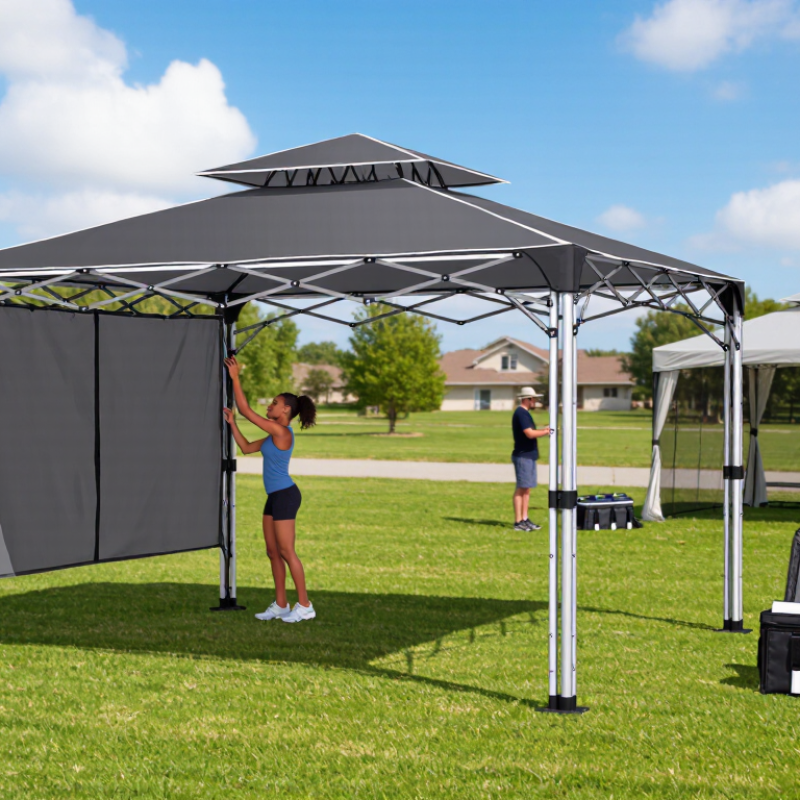
A Collapsible Gazebo can turn a bare driveway, market stall, or patch of grass into useful shade in minutes. But a quick setup is only part of the decision. Frame strength, canopy fabric, packed weight, and replacement-part availability matter once the wind picks up or a joint wears out. Small details count.

Demand for outdoor use is substantial. The Outdoor Industry Association’s 2024 Outdoor Participation Trends Report estimates that 175.8 million Americans took part in outdoor recreation during 2023. That figure does not measure gazebo sales, but it shows why portable shade deserves careful consideration. A shelter used for weekend gatherings may need different features from one carried to regular events.

Weather deserves equal attention. The National Weather Service’s familiar guidance is direct: “When thunder roars, go indoors!” A gazebo provides shade, not storm protection. That distinction is easy to forget.

In this guide, we’ll compare practical choices: steel versus aluminum frames, vented versus solid tops, and compact carry bags versus heavier-duty builds. Look for clear setup instructions, stated dimensions, and realistic care guidance. A low price can be tempting; I would still check the joints and fabric before trusting it for repeated use. There is no single best model for everyone. The right Collapsible Gazebo depends on where it will stand, how often it will travel, and what conditions it must handle.
How to Choose the Best Collapsible Gazebo

Identify Your Intended Uses and Required Gazebo Size

Before choosing a collapsible gazebo, decide what it needs to do. A shaded spot for two chairs takes far less space than a market stall with a table, display racks, and a clear path for visitors. For family meals, measure the table and chairs while they are pulled out, not tucked in. For camping, include space for bags and room to move around. Small details matter.

Measure the ground where you plan to set it up. A 10-by-10-foot gazebo describes its outer footprint, not the full usable area. Table legs, angled braces, and people moving through can quickly make the space feel tight. Leave room for entry and circulation, and check that the site has enough overhead clearance.

A larger model may suit group events, but it can be harder to carry, store, and secure. That trade-off is easy to underestimate. Check the packed dimensions and weight against your vehicle and storage space, too.

Guest counts are only rough guides; furniture and layout change how many people fit comfortably. A quick sketch with measurements can reveal a poor fit before you buy.
Compare Frame Materials, Canopy Fabrics, and Weather Resistance

Choose the frame for the conditions you expect, not just the price tag. Powder-coated steel is usually sturdy and often heavier; aluminum is lighter, but joint design and tube thickness matter. Check locking pins, corner braces, and footplates. On a patio, a broad foot can sit flat; on uneven grass, it may wobble. Weight matters. A light frame is easier to carry, yet less mass alone does not establish wind resistance. Follow the manufacturer’s setup and anchoring instructions, and take the canopy down when strong winds are forecast.

For the canopy, compare fabric weight, weave, coating, and seam construction. Polyester is common and dries quickly, but its UV and water performance depends on the finish. Look for documented UV protection and water-resistance ratings, plus sealed or reinforced seams. “Waterproof” wording without a test rating tells you little. NOAA’s National Centers for Environmental Information recorded 28 U.S. billion-dollar weather and climate disasters in 2023, underscoring how varied severe-weather exposure can be; the figure does not predict local gazebo performance. A canopy that sheds light rain may still pool water in a sagging center. I would inspect the roof tension and frame joints before relying on any fabric claim.

Assess Setup, Portability, and Storage Requirements

Choosing a collapsible gazebo starts with how you will use it, not just the canopy size. Check how the frame locks and whether one person can raise it without forcing a joint. A setup video or clear instructions can reveal awkward steps before purchase. Practice once at home. Wind changes everything.

Portability depends on more than the listed packed weight. Measure the carry bag, then compare it with your car trunk, storage shelf, and route from the vehicle to the site. Wheels help on pavement but may struggle on grass or gravel. Check the frame materials, availability of replacement parts, and any stated wind-use limits. No pop-up shelter should be treated as safe in strong gusts. A compact bag can still be clumsy to lift.

Tips: Open and close the frame on level ground, keeping fingers clear of sliding joints. Dry the canopy fully before storage to reduce mildew risk. Keep stakes and instructions in a labeled pouch. If storage space is tight, check the folded dimensions rather than guessing from photos.

How to Choose the Best Collapsible Gazebo - Assess Setup, Portability, and Storage Requirements
Gazebo Profile Approx. Canopy Footprint Typical Setup Approx. Packed Weight Approx. Packed Size Storage Volume Portability and Best Fit
Compact, lightweight 6.5 × 6.5 ft
(about 42 sq ft)
About 5–10 minutes; easiest with 2 adults About 35 lb 48 × 8 × 8 in About 1.8 cu ft Best for small patios, short outings, and buyers with limited vehicle or closet space. The smaller canopy is easier to carry but offers less shaded area.
Compact, standard frame 8 × 8 ft
(about 64 sq ft)
About 5–10 minutes; 2 adults recommended About 45 lb 50 × 8 × 8 in About 1.9 cu ft A practical middle ground for picnics and small gatherings. Check that the packed length fits your vehicle, even when the overall storage volume is modest.
Standard event size 10 × 10 ft
(100 sq ft)
About 5–10 minutes; 2 adults recommended About 55 lb 62 × 9 × 9 in About 2.9 cu ft A versatile choice for markets, campsites, and family events. It provides useful coverage, but the frame and carry bag can be awkward for one person to lift or maneuver.
Reinforced 10 × 10 ft 10 × 10 ft
(100 sq ft)
About 8–15 minutes; 2 adults recommended About 72 lb 65 × 10 × 10 in About 3.8 cu ft Typically bulkier than a basic frame of the same canopy size. Consider it when a sturdier-feeling frame is a priority and you have room for heavier lifting and storage.
Large, 10 × 20 ft 10 × 20 ft
(200 sq ft)
About 10–20 minutes; 2–4 adults recommended About 105 lb 63 × 16 × 12 in About 7.0 cu ft Suited to larger gatherings or vendor spaces. Plan for extra helpers, a larger vehicle, and a dedicated storage area; the packed frame is long and heavy.
Figures are approximate examples for comparing common collapsible-gazebo sizes, not guaranteed specifications. Actual setup time, packed dimensions, and weight vary by frame design and included accessories. Always check the product’s measurements and follow its anchoring instructions; canopies should be taken down in unsafe wind or severe weather.

Check Stability Features, Safety, and Replacement Parts

A collapsible gazebo can feel steady in calm weather and still fail when gusts catch its roof. Check the maker’s stated wind limits, frame-locking mechanism, leg braces, and anchoring instructions before purchase. The National Weather Service’s Beaufort Wind Scale describes 19–24 mph winds as strong enough to sway small trees. That is a useful warning sign, not a safe operating limit for every canopy. Stop using the shelter when conditions approach its rated limit, and never assume added weight makes an unrated frame safe. Sandbags can shift; stakes may loosen in soft soil. Small details matter.

Inspect joints and feet, too. A locking pin should seat fully, and each leg should stand evenly on firm ground. Look for corrosion, bent tubes, cracked plastic hubs, and frayed straps. I find these checks easy to rush, especially when setup is familiar. That is exactly when a loose connector can be missed. Before buying, ask whether replacement hubs, pins, roof fabric, and leg assemblies are sold separately. Confirm the part’s dimensions and compatibility in writing; similar-looking pieces may not fit. Keep a small record of the model number and part names, and store it with the setup instructions. A spare pin is only useful if it matches.

Compare Prices, Warranties, and Long-Term Value

A collapsible gazebo’s price matters less when replacement parts are scarce or the frame bends after repeated use. Compare the full kit, including sidewalls, weights, carry bag, and replacement canopy cost. Check whether the warranty covers the frame, fabric, and seams separately. A short warranty is not proof of poor quality, but exclusions can reveal where repair costs may fall.

A 2023 Grand View Research report valued the global outdoor furniture market at about $50.4 billion. That figure describes market size, not gazebo durability, so it cannot identify the best model. For a practical comparison, divide the purchase price by your expected seasons of use, then add likely fabric or part replacements. For example, a $240 shelter used for four seasons costs $60 per season before repairs. This calculation is useful, but imperfect: wind, storage, and care change the result.

Tips: Ask for written warranty terms and replacement-part prices before buying. Check frame joints, stitching, and canopy fabric in person, if possible. A lighter frame may be easier to carry, yet less reassuring in gusty weather. I would not assume a higher price means longer life. Look for clear specifications, repair options, and realistic care instructions.