Skip to content

How to Choose the Right Oil Separator for Your Business?

Choosing the right Oil Separator can protect equipment, reduce maintenance, and improve the consistency of industrial operations. However, the best choice is rarely determined by price alone. A separator must match the application’s flow rate, oil concentration, temperature, pressure, fluid viscosity, and available installation space. A unit designed for a small workshop may fail quickly in a busy food-processing plant. That difference matters.

In practical assessments, engineers usually begin with operating data, not product brochures. Measure peak flow, not only the daily average. Check whether the oil is free, emulsified, or mixed with cleaning chemicals. Consider particle size, tank capacity, drainage access, and the expected cleaning schedule. Small details become expensive problems later. A separator may perform well in laboratory conditions but struggle when wastewater temperature changes during production.

Reliable selection also requires verified performance data, clear maintenance instructions, and support from an experienced supplier. Certifications and local discharge requirements should be reviewed before purchase. Yet paperwork cannot replace honest evaluation. A neat calculation can still mislead when process conditions are poorly recorded. Recheck the assumptions. Ask for testing when the fluid is unusually complex. The final decision should balance separation efficiency, energy use, service life, safety, and total ownership cost. The cheapest unit is not always economical. Neither is the largest one. Careful comparison creates a more dependable solution for your business.
How to Choose the Right Oil Separator for Your Business?

Understand the Role and Operating Conditions of an Oil Separator

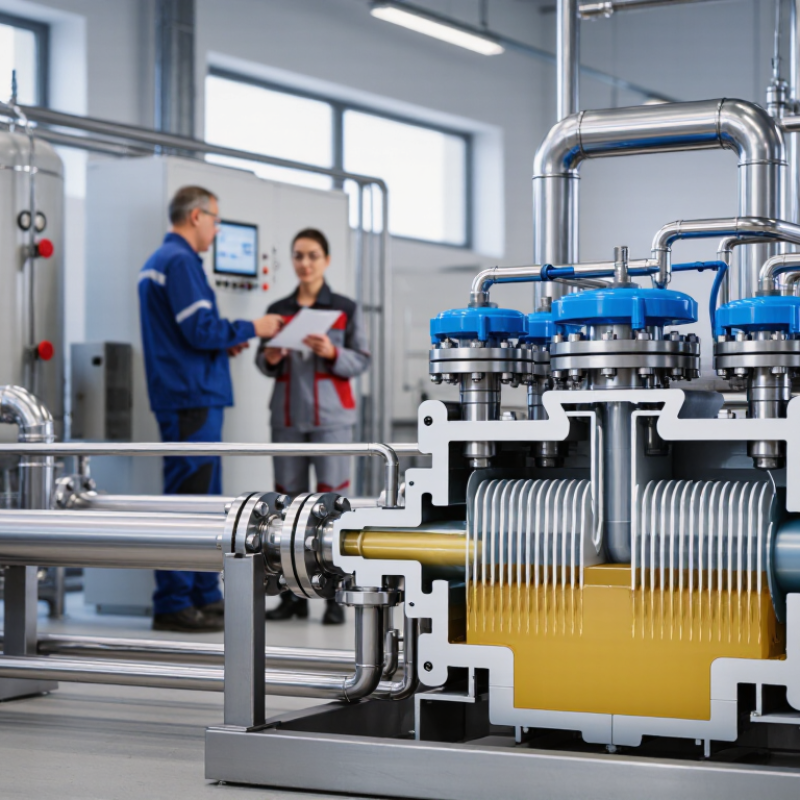
Choosing the right oil separator begins with understanding its operating conditions. An oil separator removes free oil from wastewater through gravity, not chemical treatment. API Publication 421 commonly references a 150-micrometre oil droplet and approximately 20 minutes of detention time. These figures are design benchmarks, not automatic guarantees.

Flow conditions matter greatly. Record average flow, peak flow, water temperature, oil density, viscosity, solids, and detergent use. Cold water slows separation. Detergents may create stable emulsions that gravity separators cannot remove effectively. A separator sized only for average flow may fail during a sudden discharge. That mistake is common. US EPA’s 2021 Multi-Sector General Permit lists a 15 mg/L oil-and-grease benchmark for many industrial stormwater sectors, but the applicable permit must be checked.

Inspectors should also examine sludge depth and oil storage capacity. A half-filled chamber provides less effective volume and shorter retention time. Coalescing media can improve performance, but only with regular cleaning. It is not magic. During commissioning, compare inlet and outlet samples under normal and peak conditions. If results look acceptable only on dry, quiet days, the design needs rethinking. Do not choose by pipe diameter alone. Consider access for vacuum cleaning, alarm visibility, winter temperatures, and the actual contaminant profile. Performance data from the site should outweigh a catalogue promise.
Identify the Key Types of Oil Separators for Your Application

How to Choose the Right Oil Separator for Your Business?

Identify the Key Types of Oil Separators for Your Application

Choosing an oil separator starts with identifying the oil in your wastewater or process stream. Free-floating oil behaves differently from emulsified oil, grease, or oily solids. A separator that works well in a vehicle wash may fail in a machining facility.

Gravity separators are practical for low-velocity wastewater with visible oil layers. They use residence time, baffles, and a collection chamber. Coalescing separators add special media to merge small oil droplets. This design suits tighter discharge requirements, but the media needs regular cleaning. Plate separators offer more settling surface in a compact tank. They can be useful where floor space is limited.

Centrifugal separators handle higher flow rates and separate oil through rotational force. Hydrocyclone systems are another option for pressurized streams with fine droplets. They often require stable operating conditions and careful adjustment. For kitchens, grease separators are usually more suitable than general industrial oil units. Check flow rate, operating temperature, oil viscosity, solids content, and cleaning access before choosing.

A simple site inspection helps. Measure the inlet pipe, observe peak flow, and collect a sample after production begins. Laboratory testing is valuable when emulsions appear. A neat calculation can still be wrong. We have seen undersized units overflow during short cleaning surges. Maintenance staff should also confirm how sludge and separated oil will be removed safely. The best type is not always the largest one.

Compare Capacity, Separation Efficiency, and Maintenance Requirements

How to Choose the Right Oil Separator for Your Business?

Capacity should match real operating conditions, not only the average flow rate. Measure normal flow, peak surges, temperature, oil concentration, and expected future demand. A separator running near its limit may release oil during busy periods. Oversizing can also waste space and increase purchase costs. Leave a practical safety margin.

Separation efficiency depends on oil droplet size, liquid viscosity, and residence time. Coalescing media can capture fine droplets, but heavy sludge may block the passages. Check tested performance data instead of trusting broad efficiency claims. In field inspections, I have found that poor inlet design often reduces performance more than the separator itself. Flow becomes uneven. That detail matters.

Maintenance requirements can decide the true operating cost. Look for accessible covers, visible level indicators, reliable drains, and replaceable internal media. Record pressure drop and discharge quality during routine checks. I once selected a compact unit that matched the calculated capacity, but cleaning access was frustrating. The specification looked right. Daily work proved otherwise. Ask how often sludge removal is expected, how quickly parts can be changed, and whether operators can inspect the unit safely. Keep maintenance records, even when readings seem stable. Small changes may reveal fouling before efficiency falls.

How to Choose the Right Oil Separator for Your Business? - Compare Capacity, Separation Efficiency, and Maintenance Requirements

Separator Type Typical Flow Capacity Suitable Oil Phase Typical Free-Oil Removal Efficiency Typical Outlet Oil Concentration Footprint and Installation Maintenance Requirements Best-Fit Applications
Gravity or API-Type Separator Approximately 1–1,000 m³/h Free-floating and settleable oil droplets, generally larger than 150 microns Approximately 50–90%, depending on detention time, temperature, and inlet conditions Typically 50–150 mg/L after primary separation Large footprint; usually installed as an in-ground or above-ground tank with inlet and outlet control Remove accumulated oil and settled solids regularly; inspect baffles, skimmers, sludge zones, and access covers at least monthly High-flow industrial wastewater, stormwater, workshops, garages, and preliminary treatment
Coalescing Plate Separator Approximately 1–500 m³/h Free oil and dispersed oil droplets that can merge on inclined coalescing media Approximately 85–99% for properly designed free-oil loads Typically 5–50 mg/L, depending on influent quality and droplet size More compact than a basic gravity separator; requires sufficient access for media removal or cleaning Clean coalescing plates when differential pressure rises or flow decreases; remove separated oil and sludge; inspect quarterly under normal service Vehicle maintenance facilities, equipment yards, manufacturing plants, and commercial wash-water systems
Centrifugal Separator Approximately 0.5–100 m³/h per unit Free and dispersed oil, suspended solids, and some fine droplets under controlled loading Approximately 80–98%; performance depends strongly on density difference and feed consistency Typically 10–75 mg/L after one treatment stage Compact and suitable where floor space is limited; often requires a pump, controls, and stable feed pressure Inspect rotating or internal components, check seals and bearings, remove collected solids, and follow scheduled lubrication or replacement intervals Compact industrial systems, metalworking fluids, process-water recycling, and sites with limited space
Hydrocyclone Oil Separator Approximately 1–200 m³/h per unit Free and dispersed oil where there is adequate density difference between oil and water Approximately 70–95% for suitable feed conditions; less effective for stable emulsions Typically 20–100 mg/L, depending on inlet concentration and droplet distribution Very compact with no moving parts; normally requires a pump and a reliable pressure differential Flush the unit, inspect the apex and vortex finder, monitor pressure drop, and prevent abrasive solids from causing wear Offshore and marine applications, produced-water pre-treatment, and compact process installations
Centrifuge or Disc-Stack Separator Approximately 0.1–50 m³/h per unit Fine suspended solids and dispersed oil, including smaller droplets than gravity systems can remove Approximately 90–99% for suitable feed conditions and correctly selected equipment Typically 5–30 mg/L after optimized operation Small footprint but higher electrical, control, and installation requirements; may need pre-screening Frequent inspection and cleaning; maintain bearings, seals, solids discharge mechanisms, and vibration levels according to the operating schedule High-value water reuse, industrial process water, refineries, and applications requiring consistent effluent quality
Dissolved Air Flotation System Approximately 5–500 m³/h Fine dispersed oil, emulsified oil after conditioning, suspended solids, and flocculated contaminants Approximately 90–99% when chemical conditioning and air saturation are properly controlled Typically 5–30 mg/L; actual results depend on emulsion stability and chemical selection Moderate to large footprint; requires a recycle pump, air system, skimmer, and usually chemical storage and dosing equipment Skim floated sludge, clean nozzles and saturator components, calibrate chemical dosing, inspect pumps, and monitor air and recycle pressure daily Food processing, refineries, chemical manufacturing, oily wastewater with stable emulsions, and strict discharge limits
Selection note: Actual capacity and removal efficiency depend on oil density, droplet-size distribution, temperature, solids loading, emulsification, hydraulic loading, and the required discharge limit. Gravity and coalescing separators are generally preferred for free oil, while emulsified oil usually requires chemical treatment, flotation, membrane treatment, or another advanced process.

Evaluate Materials, Compliance Standards, and Installation Constraints

How to Choose the Right Oil Separator for Your Business?

Material selection should begin with the waste stream, not the catalogue photograph. Stainless steel suits aggressive environments and frequent cleaning. Coated carbon steel may reduce cost, but scratches can expose the substrate. High-density polyethylene resists many chemicals and ground moisture. Check compatibility with oils, detergents, solvents, temperature, and expected flow rates. A small mismatch can shorten service life quickly.

Compliance requirements also influence the separator design. Confirm local discharge limits, testing procedures, access rules, and approved sizing methods. Ask for technical drawings, performance data, material certificates, and inspection records. These documents support reliable decisions during audits and maintenance reviews. Requirements vary by location. Do not rely on an old project specification. It may no longer reflect current authority guidance.

Installation constraints deserve equal attention. Measure the available footprint, inlet depth, outlet level, maintenance clearance, and lifting route. A separator that fits the pit may still block a service vehicle. Plan for sludge removal and safe access around covers. Consider groundwater pressure, anchoring, ventilation, and traffic loading. On one site, poor access made routine cleaning unnecessarily difficult. The separator worked, but the installation did not. That lesson is easy to miss during procurement. Recheck every dimension before ordering.

Select the Best Oil Separator Based on Total Operating Cost

How to Choose the Right Oil Separator for Your Business?

For compressed-air systems, purchase price is only one part of the decision. Total operating cost includes energy, replacement elements, drainage, labor, and unexpected downtime. The U.S. Department of Energy reports that compressed air may use about 10% of industrial electricity. It also estimates that leaks can waste 20–30% of compressor output. A separator with excessive pressure drop increases this hidden energy bill. Check the pressure drop at full flow, not only during a showroom test. A small saving upfront can become expensive every working hour.

Choose a separator by airflow, inlet temperature, oil type, contamination load, and required outlet quality. Review element life under real production conditions. ISO 8573 standards help define compressed-air contamination classes, but certification alone does not predict your maintenance cost. Record differential pressure weekly. Inspect the drain after cold starts. These simple observations reveal problems early. I would not rely on catalogue figures alone; factory dust, humidity, and irregular loading can change performance.

Tips

Compare five-year cost, not purchase price. Request test data at your actual flow rate. Include electricity, elements, labor, waste handling, and downtime. Select a model with clear service access. A cheap element that takes two hours to replace is not cheap. The U.S. DOE recommends reducing pressure losses and repairing leaks, yet many purchasing decisions still ignore both factors. That is an uncomfortable gap. Recheck your assumptions after three months of operating data.

How to Choose the Right Oil Separator for Your Business?

Select the best oil separator based on total operating cost, not purchase price alone.

This 10-year total cost of ownership comparison uses a common industrial duty and includes equipment purchase, electricity, routine maintenance, and waste or filter disposal. Gravity separators generally minimize energy use, while coalescing separators may require more frequent element replacement. Centrifugal separators can provide compact, high-throughput operation but typically have higher energy and equipment costs. Actual results should be recalculated using site-specific flow rate, oil concentration, electricity price, labor cost, and disposal requirements.

Article Source: