How to Choose the Right Manometer Connector?
A manometer can be accurate on the bench and still give unreliable readings after installation. The connector is a small part, but it controls the pressure path, sealing interface, and mechanical fit. Choose it poorly, and a tiny leak or mismatched thread can distort readings. Small details matter.
NIST Special Publication 250-39 describes pressure-calibration services and traceability, while ASME B40.100 addresses pressure-gauge design and performance. ISO 2186:2007 covers connections for transmitting pressure signals between primary and secondary elements. These references help frame the checks, but they do not replace the instrument manufacturer’s drawings. For a Manometer Connector, compare process pressure, fluid compatibility, thread form, port size, and sealing method. Check whether the installation uses NPT, BSPP, BSPT, or a dedicated fitting. They may look similar. They are not interchangeable by assumption.
Real installations add details that a catalog table can hide: vibration near a pump, a hot line, limited wrench clearance, or the need for quick removal during calibration. A connector should suit those conditions, not just the nominal pressure range. The practical choice is sometimes less neat than the specification suggests. That is worth admitting. Before ordering, confirm the manometer’s connection drawing and required adapter, then check the assembled system for leakage and stable readings. This guide explains how to make those checks without treating one thread standard or material as a universal answer.
Identify the Manometer Connection Type and Port Standard
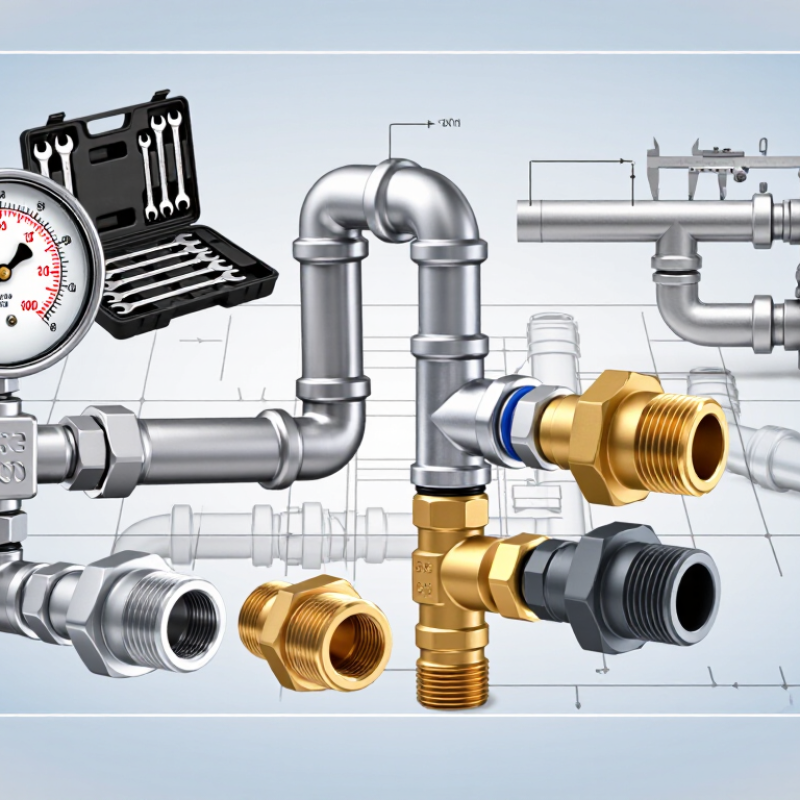
Before choosing a manometer connector, identify the instrument’s port type and thread standard. A pressure port may use a tapered thread, such as NPT or BSPT, or a parallel thread, such as BSPP. Metric threads are another possibility. They can look surprisingly similar at a glance. Check the instrument documentation, then verify the thread diameter and pitch with suitable gauges. Do not rely on appearance alone.
Look closely at how the port seals. Tapered threads usually seal along the threads, while parallel threads often need a washer, bonded seal, or O-ring at the port face. A mismatched fitting may start by hand, then bind after a turn or two. Stop there. Forcing it can damage the threads and create a leak. I’ve found that recording the port standard beside the instrument’s model details helps prevent repeat guesswork, though it is easy to forget in a busy workshop.
Also confirm the connector’s gender, orientation, and pressure rating. A swivel connector can help when the tubing needs to leave the gauge at a particular angle, but it must still match the port and sealing method. If the standard remains uncertain, compare measurements with the manufacturer’s drawing or ask a qualified supplier to verify them. An adapter may solve the fit, but it adds another joint to inspect.
How to Choose the Right Manometer Connector?
Identify the connection type and port standard by checking the thread pitch.
Thread pitch is the distance between adjacent threads. These examples show common nominal sizes: 1/4 NPT has 18 threads per inch, 1/4 BSP has 19 threads per inch, M10 × 1 has a 1.0 mm pitch, and M12 × 1.5 has a 1.5 mm pitch. Pitch alone does not confirm a match: also check the thread diameter, form, and sealing method. NPT, BSP, and metric connections are not interchangeable just because they look similar.
Determine Pressure Range and Process Media Requirements
Choosing a manometer connector starts with the pressure profile, not just the maximum reading. ASME B40.100 guidance places normal, steady operation within 25% to 75% of the gauge span. For example, a 0–100 psi gauge is best suited to steady readings around 25–75 psi. Repeated pressure spikes can still damage the instrument, so allow headroom or consider a snubber where pulsation is present. Small details matter.
Then check the process media against every wetted component: connector, seal, and gauge connection. Water, oil, and cleaning solutions can affect materials differently, especially at elevated temperatures. Confirm the thread standard and sealing method, too; a tapered thread and a parallel thread may look similar but seal differently. This detail is easy to underestimate. A connector that fits mechanically may still leak or corrode in service.
Tips: Record the normal pressure, peak pressure, media, and temperature before selecting a connector. Check the material compatibility data from the instrument or seal supplier, and verify the connection against the gauge specification. If the process is uncertain, pause and confirm it rather than guessing.
Match Connector Threads, Seals, and Fitting Dimensions
Choosing a manometer connector starts with matching the thread, not guessing from appearance. NPT threads taper, while many metric and ISO pipe threads are parallel. ASME B1.20.1 specifies an NPT taper of 1:16 on the diameter. That small angle matters: a connector may begin threading smoothly yet bind before its sealing surfaces meet. Check the thread designation, pitch, and nominal size against the instrument port and mating fitting.
Then identify where the seal is meant to form. ISO 7-1 covers pipe threads designed to make pressure-tight joints on the threads; ISO 228-1 parallel threads generally rely on a separate seal. Look for an O-ring face, washer seat, or tapered thread. Don’t assume tape will fix a mismatch. It may mask poor engagement, and it can contaminate a small pressure passage. Easy to miss.
Fitting dimensions matter just as much. Compare the connector’s seat diameter, insertion depth, wrench clearance, and overall length with the manometer port. A fitting that bottoms out early can leave a leak path; one that is too long may obstruct the pressure opening. Use thread gauges and the dimensional tables in the cited standards, then verify the seal with a suitable leak check. A gauge reading alone is not proof of a sound joint. I’d still recheck the seat after assembly; small fittings can be annoyingly unforgiving.
Select Materials for Operating Conditions and Compatibility
How to Choose the Right Manometer Connector?
Select Materials for Operating Conditions and Compatibility
Choosing a manometer connector starts with the fluid, not the thread. Check every wetted part, including the fitting, adapter, and seal. Brass often suits clean air or water, while stainless steel may handle harsher service; the grade still matters. Small details matter. Chlorides, cleaning agents, and damp outdoor air can affect materials differently. Do not assume a metal is compatible just because it looks robust. A fitting near a washdown area faces different exposure than one on a dry bench.
Temperature changes the choice too. Heat can soften polymer parts or age elastomers, while cold can make some seals stiff and leaky. Pressure pulses deserve attention. A connector that handles a steady reading may loosen or fatigue under vibration and repeated surges. Match connector and seal materials to the medium, temperature range, and pressure profile; verify limits in technical data. Also check whether threads are tapered or parallel and whether the sealing method matches. Material selection alone cannot prevent leaks. It is easy to focus on the connector body and overlook the seal, so review both before installation. If the fluid mix or operating conditions are uncertain, pause and seek compatibility guidance.
How to Choose the Right Manometer Connector? — Select Materials for Operating Conditions and Compatibility
Compare connector materials against the process fluid, environment, pressure, temperature, and installation requirements. Final suitability depends on the complete connector assembly, including its seal, thread, and manufacturer-rated limits.
| Connector Material | Typical Suitability | Compatibility and Corrosion Considerations | Key Limitations | Best-Fit Conditions |
|---|---|---|---|---|
| Brass | Common choice for general-purpose gauges used with air, water, and many non-aggressive fluids. | Often suitable for fresh water and non-corrosive services. Check compatibility with the specific fluid, particularly ammonia, some acids, and fluids that can cause dezincification. | Not a universal choice for corrosive chemicals, seawater, or every water chemistry. Pressure and temperature limits vary by fitting design and size. | General industrial or utility service when the fluid is confirmed compatible and operating conditions are within the assembly rating. |
| 316 stainless steel | Frequently selected for chemical processing, outdoor service, and applications requiring improved corrosion resistance. | Offers better resistance than 304 stainless steel to many chloride-containing environments, but is not immune to pitting or crevice corrosion. Confirm compatibility with the exact chemical and concentration. | Can be unsuitable for certain strong acids, halides, or other aggressive media. Verify the connector, gauge, and seal ratings together. | Corrosive or washdown environments where a fluid-compatibility review supports stainless steel. |
| 304 stainless steel | Used for general corrosion-resistant service, including many clean, non-chloride process fluids. | Resists rusting in many environments but is generally less resistant than 316 stainless steel to chloride-induced pitting and crevice corrosion. | May be a poor choice for seawater, brines, or chloride-rich conditions. Suitability depends on exposure, temperature, and fluid chemistry. | Indoor or mildly corrosive service where chloride exposure is limited and the material is verified for the process fluid. |
| Carbon steel | Used in some robust, non-corrosive industrial pressure connections, often with a protective coating. | May be appropriate for compatible oils, gases, or dry services. Coatings can be damaged during assembly and do not make the base metal universally corrosion-resistant. | Can rust in wet or corrosive environments. Confirm coating compatibility and ensure the connector is rated for the operating pressure and temperature. | Non-corrosive service where mechanical strength and process compatibility are more important than corrosion resistance. |
| Engineering plastic (such as PP or PVDF) | Used in selected low-pressure or chemically compatible applications where metal contamination or corrosion is a concern. | Chemical resistance varies substantially by polymer, fluid, concentration, and temperature. Select the polymer using a compatibility chart for the actual process conditions. | Typically has lower mechanical strength and temperature capability than metal. Creep, impact, UV exposure, and thread damage may affect service life. | Low-pressure applications where the chosen polymer and complete connector assembly are explicitly rated for the fluid and environment. |
| Thread and Sealing Compatibility — Confirm Before Installation | ||||
| NPT | Tapered pipe thread with a 60-degree thread form. Sealing is commonly achieved on the threads using a suitable thread sealant. | Do not assume it will seal correctly when paired with BSP threads. Verify thread size, taper, and the equipment specification. | ||
| BSPT | Tapered pipe thread with a 55-degree thread form. Sealing is generally made at the threads with an appropriate sealant. | Not interchangeable with NPT, despite some similar nominal sizes. Confirm the exact thread designation and mating connection. | ||
| BSPP | Parallel pipe thread with a 55-degree thread form. Sealing is usually provided by a bonded seal, washer, O-ring, or another specified face seal. | The parallel threads alone are not generally the sealing element. Check the required sealing method and mating-face design. | ||
| Metric parallel thread | Parallel metric thread; sealing method depends on the connector design and may use an O-ring, washer, or sealing face. | Confirm the thread diameter, pitch, and sealing arrangement. Similar-looking threads may not be compatible. | ||
Selection check: Identify the exact process fluid and concentration; check ambient and process temperatures, pressure, vibration, and external exposure; confirm wetted materials and seal compatibility; then match the thread standard and specified sealing method. Never rely on material alone for a pressure or temperature rating.
Verify Installation, Orientation, and Leak-Tightness Requirements
How to Choose the Right Manometer Connector?
Verify Installation, Orientation, and Leak-Tightness Requirements
A connector can fit the thread and still be wrong for the installation. Check the port standard, pressure range, process fluid, and sealing method before assembly. Keep the manometer upright and readable, with the connector aligned to the port. Avoid using the instrument body as a lever; that can twist the sensing element or damage threads. Small details matter. If the gauge must face a particular direction, choose an elbow or adapter rather than forcing alignment after tightening.
Leak-tightness deserves a real check. The U.S. Department of Energy’s Improving Compressed Air System Performance sourcebook estimates that leaks can waste 20–30% of compressor output; active leak-management programs can reduce losses to below 10%. That figure concerns compressed-air systems, not every manometer connection, but it shows why small leaks matter. Pressurize the assembly gradually, then inspect the joint using a suitable leak-detection method. Never rely on a snug feel alone. Recheck after thermal or vibration changes where practical. I have seen a connector look straight while a slight thread mismatch caused a slow leak; visual inspection helps, but it is not proof.