How to Choose the Best WPC Hollow Decking for Your Project
Choosing WPC Hollow Decking is not just a color decision. The right profile should suit the deck’s size, use, climate, and supporting frame. A balcony with light foot traffic has different needs from a family terrace with furniture and frequent gatherings. Details matter.
Hollow boards can reduce material weight, but their performance depends on the profile, material blend, installation, and support spacing. Check the manufacturer’s technical sheet for span limits, load guidance, fastening methods, and required expansion gaps. A neat-looking board can still disappoint if water collects beneath it or the joists are spaced too far apart. Small oversights show up later.
This guide explains how to compare board dimensions, surface finishes, colors, and product specifications for your project. It also considers drainage, ventilation, edge finishing, and the conditions around the installation. Sun exposure, temperature changes, and damp ground can all affect long-term performance. No single WPC Hollow Decking option is best for every site.
A useful choice balances appearance with practical requirements. Compare product data from reputable suppliers, and confirm that the proposed substructure follows the board maker’s instructions. It is tempting to focus on the purchase price alone. Yet installation details and maintenance expectations deserve equal attention. Some project constraints only become obvious after measuring the frame carefully. That is worth doing before ordering.
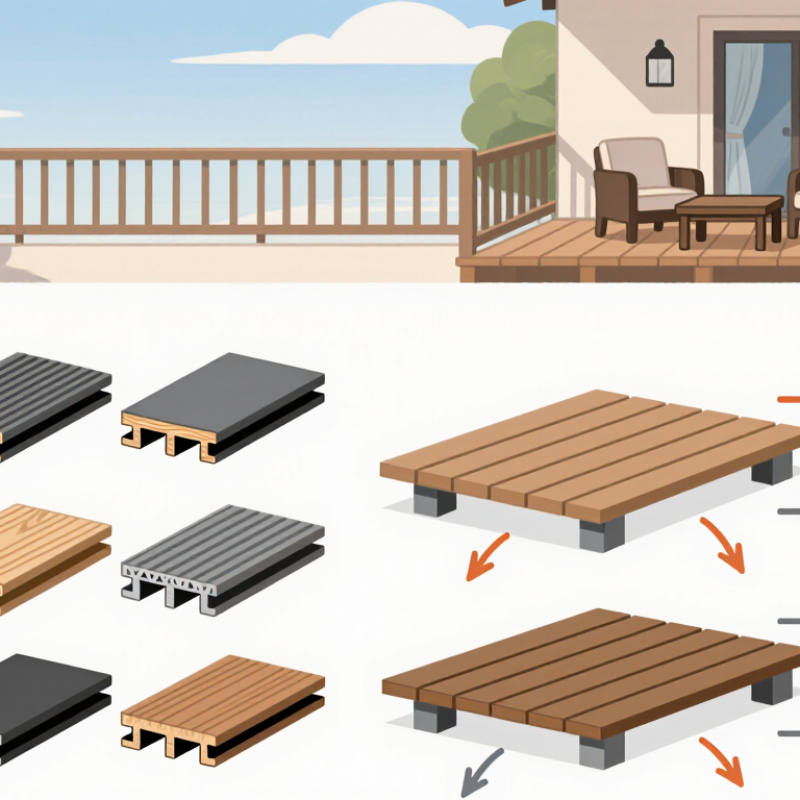
Understanding WPC Hollow Decking and Its Core Features
WPC hollow decking combines wood fibers with thermoplastic polymers, forming boards with internal air channels. Those cavities reduce board weight and material use, but they also make support spacing and drainage important. A hollow profile is not automatically stronger or cooler underfoot. Check the manufacturer’s span limits, wall thickness, and fastening instructions before choosing a board. At a cut end, thin walls can be vulnerable to impact.
Moisture resistance is useful, but “waterproof” is too simple a claim. The USDA Forest Products Laboratory’s Wood Handbook reports that wood reaches about 12% equilibrium moisture content at 70°F and 65% relative humidity; this is a wood benchmark, not a WPC test result. Formulations differ. ASTM D7032 provides performance requirements and evaluation methods for composite decking, including durability and load-related properties. Look for test information tied to the actual product, not just a broad material description. Leave room for thermal movement, keep gaps clear of leaves, and inspect edges after cutting. That detail is easy to miss. I would also compare the board’s weight and underside design in person: a light sample can feel convenient, yet reveal little about how it handles a long unsupported span.
Assessing Your Project’s Site and Intended Use
Before choosing WPC hollow decking, study the site in the conditions it actually faces. Note direct sun, prevailing wind, nearby trees, and places where rainwater collects. Walk the area after a shower if possible. That detail matters. A shaded corner may stay damp longer, while an exposed board can become uncomfortably hot underfoot.
Measure the deck carefully, but also consider how people will use it. A quiet garden platform has different demands from a busy dining area with chairs moving across it daily. Mark likely furniture positions and check whether the planned supports can carry the expected loads. For heavy items, follow the decking and substructure specifications rather than relying on appearance. Hollow boards need suitable support spacing. Guessing here can lead to movement or sagging.
Look closely at drainage, ventilation, and clearance from walls or garden soil. Trapped moisture and poor airflow can affect the structure beneath the boards, even when the decking itself is designed for outdoor use. Allow for the expansion gaps specified by the manufacturer, especially where temperatures change sharply. A small sample can help you judge color in morning and afternoon light, though it cannot show the feel of a full deck. Site checks are imperfect; I would still revisit the measurements before ordering.
Comparing Material Quality, Profiles, and Performance
Choose WPC hollow decking by checking material consistency, not just surface color. Ask for clear specifications on polymer content, wood fiber, recycled content, and UV protection. These details can affect fading, moisture response, and long-term stability. Look closely. Inspect a cut end for even wall thickness, clean edges, and well-formed internal ribs. Uneven cavities may indicate inconsistent production, though appearance alone cannot prove performance. Compare samples from the same batch when possible, since color can vary slightly between production runs.
Profiles influence both strength and installation. Hollow boards are lighter than solid boards, but their shape and wall thickness determine how well they handle foot traffic between supports. Check the maker’s recommended joist spacing and fastening method against your project layout. A profile that works on a short balcony may not suit a wide, exposed deck. Ask how the boards manage drainage and temperature changes, and leave the specified expansion gaps. Surface texture matters too; a smooth board may feel different underfoot when wet. Small details matter. I would not choose by price or a showroom sample alone: real site conditions, including shade, standing water, and heavy furniture, can expose weaknesses that a brief inspection misses.
Checking Installation Requirements and Compatibility
Before ordering WPC hollow decking, compare its installation guide with the structure already planned. Check the required joist spacing, support direction, and permitted board overhang. Hollow boards may need closer support than solid decking. Do not rely on a spacing rule from another product; profiles and load ratings differ. Small details matter.
Inspect the site, too. Is water able to drain beneath the deck? Are the joists level, stable, and separated from soil or standing water? Leave the expansion gaps specified for the boards, especially near walls and fixed posts. Temperature changes can make composite decking move. A dry-fit row can reveal awkward cuts around steps or drains before you fasten anything. Measure twice. Cut once.
Confirm that the clips or screws are approved for the board profile, and check whether cut ends need caps or another form of protection. Some systems require specific starter clips or edge details. Mixing parts can create uneven gaps or loose boards. Plan ventilation and access beneath the deck if cables or drainage components need future attention. I would not assume a neat drawing captures every site condition; corners and transitions often need a second look. If the installation guide conflicts with the frame layout, pause and ask the supplier or a qualified installer before cutting.
How to Choose the Best WPC Hollow Decking for Your Project
Check installation requirements and compatibility before selecting boards.
Each bar marks an item to verify before purchase and installation. Confirm joist spacing, fastening method, expansion allowances, drainage, subframe suitability, and edge details in the instructions for the specific decking system. Requirements vary by product and site conditions.
Balancing Durability, Maintenance, and Total Cost
WPC hollow decking can reduce weight and material use, but durability depends on more than the board surface. Check the stated load capacity, UV resistance, and recommended joist spacing. A hollow profile may flex if supports are too far apart. Keep cut ends and drainage paths in mind, especially where rainwater collects. Small details matter.
Maintenance is usually simple, not absent. Sweep grit away before it scratches the surface, and rinse spills before they dry. Use a soft brush for stubborn dirt; harsh cleaners may damage the finish. In sunny areas, compare color-fading guidance and allow for heat-related expansion during installation. That gap is easy to overlook.
Total cost includes more than the price per board. Add clips, framing, edge trims, delivery, and any replacement pieces needed for awkward cuts. A lower upfront quote may require closer joist spacing or more frequent upkeep. Ask for written installation limits and warranty conditions, then compare them with your site and expected use. I would not assume every hollow board suits every deck. A shaded garden path and a busy poolside platform have different demands, and estimates can miss that difference.
How to Choose the Best WPC Hollow Decking for Your Project - Balancing Durability, Maintenance, and Total Cost
| Decking Option | Typical Construction | Durability Considerations | Maintenance | Indicative Material Cost | Best Suited For |
|---|---|---|---|---|---|
| Uncapped hollow WPC | Wood-plastic composite board with hollow channels and no protective outer cap. | Usually lighter than a comparable solid board. Exposed composite may be more vulnerable to staining, moisture-related surface changes, and color variation than capped products. | Regular sweeping and washing with water and mild soap; clean spills promptly. Follow the product instructions for stains and snow removal. | About US$2–$5 per sq. ft. | Budget-conscious projects where the deck is sheltered or sees moderate use. |
| Capped hollow WPC | Hollow composite core covered by a protective polymer cap, often on the top and sides. | The cap can improve resistance to common stains, moisture, and surface fading compared with uncapped composite. Performance varies by cap coverage, formulation, installation, and exposure. | Generally needs routine sweeping and occasional washing. It does not require periodic staining or sealing. | About US$3–$7 per sq. ft. | Most residential decks seeking a balance of upkeep, appearance, and purchase price. |
| Premium capped hollow WPC | Hollow composite core with a more advanced cap or surface finish; some products have enhanced texture or multi-tone coloring. | Surface features may improve stain resistance or provide a more wood-like appearance, but do not make the board scratch-proof or eliminate heat and color-change considerations. | Routine cleaning is usually sufficient. Check the manufacturer’s guidance for grill placement, furniture feet, and cleaning products. | About US$4–$9 per sq. ft. | Visible outdoor living areas where finish and lower routine maintenance are priorities. |
| Reinforced or heavy-duty hollow WPC | Hollow profile with thicker walls, internal ribs, or other reinforcement, depending on the product design. | May provide greater stiffness than a lighter hollow profile of similar dimensions, but capacity depends on the tested board and the complete framing system. | Similar routine cleaning to other capped or uncapped boards; inspect fasteners and framing periodically. | About US$4–$8 per sq. ft. | Projects where a sturdier feel is desired, provided the product is approved for the planned joist spacing and loads. |
Planning notes: Material prices are broad, approximate U.S. retail ranges per square foot and exclude framing, fasteners, labor, delivery, and taxes; local prices vary. Compare the full installed cost, including substructure and concealed fasteners. Follow the selected product’s installation guide for joist spacing, fastening, ventilation, drainage, and stair use; do not assume spacing is interchangeable between products.