How to Choose the Best Power Recliner Chair?
Choosing the best Power Recliner Chair is not simply a comfort decision. It is a fit, safety, and durability decision. Grand View Research’s power recliner market analysis identifies rising demand for powered adjustment, home comfort, and accessibility-focused furniture. IMARC Group also reports continued growth in the broader recliner sofa market, supported by aging populations and changing home-living habits. These findings suggest strong demand, but they do not make every chair a smart purchase.
Ergonomist Alan Hedge often emphasized, “The best posture is the next posture.” That principle matters here. A reliable Power Recliner Chair should support several positions, not force one fixed angle. Check whether your head rests naturally, your lower back stays supported, and your feet remain fully supported when the footrest opens. Measure the wall clearance. A wall-hugger model may still need several inches behind it. Also inspect the motor warranty, weight capacity, emergency power options, and control-button visibility.
Small details become important after months of use. A seat that feels soft for five minutes may cause pressure behind the knees later. A quiet motor is pleasant at night. A USB port is useful, but it should not distract from frame quality. No chair is perfect. Even premium models can have stiff controls, limited fabric choices, or awkward headrest angles. Before buying, sit in the chair with ordinary shoes and test every position slowly. The best choice is the one that fits your body, room, routine, and realistic budget—not merely the one with the longest feature list.
Understanding Power Recliner Chair Types and Features
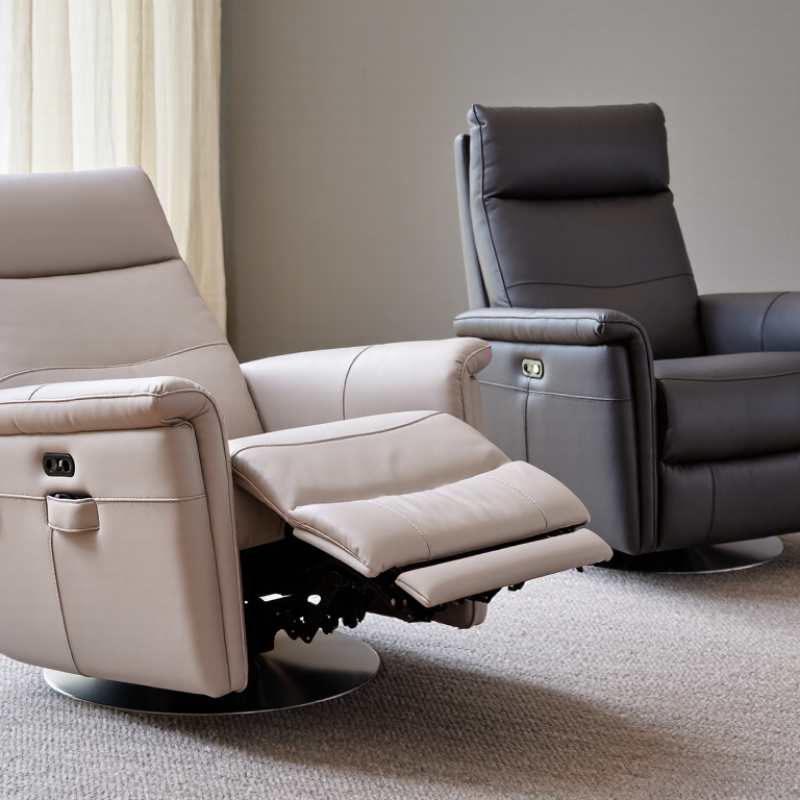
Choosing the best power recliner starts with identifying the chair type, not the color. A two-position model suits reading and television. An infinite-position chair offers finer back and leg adjustments. A lift recliner adds powered assistance for users who struggle to stand. Wall-hugging designs save space, but they still need clearance for footrest movement. Zero-gravity positioning may reduce pressure, although comfort remains highly personal.
According to the U.S. Census Bureau’s 2023 population estimates, adults aged 65 and older represented 17.7% of the U.S. population. AARP’s 2021 Home and Community Preferences Survey also found that 77% of adults want to remain in their homes. These figures support growing demand for supportive seating. Look for a quiet motor, stable frame, simple controls, and emergency battery support. USB charging is convenient, but it should not replace proper electrical safety certification.
Measure carefully. A chair that feels spacious in a showroom may crowd a narrow living room. Check seat depth, arm height, footrest length, and the user’s knee angle. Firm cushioning usually supports easier transfers, while soft foam feels warmer but may compress quickly. In practical testing, remote controls with raised buttons are easier to use at night. Still, specifications can mislead. Some published weight limits assume ideal use, not repeated daily movement. A qualified retailer or occupational therapist can verify fit before purchase.
Assessing Size, Comfort, and User Support
Choosing a power recliner begins with the person, not the mechanism. The World Health Organization projects that 1.4 billion people will be aged 60 or older by 2030. That demographic shift makes practical user support increasingly important. Measure hip width, shoulder height, leg length, and doorway clearance before shopping. Add several centimetres for clothing and movement. A chair that barely fits can feel restrictive.
Comfort requires more than soft foam. Sit with your heels supported and your knees near a right angle. When reclined, your head should remain aligned with the backrest, not pushed forward. The National Institute on Aging recommends stable seating and clear pathways for older adults. This matters because the CDC reports that one in four older adults falls each year. Choose wide, easy-grip controls, steady armrests, and a footrest that opens without sudden movement. Test the chair slowly. Listen for motor noise.
User support is easy to overstate. Lumbar cushions may help one person and irritate another. The AARP 2024 Home and Community Preferences Survey found that 75% of adults aged 50 and above want to remain in their current homes. A supportive recliner should therefore suit daily routines, not just showroom posture. Check transfer height, emergency battery operation, fabric friction, and cleaning access. I would not trust advertised “ergonomic” claims alone. Sit for at least ten minutes, try both upright and reclined positions, and notice pressure behind the knees. Small discomfort becomes significant with repeated use.
How to Choose the Best Power Recliner Chair?
Use these ergonomic reference ranges to assess size, comfort, and user support. Measurements are shown in inches and should be matched to the user’s body dimensions before purchase.
How to read the chart: A suitable power recliner should provide enough seat width for movement, a seat depth that supports the thighs without pressing behind the knees, stable seat height for easy standing, and adequate backrest, armrest, and footrest dimensions for full-body support.
Comparing Motor Performance, Controls, and Safety
Choosing a power recliner starts with its motor, controls, and safety system. A smooth motor should lift the footrest without jerking or stalling. Listen closely. Excessive humming may suggest poor insulation, friction, or an overloaded mechanism. Check the manufacturer’s rated duty cycle, lifting capacity, and warranty terms. A slower motor is not automatically weaker; controlled movement often feels safer.
Controls should be simple enough to operate in low light. Large, raised buttons help users with limited dexterity. A wired handset can be easier to find than a small wireless remote. Test every position while seated. The chair should stop immediately when you release the button. Some models include USB charging, memory positions, or emergency battery lowering. Useful, but not essential. Extra features can complicate repairs.
Safety deserves the closest inspection. The CDC reports that more than 14 million adults aged 65 and older report a fall each year. A stable base, anti-tip design, enclosed moving parts, and pinch-point protection therefore matter. Look for compliance information referencing recognized furniture or electrical safety requirements, such as UL 962 or applicable IEC standards. Keep cables away from walkways and never place fingers beneath the footrest. One detail is easy to miss: a chair may feel stable on carpet but shift on smooth flooring. Test it on the surface used at home. Availability of replacement controls also deserves attention. A comfortable chair becomes frustrating when one failed handset makes every function unavailable.
How to Choose the Best Power Recliner Chair? - Comparing Motor Performance, Controls, and Safety
The table below compares common power-recliner configurations. Actual performance may vary by chair design, user weight, battery condition, upholstery, and manufacturer specifications.
| Evaluation Dimension | Basic Single-Motor Recliner | Dual-Motor Recliner | Advanced Dual-Motor Recliner | What to Check Before Buying |
|---|---|---|---|---|
| Motor Configuration | One motor generally controls the backrest and footrest together. | Two independent motors usually control the backrest and footrest separately. | Two independent motors with more precise positioning and additional adjustment functions. | Confirm which sections move independently and whether the mechanism matches the intended use. |
| Positioning Flexibility | Suitable for standard sitting, reading, and reclining positions. | Allows separate adjustment of back angle and leg elevation for improved comfort. | Often supports finer positioning, including independent back, leg, and sometimes headrest adjustments. | Test whether the chair can reach a comfortable upright, resting, and exit position. |
| Movement Speed | Typically steady but may require a longer movement cycle because several sections move together. | Usually provides smoother control because each motor handles a separate function. | May offer smoother, more gradual positioning rather than substantially higher speed. | Prioritize smooth, quiet movement over maximum speed; ask for the full open-and-close cycle time. |
| Lifting Capacity | Capacity varies widely and should be verified from the chair's rated user-weight limit. | May provide stronger or more stable operation, but motor count alone does not determine capacity. | Can include reinforced frames or lift-assist functions, depending on the design. | Choose a model with a rated capacity above the user's weight and avoid using the chair beyond that limit. |
| Operating Noise | A low mechanical hum is normal during operation. | May produce slightly more mechanical sound because two motors operate in the system. | Should operate smoothly without grinding, clicking, or abrupt stops. | Listen for unusual noises and test the chair under normal user load. |
| Control Type | Wired hand control with basic open, close, or recline buttons. | Wired control commonly provides separate buttons for the backrest and footrest. | May include illuminated buttons, memory positions, USB charging, or wireless control. | Select large, clearly labeled buttons that are easy to operate without looking down. |
| Emergency or Manual Release | Some models provide manual access or a reset procedure if power is interrupted. | May include a battery backup or manual release, depending on the mechanism. | Often offers more comprehensive power-failure provisions, but this is not universal. | Ask how the user can return to a safe sitting position during a power outage. |
| Obstacle Detection | Basic models may stop when resistance is detected, but protection levels vary. | May include pinch-protection features around moving joints and the footrest. | May provide more advanced current monitoring or obstruction protection. | Keep hands, pets, and objects away from moving gaps; do not rely only on automatic stopping. |
| Stability and Base | A wide, level base helps reduce rocking during reclining. | A stable frame is important because independent adjustments can shift the center of gravity. | Lift-assist versions should have a stable base and controlled forward movement. | Check for wobbling, uneven flooring, and adequate clearance from walls and furniture. |
| Power Requirements | Usually powered by a low-voltage external adapter connected to a household outlet. | Uses a similar low-voltage power system, with additional motor demand. | May support an optional rechargeable battery pack for temporary cordless operation. | Check adapter ratings, cable routing, battery availability, and whether replacement parts are obtainable. |
| Safety Standards and Documentation | Should include operating instructions, weight limits, and electrical safety information. | Should provide clear instructions for installation, use, cleaning, and troubleshooting. | May include additional documentation for lift functions, battery systems, and control features. | Look for applicable electrical certifications, safety warnings, warranty terms, and service instructions. |
| Best Use Case | A cost-conscious user who needs simple powered reclining. | A user who values independent leg and back adjustment for daily comfort. | A user who needs more precise positioning, lift assistance, or additional convenience features. | Match the configuration to mobility needs, room size, frequency of use, and maintenance expectations. |
Checking Materials, Durability, and Maintenance Needs
How to Choose the Best Power Recliner Chair?
Material choice affects comfort, appearance, and long-term maintenance. Inspect the upholstery under bright light. Real leather usually feels varied, while synthetic coverings often look more uniform. High-quality fabric can resist daily friction, but tightly woven surfaces may trap dust. Ask about stain resistance, colorfastness, and cleaning instructions before purchasing. A soft surface is appealing, yet softness alone does not prove durability.
Check the frame, mechanism, and moving joints carefully. Kiln-dried hardwood or reinforced metal can provide dependable support when properly assembled. Sit fully back and operate the footrest several times. The movement should feel steady, quiet, and controlled. Listen for clicking or grinding sounds. These may indicate poor alignment, although one test cannot reveal everything. I once focused too much on cushioning and overlooked a weak control connection. That mistake changed my inspection routine.
Maintenance needs should fit your actual habits. Wipe smooth upholstery with a clean, slightly damp cloth. Vacuum fabric seams and gaps weekly, especially in homes with pets. Never use a cleaner unless the care label permits it. Keep drinks away from electrical controls and avoid pulling the chair by its footrest. Check cables and plugs periodically for damage. A chair may look sturdy but still require careful electrical maintenance. Ask whether replacement parts and service guidance remain available. That answer can matter more than an attractive finish.
Evaluating Price, Warranty, and Retailer Reliability
When choosing a power recliner chair, price should not be your only test. The National Retail Federation and Appriss Retail estimated $890 billion in merchandise returns during 2024, equal to 16.9% of annual retail sales. That figure covers all retail, but it signals a practical risk. Confirm delivery fees, assembly charges, disposal costs, and return shipping before paying. A cheaper chair may become expensive after one failed delivery. Measure twice. Sit in the chair for several minutes, and check whether the footrest opens smoothly.
Warranty terms reveal more than a sales description. The U.S. Federal Trade Commission advises buyers to check coverage, duration, exclusions, and repair procedures in writing. Ask whether the warranty covers the motor, control handset, frame, upholstery, and labor separately. Some warranties cover parts but exclude service visits. That detail matters in a heavy chair. Keep your receipt, product serial number, and installation records. My own preference is a clear service process over an impressive warranty length. Longer is not always better.
Tips:
Request the full warranty before ordering. Verify the retailer’s physical address and customer-service hours. Read recent verified-purchase reviews for delivery delays, damaged cartons, and repair response. Check the return window after delivery, not after purchase. Ask who pays return freight. If the answer feels vague, pause. A retailer’s written response can become valuable evidence later. Also, do not ignore small warning signs; unclear wording often predicts frustrating support.