How to Choose the Best Paddy Land Tractor in 2026?
Compare Traction: 4WD and 10–20% Lower Slippage on Wet Soil
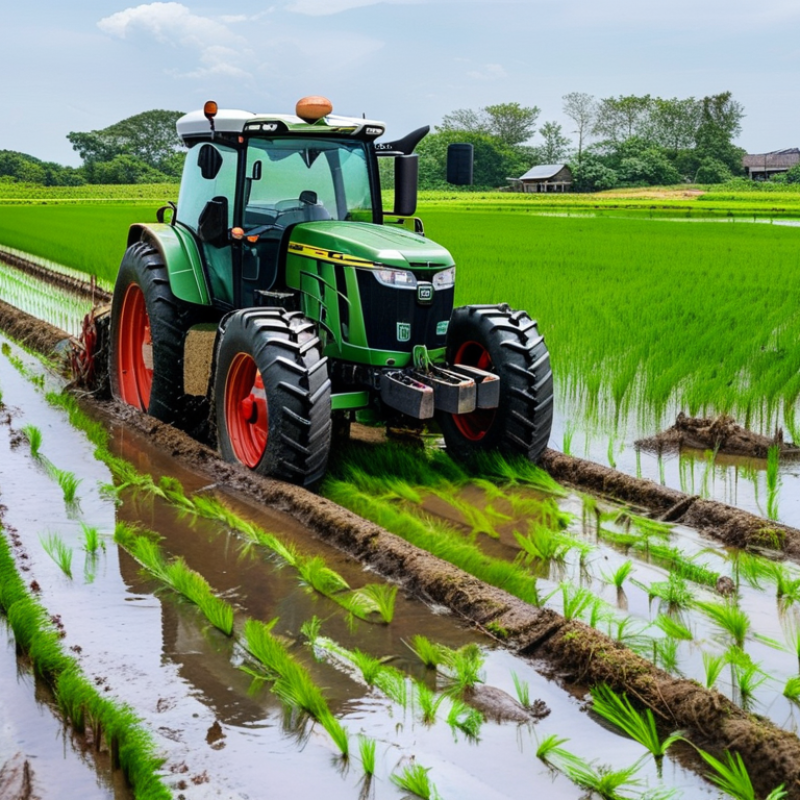
Wet paddy soil can turn a strong tractor into a spinning machine. Four-wheel drive sends torque to both axles, improving pull during puddling, hauling, and shallow field preparation. In controlled comparisons, suitable 4WD setups may reduce slippage by 10–20% on wet soil. The result depends on tire design, ballast, soil depth, and operating speed.
10–20%
Lower slippage on wet soil
Watch the wheels closely. If the rear tires dig deep while the tractor barely moves, power is being wasted. Lower tire pressure can increase the contact patch, but excessive pressure loss may damage the sidewall. Correct ballast also matters. Too little weight causes spinning, while too much creates deep ruts and soil compaction. It is a balance.
Test before buying.
A practical field trial should use the same implement, water level, gear, and travel path. Measure distance covered, fuel used, and visible wheel marks. Four-wheel drive may feel impressive, yet it is not automatically the best choice for every farm. I have seen operators blame the tractor when poor tire matching caused the real problem. Some claims also overlook turning losses at the headland. Choose a model with adjustable traction settings, clear service support, and specifications suited to your soil. Reliable performance comes from the whole setup, not drivetrain type alone.