Why Choose a Red Light Therapy Pod for Your Business?
Why Choose a Red Light Therapy Pod for Your Business?
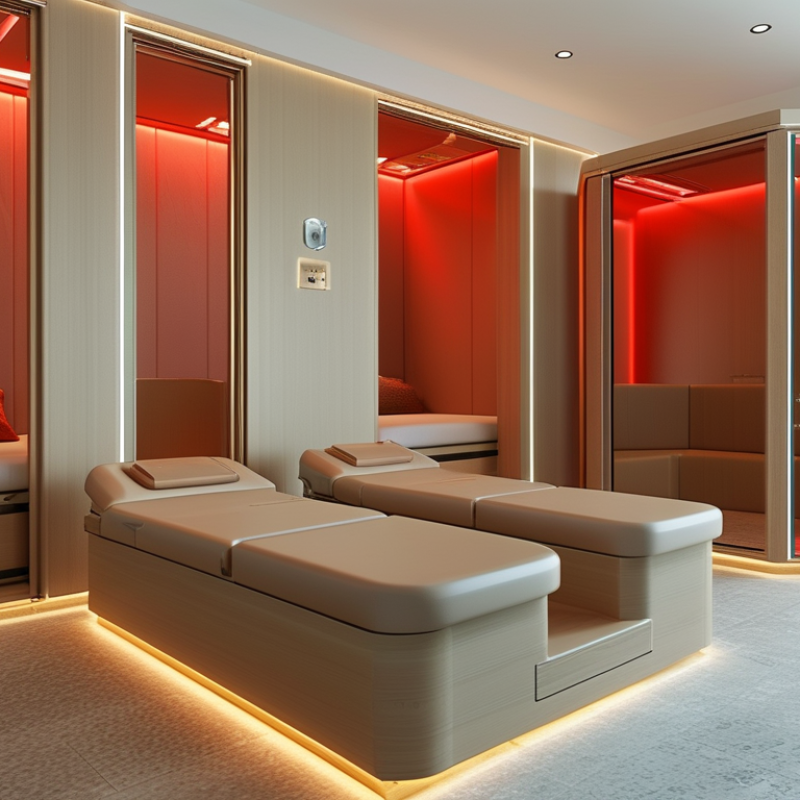
A Red Light Therapy Pod can turn an underused wellness room into a structured client experience. Its enclosed design provides full-body light exposure, consistent positioning, and a cleaner treatment routine. Clients can enter, follow clear instructions, and leave without complicated equipment adjustments. That simplicity matters in busy spas, fitness centers, recovery studios, and wellness clinics.
Dr. Michael R. Hamblin, a leading photobiomodulation researcher, has described the field this way: “Photobiomodulation is the use of light to stimulate healing, relieve pain and inflammation, and prevent tissue damage.” His work supports careful discussion of light-based therapy, not exaggerated promises. A responsible business should present a pod as a wellness service, not a guaranteed medical solution. Professional training, manufacturer guidance, eye-protection instructions, and documented cleaning procedures should shape every session.
The commercial value is practical. A pod requires floor space, electrical planning, maintenance, and staff education. It also needs a realistic return-on-investment assessment. Count appointments, session length, pricing, cleaning time, and equipment downtime. Small details build trust. A visible timer helps clients understand the process. Fresh linens and a wiped control panel show attention. Clear consent forms protect expectations.
Results can vary.
That part deserves honesty.
Some customers may notice changes quickly. Others may not. Skin type, treatment consistency, device specifications, and individual health conditions can influence experiences. Even enthusiastic operators should keep reviewing the evidence. Choosing a Red Light Therapy Pod is therefore less about following a trend. It is about creating a measured, credible service that fits your business and respects every client.
Define Red Light Therapy Pods: 600–1,000 nm Photobiomodulation
Why Choose a Red Light Therapy Pod for Your Business?
Define Red Light Therapy Pods: 600–1,000 nm Photobiomodulation
A red light therapy pod uses LEDs to deliver non-invasive photobiomodulation across red and near-infrared wavelengths. Typical systems operate between 600 and 1,000 nm. Red light mainly targets superficial tissue, while near-infrared light may reach deeper structures. The mechanism involves cellular light absorption, especially by mitochondrial chromophores. Evidence remains promising, but results depend on wavelength, irradiance, fluence, distance, and treatment time. More light is not automatically better.
A 2023 review in Photobiomodulation, Photomedicine, and Laser Surgery reported potential benefits for pain, tissue repair, and inflammation management. However, study protocols varied widely. That inconsistency matters for business owners. The World Association for Photobiomodulation Therapy publishes dose guidance, yet professional assessment remains essential. The Global Wellness Institute valued the global wellness economy at approximately 6.3 trillion dollars in 2023. This growth suggests demand, but demand alone does not prove clinical effectiveness. A pod should support qualified services, not replace medical care.
Tips: Ask suppliers for independent irradiance testing, wavelength accuracy, and electrical safety documentation. Record client exposure times and skin responses. Provide protective eyewear when appropriate. Keep ventilation and cleaning routines visible. Avoid promising guaranteed outcomes. Honestly, some clients may notice little change. That is an important limitation, not a marketing failure. Clear consent forms, staff training, and referral procedures make the service more credible.
Compare Pod Irradiance: 10–100 mW/cm² and Session Design
For a business, pod irradiance can shape both service quality and daily workflow. A range of 10–100 mW/cm² offers different session possibilities, but a higher number is not automatically better. Irradiance describes power density at the client’s skin, not the total treatment dose. Distance, body position, and device calibration can change the real exposure.
Dose depends on irradiance and time. At 10 mW/cm², a 10-minute session delivers about 6 J/cm². At 100 mW/cm², the same session reaches about 60 J/cm². That difference is substantial. Operators should follow the equipment instructions, check actual output with a suitable meter, and record session settings. Small details matter. A loose door seal or uneven panel spacing may affect consistency.
Session design should match the pod’s output and the customer’s comfort. Lower irradiance may suit longer appointments, while higher irradiance can support shorter scheduling when the protocol allows it. Staff should monitor warmth, eye comfort, skin reactions, and client feedback without making medical promises. I once assumed faster sessions would always improve business efficiency. In practice, rushed setup created more questions and weaker customer confidence. Clear screening, repeatable positioning, and honest explanations usually build greater trust. Data logs can reveal what needs adjustment, although they may expose inconvenient gaps in training.
Why Choose a Red Light Therapy Pod for Your Business? - Compare Pod Irradiance: 10–100 mW/cm² and Session Design
Illustrative session-planning models based on irradiance, exposure time, and delivered fluence. Actual output should be verified at the user surface with a calibrated meter.
| Pod Irradiance | Suggested Exposure Time | Calculated Fluence | Example Session Design | Operational Considerations | Business Use Case |
| 10 mW/cm² | 10 minutes | 6 J/cm² | Low-intensity introductory session; allow extra time for setup and turnover. | Generally easier to manage for heat-sensitive users; longer appointments reduce daily capacity. | Entry-level wellness programs and low-throughput locations. |
| 20 mW/cm² | 10 minutes | 12 J/cm² | Standard introductory session with a consistent 10-minute booking block. | Simple scheduling and moderate energy delivery; confirm uniform coverage across the pod. | Studios seeking a straightforward, easy-to-explain service format. |
| 30 mW/cm² | 8 minutes | 14.4 J/cm² | Balanced session with an 8-minute light-on period and a separate cleaning cycle. | Shorter light-on time can improve appointment turnover; ventilation and user comfort remain important. | General wellness centers balancing customer experience and throughput. |
| 40 mW/cm² | 8 minutes | 19.2 J/cm² | Moderate-intensity session with a clear pre-session screening and post-session reset. | Use temperature monitoring, airflow management, and a defined comfort check. | Multi-service wellness businesses requiring efficient appointment blocks. |
| 60 mW/cm² | 6 minutes | 21.6 J/cm² | Shorter session with a 6-minute light-on period and scheduled turnover time. | Higher irradiance may increase thermal load; verify dose control, cooling, and electrical safety. | High-demand locations prioritizing compact appointment cycles. |
| 80 mW/cm² | 5 minutes | 24 J/cm² | Fast-session model with structured intake, positioning, and cleaning procedures. | Requires careful heat management, accurate timer controls, and consistent user positioning. | Premium facilities with strong process control and trained staff. |
| 100 mW/cm² | 5 minutes | 30 J/cm² | High-output, short-duration model requiring conservative protocols and close comfort monitoring. | Maximum attention to thermal comfort, dose limits, ventilation, maintenance, and user screening. | Businesses with high utilization and the infrastructure to manage higher-output equipment. |
Calculation and safety note: Fluence is calculated as irradiance × time. For example, 40 mW/cm² × 480 seconds = 19.2 J/cm². These figures are planning examples rather than treatment recommendations. Session duration should be selected according to the intended wavelength, verified irradiance at the body surface, device instructions, user comfort, applicable regulations, and qualified professional guidance.
Plan Revenue Models Using Capacity, Pricing, and Utilization Metrics
Why Choose a Red Light Therapy Pod for Your Business?
A red light therapy pod can become a measurable service, not merely an attractive room feature. The Global Wellness Institute’s 2023 Wellness Economy Monitor valued the global wellness economy at $5.6 trillion in 2022. It projects growth to $8.5 trillion by 2027. The Health & Fitness Association’s 2024 Global Report also recorded 184 million health club members worldwide in 2023. These figures suggest strong interest, but they do not guarantee local demand.
Start with capacity. Suppose one pod operates ten hours daily, supports three sessions hourly, and opens 26 days monthly. Maximum capacity equals 780 sessions. At $35 per session and 40% utilization, monthly gross revenue reaches $10,920. That calculation excludes staffing, rent, cleaning, maintenance, payment fees, and equipment financing. Small details matter. A five-minute turnover delay can reduce available sessions sharply.
Track utilization weekly.
Pricing should match your audience and service quality. A higher price may work with consultations, private rooms, or membership access. A lower introductory rate can fill quiet hours, but it may train customers to wait for discounts. A 40% utilization target may be optimistic during the first months. Test 25%, 40%, and 60% scenarios before committing capital. Record booked sessions, cancellations, repeat visits, average revenue per visit, and downtime. Industry reports provide context, not certainty. Your own booking data will eventually be more authoritative.