Skip to content

How to Choose a Hydraulic Internal Gear Pump

Choosing a Hydraulic Internal Gear Pump is not just a matter of matching flow and pressure. The right choice affects energy use, noise, temperature, and service life. MarketsandMarkets’ Hydraulic Pumps Market report tracks demand across mobile and industrial applications, where operating conditions and efficiency needs continue to shape pump selection. Market growth alone, however, does not tell you which pump will suit a particular machine.

Start with the actual duty cycle. Record required flow, operating pressure, shaft speed, fluid viscosity, and expected temperature range. Then check the pump manufacturer’s performance curves at those conditions, not only at a catalog’s headline rating. Small details matter. A cold start with viscous oil can feel very different from steady operation after the system warms up. ISO 4409:2019 provides standardized methods for testing and presenting hydraulic pump performance, giving engineers a more consistent basis for comparing published data.

Also consider inlet conditions, fluid compatibility, contamination control, mounting space, and maintenance access. A compact pump may fit neatly, yet perform poorly if its inlet line restricts flow. That sounds simple. Real installations are less tidy. Noise limits, duty cycles, and service intervals can change the preferred configuration. Some selection decisions still depend on measurements from the machine, not a spreadsheet. This guide explains how to compare specifications, question assumptions, and choose a Hydraulic Internal Gear Pump that fits the system—not merely the quotation.
How to Choose a Hydraulic Internal Gear Pump

Define the Hydraulic System’s Flow and Pressure Requirements

How to Choose a Hydraulic Internal Gear Pump

Define the Hydraulic System’s Flow and Pressure Requirements

Start with the machine’s actual tasks, not a pump catalog. List each actuator, its required speed, and how often it operates. A cylinder that must extend in four seconds needs a different flow rate than one moving slowly between cycles. Add the flow demands of components that may run at the same time. Flow depends on operating speed, so check the pump’s rated output at the intended shaft speed. Small details matter.

Tips: Record flow and pressure readings during a typical work cycle. Use a flow meter and a pressure gauge where readings can be taken safely. Measure under load.

Set pressure requirements from the load, not just the system’s relief-valve setting. Include pressure losses across hoses, filters, valves, and fittings. Note both continuous pressure and short peaks; a pump that tolerates brief spikes may not suit constant high-pressure service. Check fluid viscosity across the expected temperature range, because cold starts and hot operation can change performance. Early estimates are rarely perfect. Recheck them against measured cycle data before choosing a pump, and leave a practical margin without oversizing blindly. Too much flow can increase heat and energy use.
Match Pump Displacement and Speed to Operating Conditions

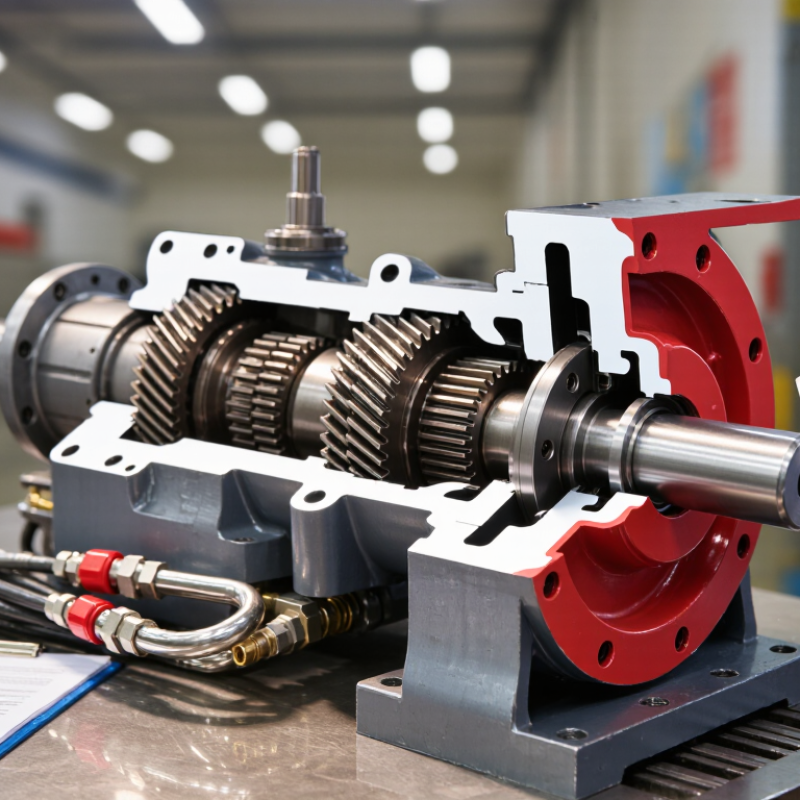
Choose displacement and speed together, not as separate catalog numbers. Theoretical flow equals displacement in cubic centimeters per revolution multiplied by rpm, then divided by 1,000 for liters per minute. Actual flow is lower because of leakage and changes with pressure, oil viscosity, and wear.

For example, a 20 cc/rev pump at 1,500 rpm produces 30 L/min theoretically. Confirm the required flow at the machine’s operating pressure, then check the manufacturer’s efficiency curves and permitted speed range. Cold, thick oil can make a high-speed start especially demanding.

Oversizing can waste energy or force excess flow through a relief valve, while undersizing may slow an actuator under load. The U.S. Department of Energy’s Improving Pumping System Performance sourcebook reports that pumping systems can account for 25–50% of energy use in some industrial facilities; this figure covers pumping systems broadly, not hydraulic gear pumps alone. It reinforces why selecting flow close to real demand matters. Measure the duty cycle, including peak flow, idle periods, and oil temperature, rather than relying only on a machine’s nominal rating.

Tips: Calculate flow at the actual shaft speed, and leave margin for leakage without ignoring heat. Check inlet conditions during cold starts. A neat calculation can still miss a messy operating cycle.

Check Fluid Compatibility and Temperature Range

When choosing a hydraulic internal gear pump, check the fluid’s compatibility with every wetted component, including seals and housing materials. A fluid that attacks an elastomer can cause swelling, hardening, or leakage. ISO 11158 classifies mineral-oil hydraulic fluids by performance, but that classification alone does not confirm seal compatibility. Check the fluid supplier’s compatibility data and the pump manufacturer’s material specifications. Small details matter. A seal can look fine during a brief inspection and still deteriorate after prolonged exposure.

Temperature changes viscosity, which affects lubrication, leakage, and pump efficiency. Under ISO 3448, ISO VG 46 oil has a nominal kinematic viscosity of 46 mm²/s at 40°C, with a tolerance of ±10%. That number is not its viscosity at your operating temperature. ASTM D341-20 provides a method for estimating viscosity across temperatures from measured data; use the fluid’s actual viscosity-temperature information rather than guessing. Compare the cold-start temperature and the hottest sustained fluid temperature with the pump’s permitted viscosity range. A reservoir near a furnace or a long, hot return line can push fluid beyond its intended range. I would recheck the assumptions after installation, too: real operating temperatures can differ from a design estimate.

Compare Construction Materials, Seals, and Efficiency

How to Choose a Hydraulic Internal Gear Pump

Compare Construction Materials, Seals, and Efficiency

Pump materials should match the fluid, pressure, and operating environment. Cast iron handles demanding loads well, while aluminum can reduce overall weight. Neither is automatically the better choice. Check whether the fluid contains additives that may affect metal surfaces. In damp or washdown areas, corrosion resistance deserves extra attention. A small material mismatch can become costly wear.

Seal selection needs the same care. Confirm compatibility with the fluid and its temperature range, including cold starts and heat buildup. A seal that works with standard hydraulic oil may not suit a fluid with different additives. Look for evidence of leakage around the shaft after operation. This part is easy to overlook.

Efficiency also depends on speed, pressure, viscosity, and internal clearances. A pump may look efficient on a data sheet but lose performance when the oil is too thin or the system runs outside its rated range. Compare volumetric efficiency at your actual working conditions, not just at a convenient test point. One detail can change the choice. Recheck duty-cycle assumptions; they are sometimes too optimistic.

Verify Mounting, Drive, and Maintenance Requirements

How to Choose a Hydraulic Internal Gear Pump

Verify the mounting interface before comparing pump sizes. Match the flange, pilot diameter, bolt pattern, and shaft position to the equipment drawing. Measure it twice. Even a small alignment error can place unwanted side load on the shaft or coupling. Check port direction and nearby hose clearance, too; a fitting that looks fine on paper may hit a frame during installation.

Then confirm that the drive suits the pump’s operating conditions. Compare required flow and pressure with the intended speed range, and check shaft type, rotation, and coupling dimensions. The drive must handle startup torque, not just steady running load. Do not assume an existing motor is suitable because its rated power appears adequate. Follow the pump maker’s technical data, and verify the actual duty cycle with the machine’s operating requirements.

Maintenance needs can determine whether a pump is practical for the site. Check the specified fluid viscosity and temperature range, filtration requirements, and suction-line limits. Make sure technicians can reach inspection points and remove the pump without dismantling nearby equipment. Access gets overlooked. A clean, accessible installation makes routine checks easier, but actual service intervals should follow operating conditions and technical guidance. Keep a record of fluid changes, unusual noise, and temperature readings; these details can reveal developing problems before performance drops.

How to Choose a Hydraulic Internal Gear Pump

Verify mounting, drive, and maintenance requirements before selecting a pump.

Estimated flow is calculated for a 20 cm³/rev pump at 90% volumetric efficiency using flow = displacement × speed × efficiency. Confirm the mounting flange and shaft match the equipment, ensure the drive stays within the pump’s rated speed and torque, and follow the manufacturer’s guidance for fluid cleanliness, filtration, and service intervals. Actual flow varies with operating conditions and pump wear.