China Top 10 PCB Circuit Board Manufacturers?
Choosing among China’s top PCB manufacturers is not just a price comparison. A Pcb Circuit Board must match the product’s layer count, material, tolerances, and production volume. A prototype for a sensor has different needs from a high-volume board for industrial control. Even small details matter: copper weight, via structure, solder-mask registration, and how clearly the supplier reports inspection results.
PCB manufacturing expert Happy Holden’s published work emphasizes the relationship between design choices and manufacturability. A practical way to express that lesson is: “A reliable board begins with a design the factory can build consistently.” This is an editorial summary, not a verbatim quotation. It points to a useful question for buyers: can a manufacturer explain its process limits, testing methods, and quality controls in plain terms?
This guide compares ten China-based manufacturers through capabilities that buyers can verify, including product range, prototype support, certifications, engineering communication, and delivery planning. A polished website is not proof of a stable process. Ask for specific evidence, such as inspection records and clear answers about traceability. Then match those details to your actual requirements. Rankings can simplify research, but they cannot replace due diligence. Some supplier information may change, and a strong first impression can still miss important constraints.
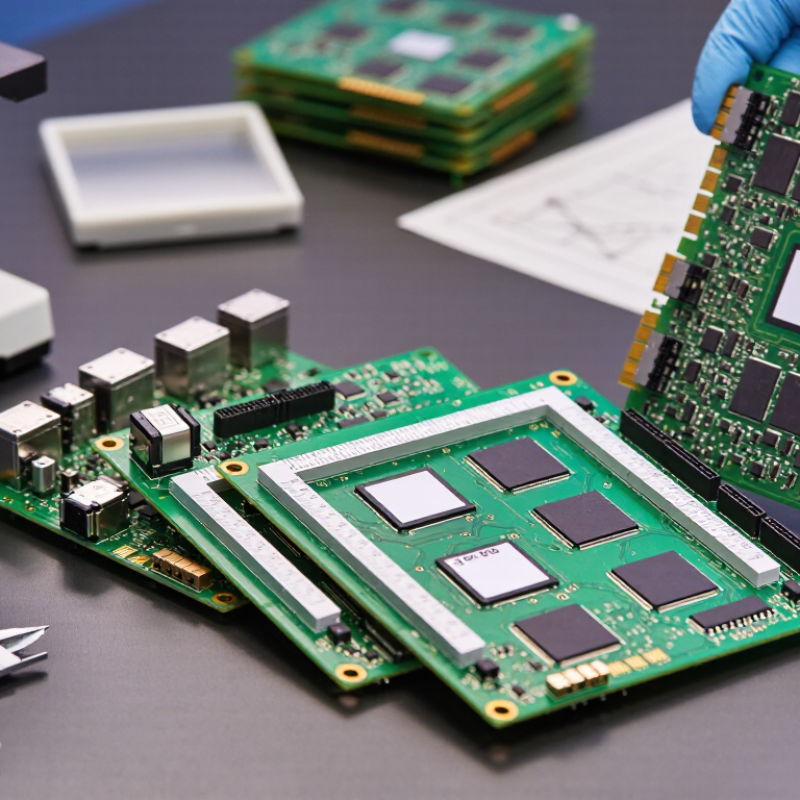
How PCB Manufacturers Support China’s Electronics Industry
China’s PCB manufacturers help turn electronic designs into products that can be assembled at scale. They supply rigid, flexible, and multilayer boards for devices ranging from phone chargers to industrial control systems. Prismark’s 2023 industry review estimated global PCB production value at about US$73.6 billion, underscoring the sector’s importance to electronics supply chains. China’s dense network of board makers, component suppliers, and assemblers can shorten production loops. That matters.
Demand also depends on the wider electronics market. The World Semiconductor Trade Statistics organization reported global semiconductor sales of US$627.6 billion in 2024, up 19.1% from 2023. More chips often mean more demand for carefully engineered boards, though not every market grows at the same pace. Manufacturers support customers through material selection, prototype runs, impedance checks, and inspection for defects such as lifted pads or uneven soldering. These steps are practical, but they do not remove every risk; design changes late in production can still cause delays.
Tips: Ask for traceable test records, clear layer-stack specifications, and samples made with the intended materials. Check how the supplier handles design revisions. Small details count.
Key Factors for Evaluating PCB Manufacturers in China
When comparing China’s top PCB manufacturers, do not rank suppliers by quoted price alone. Prismark’s 2024 industry report estimated that global PCB production value fell about 15% in 2023, to roughly US$69.5 billion. In a contracting market, utilization and financial resilience deserve attention alongside factory size. Ask for recent capacity figures, monthly output, on-time delivery rates, and defect data for boards with comparable layer counts. Request evidence for your required stack-up, copper weight, hole tolerances, and surface finish. Paper capability can look impressive. Production reality matters more.
Assess quality through documented process controls and traceability. Check alignment with relevant IPC acceptance and qualification standards, then review lot-level inspection records, cross-sections, and corrective-action examples. A capable engineering team should explain impedance control, via reliability, and how it manages design changes. Vague promises are not evidence. Review material sourcing, backup equipment, and response times for urgent issues. Ask who handles a problem after shipment; that detail is often missed. Verify claims with a pilot order and incoming inspection, since one sample cannot prove consistency. Compare total cost, including tooling, yield loss, packaging, and freight. Even thorough audits can miss problems between visits.
Profiles of Ten Notable PCB Manufacturers in China
China’s PCB sector spans high-volume multilayer production, fine-line HDI, flexible circuits, rigid-flex boards, and specialist prototypes. Prismark’s 2024 industry report estimated global PCB production value at US$73.9 billion in 2023, about 15% lower than in 2022. That downturn makes factory scale only one part of a useful comparison. Delivery consistency matters, too.
A ten-profile review can examine a high-volume supplier serving consumer electronics, a precision HDI producer, and a flexible-board specialist. Other profiles may focus on automotive-grade boards, industrial controls, server hardware, communications equipment, quick-turn prototypes, high-layer-count designs, or small-batch engineering support. Look for concrete evidence: layer-count capability, line-width tolerances, inspection methods, and published lead times. Ask how the plant handles a small pilot run, not only a large order. Details reveal more.
Certifications and equipment lists are useful, but they do not guarantee stable yields. A process engineer’s answer about copper thickness variation may be more telling than polished sales language. This comparison has limits: public disclosures differ, and some capabilities are difficult to verify independently. Still, specific questions make the ten profiles easier to assess.
Comparing Their Products, Capabilities, and Market Focus
Comparing China’s top ten PCB manufacturers is more useful when the focus is on products, capabilities, and customers—not a simple ranking. Some concentrate on rigid multilayer boards for industrial controls, while others offer HDI or rigid-flex designs for compact electronics. These products solve different problems. A board with dense routing may suit a small device, but it can require tighter process control and more careful design review.
Production capabilities matter just as much. Buyers can compare layer counts, minimum trace widths, prototype turnaround, and support for volume orders. Ask how a supplier handles impedance control, copper thickness, and inspection records. These details affect whether a design moves smoothly from a sample board to repeat production. A fast prototype is useful, but it does not prove stable mass-production performance. Not always.
Market focus provides another useful lens. Manufacturers serving automotive, medical, telecommunications, or consumer electronics may have different testing routines and delivery expectations. Request evidence relevant to the intended application, such as quality-system documentation and sample inspection results. Certifications alone do not explain how a factory manages a specific project. And a polished capability list can leave out practical limits, such as available materials or engineering response times. Comparing ten suppliers is imperfect; the best fit depends on the board design, order size, and support the project actually needs.
How to Choose a Chinese PCB Manufacturer for Your Project
Choosing a Chinese PCB manufacturer starts with matching its capabilities to your design, not comparing prices alone. Share the layer count, board dimensions, copper weight, material, and target impedance. Ask whether the factory can meet your tolerance requirements and provide a design-for-manufacturing review before production. For example, a six-layer prototype with fine-pitch components may need tighter registration controls than a simple two-layer board. Small details matter.
Tips: Request a sample inspection report and clarify what electrical tests are included. Check how the manufacturer handles engineering changes, yield issues, and delivery updates. A quick reply is useful, but clear technical answers matter more.
For a fair comparison, send the same files and specifications to each supplier. Review the stack-up proposal, surface finish, test method, and quoted lead time. Ask how prototypes transition into repeat orders, and whether production records can be traced by lot. If possible, inspect a sample under magnification and compare hole quality, solder mask alignment, and edge finish. I have seen teams focus on unit cost, then discover that unclear test coverage caused delays. That is easy to miss. Confirm responsibilities in writing, especially when drawings change after approval. A short call with the engineering team can reveal gaps that a polished quotation does not.
| No. | Selection Dimension | What to Specify or Ask | How to Evaluate the Response |
|---|---|---|---|
| 1 | Board Type and Construction | Identify whether the project needs a rigid, flexible, or rigid-flex board, and provide the board outline, thickness, copper weight, and layer count. | Confirm that the supplier can build the exact construction in the fabrication data, rather than relying on a general capability statement. |
| 2 | Layer Stack-Up | Request the proposed layer sequence, dielectric thicknesses, copper weights, and finished board thickness for the specified design. | Check the stack-up against the design files and controlled-impedance requirements. There is no single layer-count limit that applies to every manufacturer or project. |
| 3 | Design Rules and Tolerances | Provide the minimum trace width and spacing, hole sizes, annular-ring requirements, board-edge clearances, and relevant dimensional tolerances. | Ask for a written capability review against the actual design. Confirm any proposed changes before fabrication. |
| 4 | Base Materials | Specify the laminate material requirements, glass-transition temperature where relevant, dielectric properties for high-speed designs, and copper weight. | Request the material designation and supporting documentation. Confirm that substitutions require approval if the design depends on particular electrical or thermal properties. |
| 5 | Controlled Impedance | Include target impedance values, tolerance, reference layers, and the relevant transmission-line geometry in the fabrication notes. | Ask for a stack-up proposal and impedance test results or coupons where specified. Verify that the agreed acceptance criteria are documented before production. |
| 6 | Quality Requirements | State the required product class and acceptance criteria. IPC-6012 covers qualification and performance requirements for rigid printed boards; IPC-6013 covers flexible printed boards; IPC-A-600 describes printed-board acceptability. | Check that the quotation and inspection plan identify the applicable standard, revision, and class where required by the project. |
| 7 | Inspection and Testing | Ask which checks are included, such as electrical testing for opens and shorts, automated optical inspection, and additional inspection appropriate to the design. | Match the inspection plan to the board’s risks and requirements. Request test records or inspection reports when they are part of the purchase specification. |
| 8 | Compliance and Traceability | Specify applicable regulatory requirements, material declarations, lot identification, and any certificates or records required with the shipment. | For restricted-substance requirements, state the applicable rules, such as the EU RoHS Directive as amended, and request supporting documentation for the supplied product. |
| 9 | Prototype-to-Production Control | Ask how revisions, approved materials, process changes, and production lots are controlled when moving from prototypes to volume orders. | Look for documented revision control and a clear process for notifying and obtaining approval for changes that could affect form, fit, or function. |
| 10 | Quotation, Delivery, and Communication | Send the same fabrication data and quantity assumptions to each supplier. Request itemized pricing, stated lead time, shipping terms, tooling charges, and quote validity. | Compare quotations on the same board specification and delivery basis. Confirm the production schedule, packaging requirements, and the contact process for engineering questions. |