China Top 10 Hot Stamping Plate Manufacturers
Hot stamping depends on a plate that transfers foil cleanly and holds fine details under heat and pressure. For printers, packaging producers, and finishing workshops, choosing a reliable Hot Stamping Plate manufacturer can affect both appearance and production consistency. The difference may show in a sharp logo edge, an even foil surface, or a plate that wears sooner than expected. Small details matter.
This guide to China Top 10 Hot Stamping Plate Manufacturers offers a starting point for comparing suppliers, not a universal ranking. It considers product range, material options, machining capability, quality controls, communication, and export support. Buyers should ask about brass or magnesium grades, plate thickness, engraving depth, flatness, and tolerances. A supplier’s sample can reveal details that a catalogue cannot. Samples help. It is also useful to confirm production lead times, packaging methods, and the process for handling defects or revisions. No supplier suits every job.
The companies covered may serve different applications, from short-run custom work to repeat packaging orders. Compare each manufacturer against your own artwork, press setup, foil type, and expected run volume. Request current specifications and written quotations before making a decision, since product lines and service terms can change. Still, no list is perfect. Public information may not capture every workshop’s actual capacity, and a polished website is not proof of consistent quality. A careful comparison, backed by samples and direct questions, is more dependable than a headline alone. Reliable sourcing takes verification.
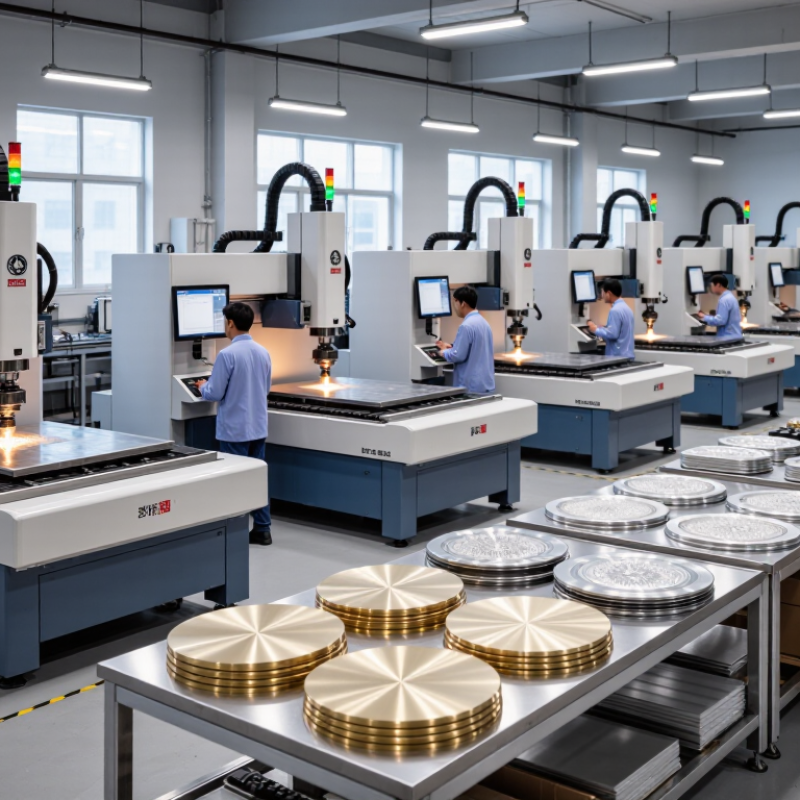
What Hot Stamping Plates Are and Where They Are Used
A hot stamping plate is a precision-made die, usually produced from brass, copper, or magnesium. Its engraved surface transfers metallic or colored foil onto paper, board, leather, or selected plastics through heat and pressure. Some dies create a raised impression without foil. The result can be a small logo, a fine border, or a tactile seal.
Look closely at a carton of cosmetics or a premium spirits label: the reflective lettering often comes from this process. Plates are also used on book covers, greeting cards, and product labels. The method suits short decorative areas, but tiny details need careful testing. Foil may bridge narrow gaps, and uneven pressure can leave dull patches.
Demand for finished packaging gives this process useful context. Smithers’ 2023 report, The Future of Global Packaging to 2028, projects the global packaging market will exceed $1.2 trillion by 2028; this is a packaging forecast, not a hot-stamping-plate sales figure. In production, plate choice depends on substrate, artwork detail, run length, and press setup. A sample impression helps reveal problems before a full run. Shiny is not always better. Overworked decoration can make text harder to read, so contrast and legibility deserve equal attention.
How China's Hot Stamping Plate Industry Is Structured
China’s hot stamping plate industry is a specialized link between metal processing and print finishing. Its supply chain typically starts with brass, magnesium, copper, or steel stock, then moves through artwork preparation, plate cutting or engraving, finishing, and inspection. Some suppliers focus on tooling alone; others combine design support with production. The boundary is fuzzy.
Demand comes mainly from packaging, labels, book covers, and other printed surfaces that need metallic detail or raised texture. China Paper Association’s 2023 annual report records 144.05 million tonnes of paper and paperboard production. This is useful context for the broader print and packaging base, not a direct measure of hot stamping plate sales. Publicly comparable national figures for plate output are limited.
Manufacturers compete on more than price. Plate thickness, engraved depth, edge quality, and repeatability matter on press, where a small defect can mark a whole sheet. Short runs reward fast proofing; high-volume work favors stable tolerances and durable tooling. Regional clusters can shorten supplier-to-printer lead times, although that advantage varies with material availability and transport. The structure is not perfectly tidy: material suppliers, engraving shops, and finishing specialists may overlap, and smaller workshops can be difficult to compare using published data.
Criteria for Assessing Hot Stamping Plate Manufacturers
When comparing hot stamping plate manufacturers in China, look beyond catalog thickness and advertised output. A reliable supplier should explain its material grades, heat-treatment route, and dimensional controls in plain terms. Ask how flatness is measured across a full plate, not only at its edges. Small deviations can affect die contact and create uneven heating during production.
Request test records for hardness, surface condition, and thermal performance. Check whether samples have been evaluated through repeated heating and cooling cycles. Ask for tolerances on thickness and machining, plus a clear inspection report tied to the delivered batch. Details matter. A polished sample is useful, but it cannot replace consistent production records. If possible, review a plate after machining and compare its measured dimensions with the original drawing.
Assess the manufacturer’s process as well as the product. Can technical staff discuss plate selection for your operating temperature and cycle time? Do they explain limits, rather than promise that one specification suits every application? Ask about traceability, packaging, lead times, and how dimensional issues are handled. Not every test tells the whole story. Some buyers focus too heavily on hardness, while overlooking flatness or thermal uniformity. A careful comparison should weigh documented quality, practical engineering support, and repeatability together.
Criteria for Assessing Hot Stamping Plate Manufacturers
Illustrative evaluation weighting (% of total assessment)
The chart presents a practical evaluation rubric, not measured market data or a universal industry standard. Assess plate accuracy, durability, thermal stability, engraving quality, and delivery and technical support using documented specifications and sample tests.
Profiles of 10 Leading Hot Stamping Plate Manufacturers in China
Profile 1 serves high-volume automotive programs, with attention to repeatable plate dimensions.
Profile 2 focuses on custom designs for complex panel shapes.
Profile 3 offers short-run production for pilot projects.
Profile 4 emphasizes material traceability and documented inspection.
Profile 5 supports customers needing close coordination between plate design and press setup.
Profile 6 specializes in replacement plates and maintenance requests.
Profile 7 provides broad machining capacity for larger components.
Profile 8 targets tight tolerances and detailed surface finishing.
Profile 9 offers export packaging and technical communication.
Profile 10 suits buyers seeking flexible order quantities.
China’s hot stamping plate suppliers differ in tooling focus, production scale, and support services. These ten profiles describe useful supplier strengths, not verified rankings. Capabilities vary; confirm them directly.
Tips: Request a sample inspection report, stated tolerances, material details, and a realistic lead time. Ask how changes are handled after design approval. A polished quotation is not proof of consistent production.
A practical comparison should include plate flatness, dimensional accuracy, surface condition, and response time. Ask suppliers to explain their inspection process in plain terms. If possible, review sample parts or visit the production site. Small differences matter. A plate that fits poorly can add setup time and disrupt a stamping schedule. Supplier profiles are only a starting point, and this shortlist needs careful checking.
How to Compare Manufacturers by Products, Quality, and Service
When comparing China’s hot stamping plate manufacturers, match the product to the job. Ask about plate material, thickness options, engraving detail, and compatibility with your press and foil. Request a sample made from your own artwork. Check small text, fine lines, and solid areas under consistent lighting. A polished catalog is not proof.
Quality needs measurable checks. Ask for documented thickness and flatness tolerances, inspection records, and repeatability across production batches. The World Steel Association reported 1,882.6 million tonnes of crude steel production worldwide in 2024 in World Steel in Figures 2025. This is a broad supply indicator, not evidence of plate quality. For that, compare material certificates and test results directly. Details matter.
Service can decide whether a good plate performs well on the press. Compare response times, proofing steps, packaging, and support when impressions look uneven. Ask how the supplier handles urgent revisions and what information it needs to diagnose defects. Try the same foil, substrate, temperature, and pressure for each sample. Keep the results. This comparison is imperfect: workshop conditions can change the outcome, and I would not judge a supplier from one test alone.