Which Ordinary Plywood Is Best in 2026?
Choosing the best Ordinary Plywood in 2026 depends less on a single brand than on where the panel will be used. A cabinet back, a painted shelf, and a workshop jig face different demands. Thickness, veneer quality, bonding, and surface condition all affect performance. A smooth face may suit visible furniture, while a sturdy, less polished panel can work well for hidden parts. The cheapest sheet is not always the best value. Warping or uneven thickness can create extra work later.
Before buying, check the grade and intended-use information on the product label. Ask whether the panel is suitable for dry indoor conditions or needs stronger moisture resistance. These categories are not interchangeable. Look along the edges for open gaps, inspect both faces for bubbles or rough patches, and place the sheet on a flat surface if possible. Small clues matter. A label alone cannot tell you everything, and store conditions may affect a panel’s shape. I have learned that the hard way.
This guide compares practical selection factors, common uses, and trade-offs to help readers choose with confidence. It does not assume that one plywood type suits every project. Instead, it explains what to inspect, which compromises may be reasonable, and when a higher-grade panel is worth the added cost. Measurements, local availability, and manufacturer specifications can vary, so verify details before making a final purchase.
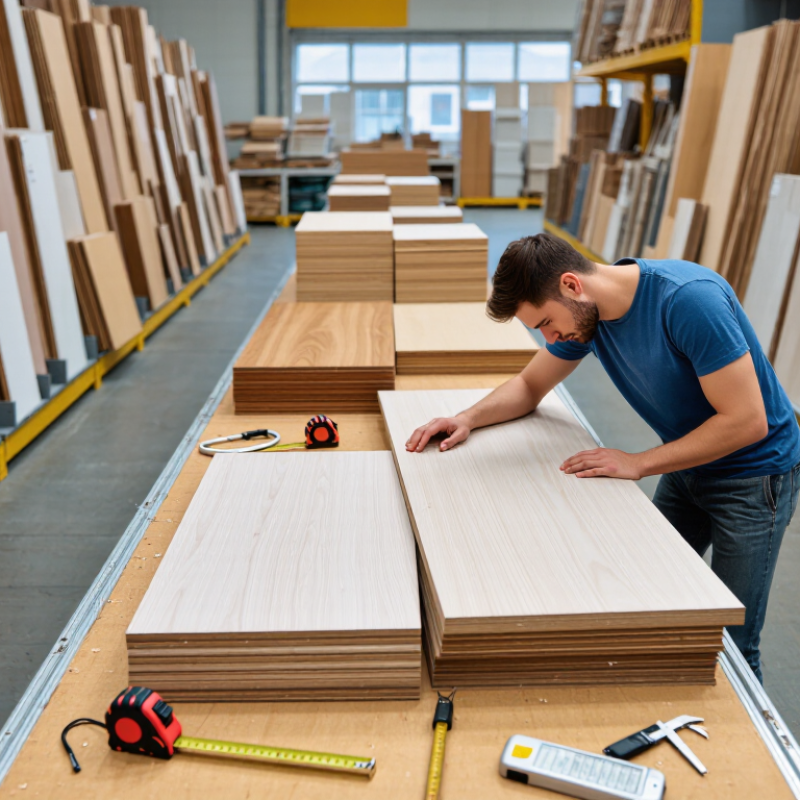
What Ordinary Plywood Means and How It Is Made
Ordinary plywood usually means general-purpose plywood rather than a specialized panel for a particular structural or decorative use. It is built from thin wood veneers, called plies, bonded in layers. The grain direction alternates between neighboring layers, which helps the sheet resist bending and splitting. It is not solid wood. Look at the edges and the stacked layers are easy to see.
Making a sheet begins with logs, which are softened and peeled into thin veneers. The veneers are dried, checked for defects, and coated with adhesive. Workers arrange them in a cross-grain layup, then press the stack with heat and pressure. The panel is trimmed and often sanded. Small gaps or patches may remain; ordinary plywood is not always visually uniform. That detail can matter when a cut edge will stay exposed.
“Ordinary” does not tell you the panel’s exact strength, finish, or moisture suitability. Those depend on its grade, thickness, core construction, and adhesive rating. A smooth face can still hide a weak core. Check the panel markings and project requirements, and inspect the edge for voids before cutting. I would not assume a sheet is waterproof just because it feels dense. For dry indoor shelves, basic panels may work; damp locations call for a clearly rated product and proper installation. The label is useful, but it can still take a closer look.
Which Grades and Core Types Are Available in 2026?
For ordinary plywood in 2026, compare face grades and core construction rather than relying on the word “premium.” In common U.S. grading, A faces are smooth and usually suitable for visible finishes; B allows minor repairs, while C and D permit more knots and defects. The USDA Forest Products Laboratory’s Wood Handbook explains that veneer quality and bonding affect panel performance, not appearance alone. A clean face can still hide a core that is unsuitable for the job.
Core choices include veneer core, lumber core, and composite cores made with particleboard or fiberboard. Veneer core is widely used for general construction and handles screw fastening well. Composite cores can offer flatter surfaces for cabinetry, but edge fastening and moisture exposure need closer attention. Check the panel stamp: APA’s Rated Sheathing guidance uses ratings such as 32/16, indicating tested roof and floor support-spacing categories of 32 and 16 inches, respectively, when installed as specified. Ratings matter more than a vague “strong plywood” label.
For shelves or painted furniture, an A or B face may save sanding time; for concealed sheathing, structural rating and thickness usually matter more. I would not choose by face grade alone—that shortcut misses core and exposure details. I also find labels easy to misread. Verify the mill stamp, intended use, and local product standard before cutting.
How to Compare Plywood for Strength, Finish, and Cost
Ordinary plywood is best judged by the job, not by a single “strongest” label. APA’s panel span rating, such as 32/16, indicates maximum support spacing for roof and floor applications: 32 inches for roof supports and 16 inches for floor supports. It is not a universal strength score. Check the panel stamp, thickness, and intended use before comparing sheets. The USDA Forest Products Laboratory’s Wood Handbook also explains why moisture matters: wood changes with moisture, so protect panels from wet storage and allow them to acclimate before fitting.
For a visible surface, look for a smoother face grade and inspect the sheet under side lighting; patches and sanding marks show quickly beneath clear finish. A structural panel may be perfectly suitable yet look rough. Cost comparisons should include usable area, waste, and any extra sanding or filling—not just the shelf price. APA guidance on panel grades can help verify the stamp, while the Wood Handbook provides a technical basis for considering moisture and material behavior.
Small detail, big difference. I would not call one grade best without knowing the span and finish. The cheapest sheet can cost more in labor.
Which Plywood Type Fits Each Common Project?
For roof sheathing and subfloors, choose structural plywood with a span rating suited to the joist spacing. The APA Engineered Wood Construction Guide explains ratings such as 24/16: the specified panel may span up to 24 inches on-center for roofs and 16 inches for floors, when installed as directed. Check thickness and grade, too. A rating alone does not guarantee a quiet, stiff floor.
Cabinet sides, shelves, and furniture panels usually benefit from sanded plywood with a clean face veneer. For painted projects, a smooth paint-grade face saves filling and sanding time. Hardwood-faced panels look good under clear finish, but inspect veneer defects before cutting. Small flaws show.
For exterior trim or damp locations, use panels rated for the intended exposure; “marine” does not mean permanently waterproof. Seal edges and keep panels out of standing water. The USDA Forest Products Laboratory’s Wood Handbook places wood’s fiber saturation point around 25–30% moisture content, a reminder that moisture changes can affect wood’s dimensions and performance. I would not pick a panel by its face alone: project load, exposure, and edge protection matter just as much.
How to Choose the Best Ordinary Plywood for Your Needs
Choosing the best ordinary plywood starts with the job, not the smoothest-looking sheet. For a painted cabinet or indoor shelf, a clean face may matter more than weather resistance. For a workshop panel or utility project, strength, thickness, and a stable core may matter more. There is no single best choice for every use.
Check the panel’s stated grade and intended exposure, since grading terms can vary by region. Interior plywood is not made for repeated wetting. Exterior-rated adhesive can improve moisture resistance, but it does not make a panel waterproof. Check the edges. Look for gaps between veneer layers, loose patches, and swelling. A smooth face can be persuasive, but it does not prove the core is sound.
Match thickness to the span and expected load. A long shelf may sag even when its surface looks excellent; adding support can matter more than buying a pricier panel. Ask the seller for the product specification if the stamp is unclear. Then inspect the sheet for bowing under good light. Small flaws are normal, and perfection is an unrealistic target. Measure twice before cutting, especially when the panel will be visible.