Best Fitted Baseball Caps 2026 for Wholesale Buyers
In 2026, wholesale buyers need more than a clean logo and a low unit price. The right Fitted Baseball Caps should hold their shape, feel comfortable across a full day, and arrive consistent from sample to bulk order. A six-panel crown with firm front panels, a smooth sweatband, and carefully aligned stitching can look sharp on a showroom shelf. Small flaws show quickly, though: uneven eyelets, a wavy brim, or sizing that shifts between cartons can weaken an otherwise strong product.
This guide compares cap styles through a practical sourcing lens. It considers crown construction, fabric, closure-free sizing, embroidery space, color options, and production consistency. Buyers will also find questions to ask before approving a sample, such as how measurements are checked and how fabric shade is matched across batches. These checks take time. They are still worth it.
A verified expert name and quotation were not provided, so I won’t invent an attribution. Instead, this guide follows a useful buying principle: “A cap is only wholesale-ready when its fit, finish, and repeat-order quality agree.” Treat that as a checklist, not a promise. Even detailed specifications cannot replace inspecting a physical sample, and some trade-offs—especially between fabric weight, structure, and cost—deserve a second look before ordering.
What Defines a Fitted Baseball Cap in 2026
Best Fitted Baseball Caps 2026 for Wholesale Buyers
What Defines a Fitted Baseball Cap in 2026
A fitted baseball cap is made to sit securely without an adjustable back strap. Its size comes from the cap’s internal circumference and shape, not a buckle or snap. No strap to adjust. Buyers should check the available size range and compare measurements with their intended customers.
The fit depends on more than circumference. Crown depth, head shape, sweatband construction, and fabric flexibility all affect how a cap feels after several hours of wear. A structured crown holds its shape, while softer panels may settle differently. Small production variations can also change the feel between sizes. Fit still varies. That matters when ordering in bulk.
For wholesale evaluation, request samples in several sizes and measure them consistently, including the inner band. Try them on different head shapes, and check whether the brim sits level without pressure at the temples. Review stitching and fabric recovery after handling. A size chart is useful, but it cannot capture every fit issue; that is an easy detail to overlook. Clear grading standards and sample checks help buyers make more reliable purchasing decisions.
How Crown Shape and Sizing Affect Fit
For wholesale buyers, crown shape can change fit as much as the number on the size label. A deep crown may sit low and feel loose on a shorter head, while a shallow crown can press above the ears. Structured fronts hold their shape; unstructured crowns follow the wearer more closely. Small differences matter.
Gordon et al.’s 2014 Anthropometric Survey of U.S. Army Personnel recorded 6,068 participants and 93 body measurements, including head circumference. Its military sample is not a retail customer panel, but it illustrates why one size curve may not serve every market. Measure circumference consistently, then check crown depth and the cap’s internal shape on fit samples. A tape measurement alone cannot describe every head.
For production, request graded samples and test them on wearers with different head shapes, not just different circumferences. Note pressure at the temples, gaps above the ears, and whether the crown collapses after handling. Record actual inside measurements; supplier size labels can vary. A fit chart still has limits. Check it again before a large order, especially when changing fabrics or construction.
Which Materials and Construction Details Matter
For wholesale buyers sourcing fitted baseball caps in 2026, fabric should suit the intended use and price point. Cotton twill has a familiar texture and breathable feel, while polyester blends often dry faster and hold color well. A wool blend can feel substantial, but may need more careful handling. Feel matters. So does recovery.
Construction affects how a cap sits after repeated wear. Check that crown panels align cleanly and seams feel even, especially where several layers meet. Structured caps use buckram to help the front keep its shape; too stiff, and the crown may feel uncomfortable. Inspect the sweatband for soft edges and secure stitching. The visor should feel firm without twisting. Small differences show.
Fitted sizing deserves a real sample check, not just a chart review. Measure the inside circumference and compare several sizes from the same production run. Fabric finishing and stitching can create small variations. Ask for a sample with the intended embroidery or decoration, since dense stitching may pull lightweight fabric. It is tempting to approve a cap from photos alone. That can miss an uneven seam or a scratchy band. A fabric specification helps, but it cannot tell you exactly how the finished cap feels.
Best Fitted Baseball Caps 2026 for Wholesale Buyers: Size and Construction Guide
Buyer note: The chart shows commonly used U.S. fitted-hat size conversions. Use it to plan a size run, but confirm measurements with each supplier. When assessing materials and construction, check the fiber-content label, panel-seam consistency, sweatband finish, and even brim stitching.
How to Compare Fitted Cap Styles for Wholesale Assortments
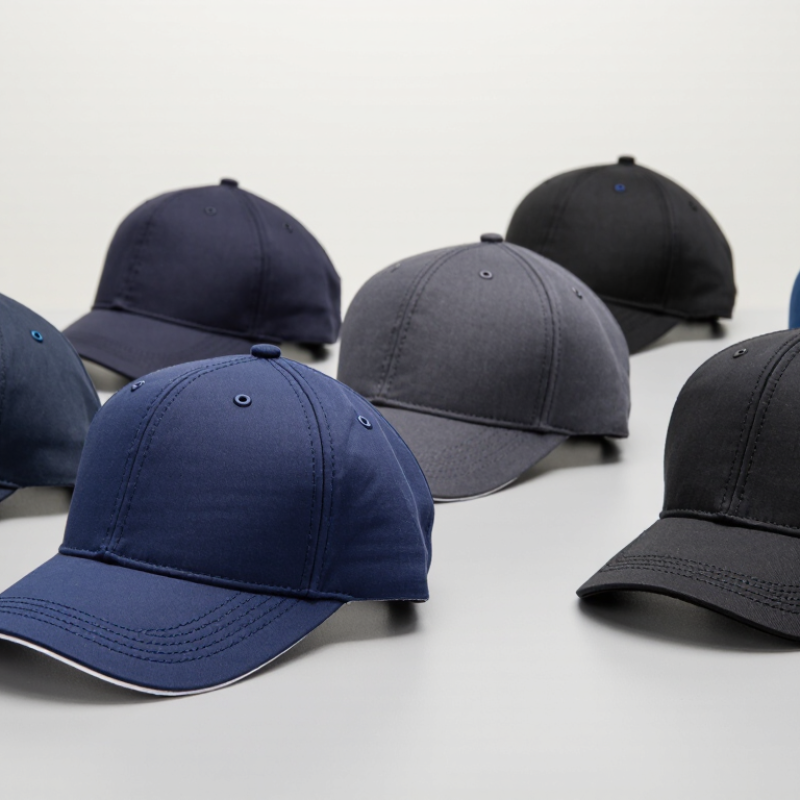
Wholesale buyers should compare fitted caps by shape, sizing, fabric, and finish—not color alone. A low-profile crown sits closer to the head, while a structured, high-profile crown keeps a taller shape. Ask for measurements and sample caps in several sizes; “medium” can vary between suppliers. Check the bill’s curve, seam alignment, and how firmly the crown holds its form. Small details matter.
Tips: Fit samples on different head shapes, and note pressure near the temples. Check fabric weight and sweatband feel, too. A size chart helps, but it cannot replace a try-on.
For a balanced assortment, compare core colors with seasonal shades, then match quantities to your customers’ preferences. Review each size’s availability before confirming the order. Fitted caps offer no adjustable back closure, so uneven size demand can leave gaps—or slow-moving stock. Ask about size tolerances, color consistency, and repeat-order availability. I once trusted a tidy chart too quickly; the samples fit differently than expected. Build in time to review them, even when the schedule feels tight.
What Wholesale Buyers Should Check Before Ordering
Best Fitted Baseball Caps 2026 for Wholesale Buyers
For a 2026 fitted-cap order, check the fit block before negotiating volume. Request the crown height, inner circumference, brim length, and tolerance in millimeters. Small differences show. Try samples on different head shapes, then compare the measurements with the approved sample. A size chart alone may not reveal pressure at the temples or a loose fit at the back.
Material details deserve equal attention. Textile Exchange’s 2024 Materials Market Report estimates global fiber production reached 124 million tonnes in 2023. Polyester represented 57% of that volume. Ask suppliers to state the fiber blend, lining, sweatband composition, and whether each claim is supported by test documents. Check fabric weight and color under daylight; a swatch can look different from a finished cap. I would not treat a sustainability claim as verified just because it appears on a quotation.
Before confirming production, approve a pre-production sample with the final fabric, closure, stitching, and embroidery. Specify acceptable measurement variation and inspection criteria in writing. ISO 2859-1 provides sampling plans for inspection by attributes, but buyers still need to agree on the actual plan and defect definitions with suppliers. Check carton packing too: crushed brims can turn a sound product into a costly return. One caveat: even a detailed checklist can miss fit issues until people wear the caps for a full day.
Best Fitted Baseball Caps 2026 for Wholesale Buyers - What Wholesale Buyers Should Check Before Ordering
| Check Before Ordering | Useful Specification or Reference | What Wholesale Buyers Should Verify |
|---|---|---|
| Fitted size range | Common cap sizes run from about 6⅞ (54.9 cm head circumference) to 8 (63.5 cm). Size conversions can vary slightly by maker. | Request the supplier’s size chart and measure sample caps around the inside sweatband. Do not rely on size labels alone. |
| Size distribution | A fitted cap has a fixed circumference and no adjustment strap; each size must be ordered and stocked separately. | Set a size curve using your sales history or target market. Confirm per-size minimums and whether mixed-size cartons are allowed. |
| Crown construction | Six-panel construction is common. Structured caps use stiffening in the front panels; unstructured caps have a softer crown. | Check panel symmetry, seam quality, crown height, and whether the sample matches the intended structured or unstructured profile. |
| Fabric and hand feel | Cotton twill and polyester fabrics are widely used. Fiber content and fabric weight affect feel, appearance, and care requirements. | Request the fiber-content specification and a physical swatch. Check for consistent color, surface defects, and fabric weight across production lots. |
| Visor shape and finish | Visors may be supplied flat or pre-curved. Shape and stitching should be consistent with the approved sample. | Inspect visor symmetry, edge stitching, flexibility, and whether the requested shape is maintained across sizes. |
| Sweatband and comfort | The sweatband contacts the wearer’s head and affects comfort and fit. Its material and construction vary by product. | Check that it lies flat, is securely attached, and has no rough seams or loose threads. Test wear samples in the intended climate. |
| Color and shade consistency | Fabric lots and components can show shade variation, particularly between panels, visors, and sweatbands. | Approve a color standard before production and compare bulk goods under consistent lighting. Ask how shade variation is controlled. |
| Decoration and labeling | Embroidery, printed details, and sewn labels may require different artwork files, placement tolerances, and production approvals. | Approve artwork size, thread or print colors, placement, and label details on a pre-production sample. Confirm any applicable labeling rules for the destination market. |
| Minimum order and lead time | Minimum quantities and lead times are supplier- and order-specific; custom colors or decoration can affect both. | Get written figures for total and per-color/per-size minimums, sample timing, production timing, and the point at which the lead-time clock starts. |
| Quality inspection | A pre-production sample and a documented inspection plan help define what the buyer has approved. | Agree on measurable checks for sizing, stitching, appearance, and packaging, plus how defects and replacements will be handled. |
| Packaging and shipping | Carton quantity, carton dimensions, gross weight, and shipping terms affect freight planning and landed cost. | Request packing details and a written quotation showing the agreed delivery terms, shipment schedule, and responsibility for freight and import charges. |