China Top Earth Rammer Manufacturers Which One Is Best?
Choosing the best China Earth Rammer manufacturer requires more than comparing prices on a product page. Construction contractors need dependable compaction, stable performance, and practical after-sales support. A rammer may look powerful in photographs, yet field performance depends on impact force, operating frequency, shoe design, engine quality, and balance. Small details matter.
Experienced buyers often inspect machines on real job sites. They watch how the Earth Rammer performs beside trenches, foundations, and narrow drainage areas. Excessive vibration, difficult starting, or loose fasteners can quickly increase labor costs. Reliable manufacturers should provide clear technical specifications, factory inspection records, spare-parts availability, and responsive warranty service. Certifications also deserve careful verification, especially when equipment will enter different international markets.
No single manufacturer is perfect. That is worth admitting. Some factories offer competitive prices but limited customization. Others provide stronger engineering support but require larger minimum orders. Product videos can help, but they cannot replace testing. Buyers should request samples, compare measurable data, and ask for references from similar projects. They should also confirm engine origin, delivery terms, maintenance guidance, and replacement-part lead times.
This guide examines leading Chinese manufacturers through practical criteria, including manufacturing experience, quality control, product range, export capability, and customer feedback. The goal is not to promote the cheapest option. It is to identify the supplier that offers the most suitable balance of performance, reliability, service, and long-term value for each application.
What Is an Earth Rammer and How Does It Work?
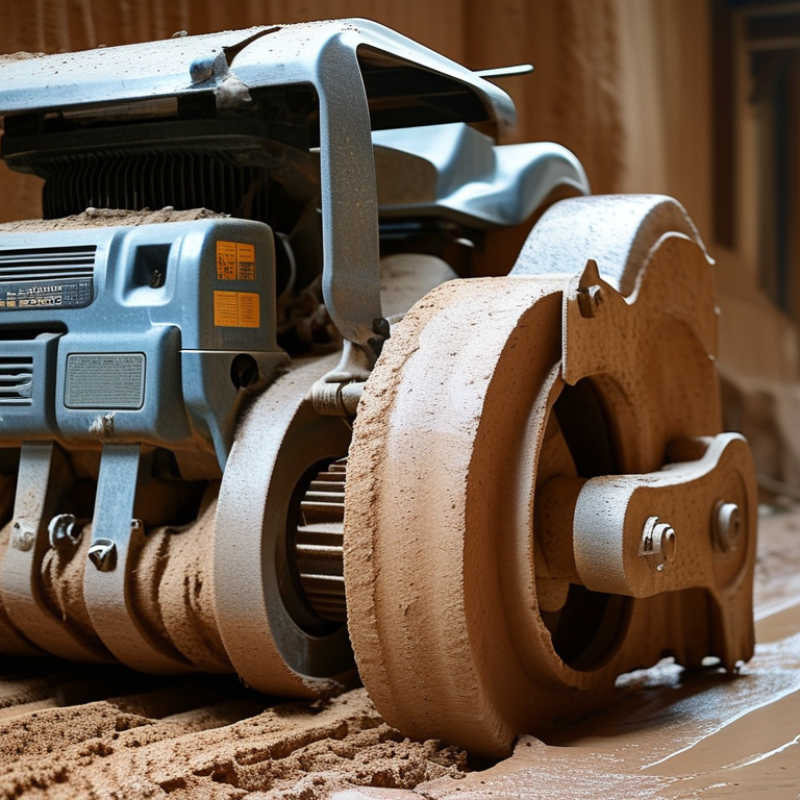
An earth rammer is a compact machine for densifying soil in narrow or confined areas. It uses a small engine, crank mechanism, springs, and a steel tamping foot. The engine drives repeated vertical impacts. Each impact pushes air from soil voids and rearranges particles into a tighter structure. Typical rammers deliver about 500–750 blows per minute, depending on design and operating conditions.
The machine works best on cohesive soil, including clay and silty backfill. Its narrow foot can compact trench edges, utility corridors, and foundation corners. The U.S. Army Corps of Engineers recommends controlling lift thickness, moisture, and compaction energy during earthwork. ASTM D698 establishes laboratory moisture-density testing, while many projects specify at least 95% of maximum dry density. The exact requirement still depends on the project specification.
Moisture matters greatly. Dry clay may rebound under the foot. Wet soil can smear instead of compacting. A practical operator checks the surface after several passes, not only the machine’s vibration. The FHWA notes that field density testing verifies whether compaction targets are achieved. A harder-looking surface is not always stronger. That is easy to miss.
For buyers comparing Chinese earth rammer manufacturers, independent test results matter more than appearance. Check impact frequency, shoe width, operating weight, vibration control, spare-part availability, and noise data. One uncomfortable truth remains: even an excellent rammer performs poorly with thick lifts or unsuitable moisture.
China Top Earth Rammer Manufacturers Which One Is Best? - What Is an Earth Rammer and How Does It Work?
| Evaluation Dimension | Typical Technical Data or Fact | How an Earth Rammer Works | Best Application | What to Check Before Selection |
|---|---|---|---|---|
| Primary Purpose | Compaction of soil in narrow or confined areas | A reciprocating mechanism transfers repeated impact energy through a compact steel shoe into the ground. | Trenches, foundations, pipe backfill, road edges, and repair work | Confirm that the work area is too narrow or irregular for a vibratory Plate Compactor. |
| Suitable Soil Type | Most effective on cohesive and semi-cohesive soils, including clay, silt, and mixed backfill | The impact action kneads and rearranges soil particles, helping reduce air voids and increase density. | Clay-containing soil and utility-trench backfill | For clean, free-draining sand or granular aggregate, compare a vibratory plate compactor instead. |
| Operating Mass | Common professional units are approximately 50–80 kg, although lighter and heavier models exist. | The machine’s weight and impact mechanism work together to deliver concentrated compaction energy. | 50–65 kg: easier manual handling; 65–80 kg: greater force for demanding soil | Balance compaction performance with operator lifting, transport, and access requirements. |
| Impact Force | Many commonly used units deliver approximately 10–20 kN of rated impact force. | The crank, spring, and ram assembly repeatedly drives the shoe downward and then lifts it for the next stroke. | Higher force is useful for dense cohesive soil and deeper backfill layers. | Compare rated impact force using the same testing method; do not judge performance by engine power alone. |
| Compaction Shoe Width | Typical shoe widths are about 130–330 mm, depending on machine design. | The narrow shoe concentrates impact energy over a small surface area, allowing access to confined spaces. | Narrow shoes for trenches; wider shoes for more open backfill areas | Measure the trench width and allow sufficient clearance for safe operator control. |
| Impact Frequency | Many earth rammers operate within roughly 600–800 impacts per minute. | Repeated high-frequency impacts compact successive areas as the operator guides the machine forward. | General soil compaction where controlled, repeated impacts are required | A higher frequency is not automatically better; match frequency, force, and soil moisture to the application. |
| Power System | Gasoline engines commonly range from approximately 2–5 hp; electric versions are also available. | The engine or electric motor drives the clutch and crank mechanism that creates the vertical tamping motion. | Gasoline: outdoor mobility; electric: lower-emission areas with reliable power access | Check fuel consumption, electrical voltage, cable management, noise limits, and local emission rules. |
| Travel Speed | Typical forward travel speed is approximately 10–20 m/min, depending on soil and machine settings. | The operator guides the self-propelled rammer while the shoe impacts the surface continuously. | Short trench sections, repair zones, and small construction sites | Lower speed can provide more impacts per area; productivity also depends on layer thickness and soil condition. |
| Recommended Fill Layer | Backfill is generally compacted in multiple thin layers; the exact thickness depends on soil and equipment. | Each pass transmits energy into the current layer rather than effectively compacting an unlimited depth. | Utility trenches and foundation backfill placed in controlled lifts | Follow the project specification and verify density with an appropriate field compaction test. |
| Operator Comfort and Safety | Important features include vibration-reducing handles, balanced controls, emergency shutoff, and protective guards. | The handle allows directional control while isolating the operator from part of the machine’s vibration. | Frequent or extended compaction work | Review hand-arm vibration data, noise level, guarding, stability, and required personal protective equipment. |
| Maintenance Requirements | Routine service may include engine oil, air filter, spark plug, fuel system, clutch, springs, bolts, and shoe inspection. | The impact mechanism experiences repeated cyclic loading, making lubrication and fastener checks essential. | Construction fleets and rental operations requiring reliable uptime | Check spare-parts availability, service intervals, technical documentation, and warranty terms. |
| Best Overall Choice | The best earth rammer is the one whose force, shoe width, power system, safety features, and service support match the project. | Performance results from the combined effect of impact energy, frequency, operating mass, soil moisture, and operator technique. | Select by soil type, trench dimensions, required density, working environment, and expected utilization. | Request test data, inspect build quality, compare total ownership cost, and verify compliance with applicable safety standards. |